Languages
Sunday, September 20, 2026



News and Views from the Global South
Opinion
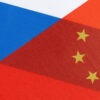
What the Sino-Russian Declaration Exposes
The joint declaration issued by Russia and China on 20 May, Joint Declaration of the Russian Federation and the People’s Republic of China on the Establishment of a Multipolar World and a New Type of International Relations, has been read in sharply different ways. Some welcome its language of sovereign equality, multilateralism and a UN-centred international order. Others dismiss it as legal rhetoric deployed in bad faith. Both responses miss the more important point.
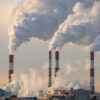
Governments Falling 90 percent Short of Climate Adaptation Finance Needs
Governments are falling 90 percent short of adaptation finance targets and leaving people in climate-vulnerable communities drastically under-equipped to cope with the devastating impacts of climate change, Oxfam warns ahead of Bonn climate talks (8-18 June).
A Larger, Older, and More Diverse Population
In 2026, the population of the United States is significantly larger, older, and more diverse than it was 250 years ago when the country declared its independence from the Kingdom of Great Britain on July 4, 1776.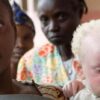
People With Albinism Face Discrimination, Danger
When Patricia J. looks for work or shops at the outdoor markets near her home in rural Malawi, fear still follows her. Years after surviving two attacks linked to harmful beliefs about albinism, she says she remains constantly alert. “I still carry the fear that at any moment I can be attacked again,” she told us as we did research about conditions for people with albinism.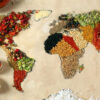
Russia Ensuring Africa’s Food Security
Within the framework of the Expert Council on Africa at Russia's State Duma, the lower chamber of parliamentarians, during its annual round-table conference, held in late May 2026, focused concretely on food security in Africa.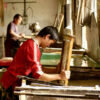
Bhutan’s WTO Path: Learning from the Global South
Bhutan’s decision to restart its accession to the World Trade Organization (WTO) comes at an important junction. Since graduating from Least Developed Country (LDC) status in 2023, the country is entering a new phase of development, which requires stronger competitiveness, deeper global engagement and greater economic resilience.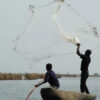
Africa’s Water is its Future. Who will Govern it?
Africa holds 9 per cent of global renewable freshwater, over 600 gigawatts of untapped hydropower potential, and between 60 and 65 per cent of the world's uncultivated arable land.
“The Heat Is No Longer Distant: A Global Climate Reckoning“
‘As record heat sweeps the world, the climate crisis is no longer a warning for the future, but a reality of the present.’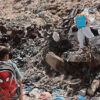
US-Israeli Ceasefire: You Cease, We Fire
If you have been paying attention to the ongoing wars in Ukraine, Iran, Lebanon, and many other places, perhaps you have noticed that battles today are far different from those of the last century. Now it’s not only tanks and planes but also scores of long-range missiles and massive flights of drones linked to cybernetic warfare.
A New Youth Generation: Largest in History & a Decisive Force
In this exclusive interview, Dr. Felipe Paullier, UN Assistant Secretary-General (ASG) and Head of the United Nations Youth Office shares his leadership approach, insights on youth engagement, and his vision for driving institutional change from the grassroot level — redefining what is possible and proving that age is just a number.
Developing Countries Feel Squeeze from Lower Natural Resource Revenue & Falling Foreign Aid
Developing countries face major difficulties as income from natural resource extraction industries decreases and wealthier nations reduce their aid.
New US Fed Policy Deepens World Stagflation
The Federal Reserve Bank’s turn to ‘reserve management’ exposes the limited policy options still available as the US seeks to protect itself against international stagflation stemming from President Trump’s policies.
Japan and Kazakhstan: A Partnership for an Age of Energy Insecurity and Nuclear Risk
The relationship between Japan and Kazakhstan is often described in terms of diplomacy, investment and regional cooperation. But at a time of growing geopolitical uncertainty, it deserves to be understood in broader terms: as a partnership linking cities, resources, technology and peace.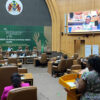
How the Global Anti-Rights Movement Is Targeting Women’s Rights in Africa Through Family Laws
The theme of Africa Day 2026, “63 years of unity, integration and development," offers a stark reminder of the gap that often exists between rhetoric and reality. While commendable regional legal frameworks have advanced legal protections for millions of women and girls, injustice remains written into the fabric of national family laws in many African countries, entrenching gender inequality in the home.
The Search is On for the Next U.N. Secretary General in a Turbulent World
AS THE WORLD HURTLES TO HELL (albeit in a SpaceX rather than a hand basket), it might seem of only academic interest which cipher vegetates on the 38th floor of the U.N. Headquarters. However, the choice is due by the end of the year, unless, as has happened in the past, the Security Council is veto-bound and asks António Guterres to stay on as interim Secretary General.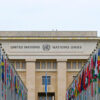
Trump’s Cuts are Pushing the UN out of Geneva. That may be a Win
The $1.2 billion renovation of the Palais des Nations was intended to reaffirm Geneva's centrality to the multilateral system. Instead, the city’s international quarter is emptying.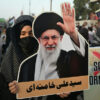
Iran War Deepens Activist Dangers
Narges Mohammadi, awarded the Nobel Peace Prize for her human rights activism in Iran, has been allowed to go home. After guards found her unconscious in her cell, the apparent victim of a heart attack, she was granted temporary release from prison and transferred to a hospital. However, she still faces the threat of being taken back to jail once her condition has improved.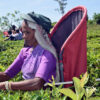
Tea’s Future Depends on Its Farmers
The tea in your cup this morning began its journey in someone else's hands. Hands whose work most of us never think about. Almost certainly, those hands belonged to a smallholder farmer tending a small plot of land, plucking leaves by hand beneath long mornings of mist and rain.
The Iran War Exposes the Fragility of Our Fuel-Dependent Food System
Sharp surges in energy, fertilizer, and food prices triggered by the ongoing conflict in the Persian Gulf strikingly illustrate the deep interconnections between geopolitical conflict, food insecurity, and the fragility of fossil fuel–dependent food systems.
The 3Ds for a Credible Post-2030 Development Agenda
Just four years of the Agenda 2030 for Sustainable Development remain. What comes after 2030 is already a political battleground.
The UN Vote that Could Reshape Climate Justice
Normally, resolutions voted at the United Nations General Assembly do not make the headlines. As nonbinding and mostly symbolic, rich in principles yet empty and lacking the power to carry consequences, these statements are shrugged off and ignored.« Previous Page — Next Page »


The views expressed in these articles are those of the authors and do not necessarily represent the views of, and should not be attributed to, IPS-Inter Press Service

The Week with IPS

NEXT STOP - SDGs
Tracking global progress towards a sustainable world
Tracking global progress towards a sustainable world
