Languages
Tuesday, October 27, 2026



News and Views from the Global South
Climate Change Justice

International Day of Climate Action 2026
The world is getting hotter. And the consequences are already being felt. From devastating floods and prolonged droughts to intensifying heatwaves, climate change is disrupting lives and livelihoods across the globe.

Bangladesh’s Hidden Climate Bill: How Much Are We Losing Without Counting It?
Bangladesh has earned global recognition for reducing deaths from cyclones and floods. Early warning systems, cyclone shelters, embankments and community preparedness have transformed the country’s disaster response. Yet another climate crisis is receiving far less attention: the economic damage climate change is quietly inflicting on households, farmers, workers, businesses and public finances.
As Winter Approaches, Afghanistan Faces Record Hunger and Mounting Human Rights Abuses
In recent months, Afghanistan’s humanitarian crisis has severely deteriorated, with the UN reporting record-high levels of acute malnutrition and hunger. Compounded by rampant human rights violations, limited access to basic services, and persistent barriers to humanitarian aid, the UN warns that conditions could considerably worsen in the coming months.
From Small Islands to Antalya: COP31 Must Move Climate Promises from Paper to People
When you grow up on a small island, the ocean is not scenery. It is your neighbour, your livelihood, and the measure of time itself. For decades, as I walked the beaches of Seychelles, I watched the subtle shifts that scientists were warning the world about. The tide crept a little higher up the sand each year. After a warm season, vibrant coral gardens turned ghost-white. Storms that once belonged to rare memory began arriving with unsettling regularity.
As El Niño Returns, East Africa’s Urban Poor Brace for Heavy Rains
Nearly three decades have passed, but Japhet Gimbi still remembers the rain. He was a Form 2 student in Tabora, western Tanzania, when the 1997 El Niño flooded the town. As the rain kept falling, fewer students made it to school. That was a super El Niño, one of the strongest on record. Since then there have been five other events including the 2014-2016 "super El Niño".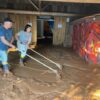
Afro-Brazilian Religious Communities Face Mounting Discrimination Amid the Climate Crisis
In 2024, as floodwaters approached Lutalo Canti’s home in Porto Alegre, Brazil, he lifted some furniture off the floor and left in a hurry. Extreme rainfall in the country’s southern region had caused local rivers to overflow. The flooding would eventually reach more than 400 municipalities and impact over 2 million people.
If the UN COP17 Is Serious About Biodiversity, It Needs to Follow the Money
On Monday, governments from across the world will gather in Armenia for COP17, the UN biodiversity summit, to assess progress on the global agreement to halt and reverse biodiversity loss. For anyone who cares about the livability of our planet for future generations, and the richness of life on earth, the stakes could hardly be higher. Policy makers will debate targets, implementation, and the lack of money to protect nature, in particular the failure of developed countries to fulfil their obligations. But there is a more basic question that should put at the center of those discussions: what happens when the financial system governments are counting on to fund nature protection is also financing its destruction?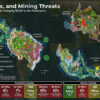
Protection That Holds: Keeping Nature Safe From Extraction
When governments gather in Yerevan this month for the 17th UN Convention on Biological Diversity, they will weigh a promise nearly 200 countries adopted six years ago: to effectively conserve at least 30 percent of land, inland waters, and sea by 2030. Achieving the ambitious 30x30 target is essential to sustaining the systems humanity relies on for survival—including crop pollination, purification of water and air, and climate regulation—as well as the biodiversity that underpins food production, fisheries, and tourism.
The Late Arrivals
One night, many years ago now, on a remote beach in the outer islands of Seychelles, I sat in the darkness and watched a green turtle come ashore. She had waited for the heat of the day to leave the sand. Under a sky crowded with stars, she hauled herself slowly above the tideline, dug with a patience no human hand could match, and laid her eggs. Then, in the small hours, she turned back toward the water. She did not hurry. She paused once, as though listening, and then made her slow, unhesitating way down the sand, back to a home older than any I could imagine.
If We Can Start an Epoch, We Can Start a Farming Revolution
In November 1952, the United States detonated the world's first thermonuclear device at Enewetak Atoll in the Marshall Islands. The test, code-named Ivy Mike, erased the island of Elugelab and scattered a signature of plutonium across the planet that remains in lake beds, ice sheets and ocean sediments today.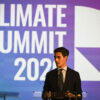
Overshoot of Paris Agreement and the Looming Super El Niño Drive Urgent Calls for Global Climate Action at UNGA 81
The United Nations 2026 Climate Summit addressed critical strategies to mitigate the compounding impacts of the climate crisis and accelerate progress toward the Sustainable Development Goals (SDGs).
BRAZIL: ‘Resistance Is Intergenerational, and Art Is How Energy Gets Renewed’
CIVICUS discusses the role of art in climate and rights struggles in the Brazilian Amazon with Tom Wheeler, executive director and co-founder of Treesistance. Treesistance is a platform operated by the Netherlands-based Sinchi Foundation that partners with Indigenous communities across four Brazilian states on cultural preservation and forest protection.
The Overlooked Fast Track for Cutting Planetary Warming
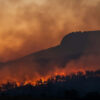
Among the three of us, we have 15 decades of high-level experience in climate science, policies and actions, and we have never been more alarmed than we are at this moment. The United Nations has just officially declared that the world has failed in limiting global warming to a safe level. During the last decade, heat-trapping pollutants nearly doubled the rate that heat is being added to the planet—a rate that will push temperatures across the 1.5°Celsius threshold in five years or less and breach the first barrier of the Paris Agreement. This will further destabilize natural climate systems and amplify weather extremes, which are already costing the world economy more than $ 2 trillion annually. At the current rate of warming, the global temperature is likely to cross 2° Celsius in about 15 years, the outer limit of the Paris Agreement, taking us into a climate not witnessed by homo sapiens, ever.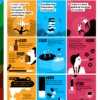
Global Survey Finds Deep Crisis of Trust as Majority Say Economic System Favours the Rich
An international survey released by Earth4All has found a growing crisis of trust in governments, widespread anger over inequality, and strong public support for major economic reforms, suggesting that many people across the world believe current political and economic systems are failing to serve ordinary citizens.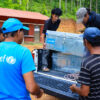
Humanitarian Needs Grow as Nepal Recovers from Catastrophic Floods
Two weeks after devastating floods struck Nepal, communities across the country are still struggling to meet basic needs as humanitarian efforts continue. The disaster, triggered by a glacial collapse, has become one of Nepal’s deadliest in recent years, leaving widespread destruction in its wake.
Lawmakers Need to Grapple With the ‘Human Story’ of the Aged, Youth, Women and Girls when Making Policy
"As parliamentarians, we should understand that behind every demographic indicator is a human story,” Kamikawa Yoko, MP Japan and Chair of AFPPD, reminded lawmakers in her opening address to the Asian Forum of Parliamentarians on Population and Development (AFPPD) annual conference held in Kuala Lumpur, Malaysia.
Families in Desperate Search for Victims of the ‘Himalayan Tsunami’ in Nepal
On Sunday afternoon, Mingma Tamang, 29, rushed into the TU Teaching Hospital’s emergency ward, where a rescue team had just brought in an injured person in the Rasuwa flash flood – but she soon left grim-faced.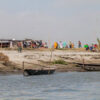
Beyond Resilience: Climate Change and the Rights of Char Dwellers in Bangladesh
Bangladesh’s riverine and coastal chars have always been landscapes of movement, but climate change is making that movement more violent, frequent, and unequal. The shifting islands of the Jamuna, Brahmaputra, Padma, and other rivers now reveal how climate stress multiplies deprivation, weakens citizenship, and forces char dwellers to absorb the costs of a crisis they did little to create.
The Indian Ocean Is Sounding the Alarm and Its Islands Are Among the First to Hear It
Across this vast ocean, the latest monitoring by Mercator Ocean International shows marine heatwave conditions ranging from moderate to severe. At the same time, the World Meteorological Organization expects a strong El Niño to intensify through August to October, with a positive Indian Ocean Dipole also likely to develop. These are not distant scientific signals. They are an urgent warning that the ocean system on which millions depend is under mounting stress.
Grand Planetary Challenges Need a Grand Coalition to Solve Them
Several coalitions exist today to defend the territories in which people live and work. Global leaders have long understood the importance of shared responsibility for collective security and have invested significant time in establishing networks, partnerships and alliances. In 2025, global spending on defense reached a record $2.9 trillion.
The Earth Is Burning — And We Are Still Choosing to Let It
I have spent my life on an island. From the granite hills of Mahé, one can watch the sun rise over an ocean that has fed, protected and defined the Seychellois people for centuries.Next Page »





The Week with IPS

NEXT STOP - SDGs
Tracking global progress towards a sustainable world
Tracking global progress towards a sustainable world
