Languages
Friday, October 9, 2026



News and Views from the Global South

Libya: Up to One Million Enslaved Migrants, Victims of ‘Europe’s Complicity’
“European governments are knowingly complicit in the torture and abuse of tens of thousands of refugees and migrants detained by Libyan immigration authorities in appalling conditions in Libya,” Amnesty International charged in the wake of global outrage over the sale of migrants in Libya.
Trump-Mideast: Much More than a ‘Kiss of Death’ to Palestinians
US President Donald Trump’s decision to recognise Jerusalem as Israel’s capital does not represent only a ‘kiss of death’ to the two-State solution, but also a strong blow in the face of 57 Muslim countries, let alone igniting fire in this easily inflammable region, providing more false arguments to criminal terrorist groups to escalate their brutal attacks, in addition to taking a step further in Washington’s new conflict with Iran and the ‘restructuring’ of the Middle East.
Resistance to Antibiotics: The Good, the Bad and the Ugly
The growing resistance to antibiotics and other antimicrobials due to their overuse and misuse both in humans and animals has become an alarming global threat to public health, food safety and security, causing the deaths of 700,000 people each year. This is a fact.
South-South Cooperation Key to a New Multilateralism
“There are new challenges to all states: among them, the real threat to multilateralism... South-South and triangular cooperation can contribute to a new multilateralism and drive the revitalisation of the global partnership for sustainable development.”
Six ‘Signature Solutions’ – New Development Plan for a New Era
While the top priority of any development strategy is still the same - to leave no one behind - the new challenges that have emerged show the need to adapt the actions necessary to face them.
One Third of Food Lost, Wasted – Enough to Feed All Hungry People
Believe it or not, the way to eradicate hunger from the face of the Earth is as feasible as it is handy. In fact, the current loss and waste of one-third of all food produced for human consumption would be just enough to feed the nearly one billion people who go to bed hungry every single night.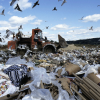
Desperate Need to Halt ‘World’s Largest Killer’ — Pollution
Now that the lights of the UN climate change summit’s meeting rooms have been turned off in Bonn, after a week of intense negotiations and some partial results, another major environmental event is now scheduled in Nairobi, this time to search for ways to halt the world’s major killer – pollution.
Good to Know (Perhaps) That Food Is Being ‘Nuclearised’
It might sound strange, very strange, but the news is that scientists and experts have been assuring, over and again, that using nuclear applications in agriculture --and thus in food production—are giving a major boost to food security. So how does this work?
The Harsh Plight of 152 Million Child Labourers
While trillions of dollars are being spent on exploring remote galaxies, Planet Earth is still home to harsh realities that could be easily –and much less expensively—resolved. One of them is that worldwide 152 million children are currently victims of child labour.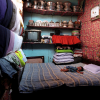
Nations without Nationality – An ‘Unseen’ Stark Reality
Here’s another ‘unseen’ stark reality—that of millions of people around the world who are deprived of their identity, living without nationality. Their total number is by definition unknown and their only ‘sin” is that they belong to an ethnic, religious or linguistic minority in the country where they have often lived for generations.
Climate Change Summit a Step Further, Yes… But Where To?
The UN Climate Change Summit in Bonn is a step further, most experts say. Fine, but towards what?
The Roots of Exodus: Why Are People Compelled to Leave their Homes?
Facts are facts, and one of them is that while everybody talks about the growing forced movement of people --be they migrants or refugees—decision-makers haven’t seriously acted on the root causes of why millions of humans are compelled to leave their homes.
Pollution or How the ‘Take-Make-Dispose’ Economic Model Does Kill
The prevailing “Take-Make-Dispose” linear economic model consisting of voracious depletion of natural resources in both production and consumption patterns has proved to be one of the world’s main killers due to the huge pollution it causes for air, land and soil, marine and freshwater.
World Campaign to Clean Torrents of Plastic Dumped in the Oceans
With 30 countries from Kenya to Indonesia and from Canada to Brazil now involved in the world campaign to beat pollution by countering the torrents of plastic trash that are degrading oceans and endangering the life they sustain, the UN has strengthened its massive efforts to clean up the seas, which are the Earth’s main buffer against climate change.
What Do You Really Eat When You Order a Steak, Fish or Chicken Filet?
The world is running out of antibiotics to combat the growing threat of antimicrobial resistance, the UN World Health Organization (WHO) warned while announcing the World Antibiotic Awareness Week on 13-19 November.
How to Change the Future of Migration
The world is on the move. More people have been forced to flee their homes than at any time since the Second World War due to increased conflict and political instability, hunger, poverty, and an increase in extreme weather events linked to climate change.
Not True that Hunger Doesn’t Discriminate — It Does
In a world where only 8 individuals – all of them men—possess as much as half of all the planet’s wealth, and it will take women 170 years to be paid as men are*, inequality appears to be a key feature of the current economic model. Now a new study reveals that there is also a widening gap in hunger.
How to Eradicate Rural Poverty, End Urban Malnutrition – A New Approach
Population growth, increasing urbanisation, modern technologies, and climate change are transforming the world at a fast pace. But what direction are these transformations headed in? Are they benefitting the poor and the food insecure? And will the food systems of the future be able to feed and employ the millions of young people poised to enter labour markets in the decades to come?
The World Is Running Out of Much Needed New Antibiotics
The world is running out of new antibiotics to combat the growing threat of antimicrobial resistance, a new specialised report warns ahead of this year's World Antibiotic Awareness Week, adding that most of the drugs currently in the clinical pipeline are modifications of existing classes of antibiotics and are only short-term solutions.
To Be an Egyptian Migrant in Rome (And Also Make Great Pizza)
“I asked him: do you want to come with us to Greece? He said: ‘Why not?’ So my wife and myself packed up and drove to Athens to open our ‘trattoria’ there.”
Where Do 50 Million Tonnes a Year of Toxic E-Waste Go?
Each year, the electronics industry generates up to 41 million tonnes of e-waste, but as the number of consumers rises, and the lifespan of devices shrinks in response to demand for the newest and best, that figure could reach 50 million tonnes this year, according to specialised studies.« Previous Page — Next Page »





The Week with IPS

NEXT STOP - SDGs
Tracking global progress towards a sustainable world
Tracking global progress towards a sustainable world
