Languages
Friday, October 9, 2026



News and Views from the Global South

Parliamentarians a “Fourth Pillar” of Sustainable Development
Investing in youth and the population dividend, women's health, sustainable development objectives, and the key role of parliamentarians to promote transparency, accountability and good governance to achieve the 2030 Agenda on Sustainable Development topped the agenda of a two-day conference of Asian and African lawmakers in New Delhi last week.
Poor Orphan Crops…So Valuable, So Neglected
When ‘think-tankers’ in the mid-1990s formulated their famous “think global, act local” slogan, they probably did not expect humankind to require a couple of decades to implement such practical advice.
World Hunger on the Rise Again
Exacerbated by climate-related shocks, increasing conflicts have been a key driver of severe food crisis and recently re-emerged famines, a major United Nations joint report has just revealed.
Alert: Nature, on the Verge of Bankruptcy
Pressures on global land resources are now greater than ever, as a rapidly increasing population coupled with rising levels of consumption is placing ever-larger demands on the world’s land-based natural capital, warns a new United Nations report.
Floods, Hurricanes, Droughts… When Climate Sets the Agenda
When officials and experts from all over the world started the first-ever environmental summit hosted by China, they were already aware that climate and weather-related disasters were already seriously beginning to set the international agenda – unprecedented floods in South Asia, strongest ever hurricanes Harvey and Irma, and catastrophic droughts striking the Horn of Africa, among the most impacting recent events.
Europe, New Border of Africa’s ‘Great Desert’ – The Sahara
 With the highest temperatures on record and unprecedented heat waves hitting Europe this year, Africa’s ‘Great Desert’, the Sahara, is set continue its relentless march on the Southern European countries until it occupies more than 30 per cent of Spain just three decades from now.

Climate-Smart Agriculture Urgently Needed in Africa
Africa contributes only 4 per cent of global greenhouse gas emissions, while six of the 10 most affected countries by climate change are in Africa, warns a major agricultural research for development partnership, while stressing the urgent need to scale up climate-smart agriculture, improve forestry and transform the productivity of water use.
To Be a Nigerian Migrant in Italy
Bako* (24), a Nigerian migrant, stares at newcomers at an old, local Roman bar. Extremely polite, he asks for money. If you offer to buy him some food instead, he immediately accepts.
Forced Evictions, Rights Abuses of Maasai People in Tanzania
Indigenous Maasai people in Loliondo region,Tanzania have been facing new cases of forced evictions and human rights violations, a major international organisation supporting indigenous peoples' struggle for human rights and self-determination warned.
Climate Migrants Might Reach One Billion by 2050
Imagine a world with as many as one billion people facing harsh climate change impacts resulting in devastating droughts and/or floods, extreme weather, destruction of natural resources, in particular lands, soils and water, and the consequence of severe livelihoods conditions, famine and starvation.
Yemen: African Migrants Beaten, Starved, Sexually Violated by Criminal Groups
African migrants who arrive on Yemen’s shores --that’s if they are not forced into the sea to drown—risk to fall in the hands of criminal networks who hold them captive for several days to extort money in exchange for their “freedom,” according to UN sources.
Can the Gender Gap Be Measured in Dollars Only?
Until a decade or so ago, experts and world organisations measured the impact of natural and man-made disasters in terms of human losses. For instance, they would inform about the number –and suffering—of human beings falling victims of extraordinary floods, droughts, heat or cold waves, and armed conflicts. This is not the case anymore.
Millions of Women and Children for Sale for Sex, Slavery, Organs…
It is happening now. Millions of humans are forced to flee armed conflicts, climate change, inequalities, and extreme poverty. They fall easy prey to traffickers lurking anyone who can be subjected to sexual exploitation, forced labour and even sell their skin and organs.
Halting Sexual Exploitation of Children in Tourism, Mission Impossible
While the business sector jumps for joy as the number of tourists grew in 2016 for the seventh consecutive year to reach 1.2 billion, and as the first four months of 2017 have registered 6 per cent increase, the sheer speed, abetted by technology, of an atrocious crime—the sexual exploitation of children in tourism, has, to date, out-paced all attempts to put an end to it.

Not Just Numbers: Migrants Tell Their Stories
Every single day, print and online media and TV broadcasters show images and footage of migrants and refugees adrift, salvage teams rescuing their corpses--alive or dead, from fragile boats that are often deliberately sunk by human traffickers near the coasts of a given country. Their dramas are counted –and told-- quasi exclusively in cold figures.
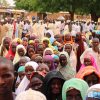
Climate Change-Poverty-Migration: The New, Inhuman ‘Bermuda Triangle’
World organisations, experts and scientists have been repeating it to satiety: climate change poses a major risk to the poorest rural populations in developing countries, dangerously threatening their lives and livelihoods and thus forcing them to migrate.
Drought Pushes 1 in 3 Somalis to a Hunger Knife-Edge
Another famine in former European colonies in Africa and another time in its Eastern region, with Ethiopia and Somalia among the major victims of drought and made-made climate disasters mainly caused by US and European multinational business.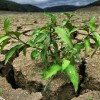
Mideast: Drought to Turn People into Eternal Migrants, Prey to Extremism?
Worldwide, land degradation, severe droughts and advancing desertification are set to force populations to flee their homes and migrate. In the specific case of the Middle East and North of Africa (MENA), such an obliged choice implies the additional risk to turn peoples into easy prey to extremist, terrorist groups.
More Plastic than Fish or How Politicians Help Ocean Destruction
World’s oceans are dangerously exposed to at least three major threats: climate change; the sharp degradation of marine biodiversity, and politicians. These simply encourage the destruction of oceans by subsidising over-fishing and turning a blind eye on illegal captures. See what happens.
What Future for 700 Million Arab and Asian Youth?
With a combined population of around 400 million inhabitants, 22 Arab countries are home to nearly 300 million youth. Meantime, there are 400 million youth living in Asia and the Pacific. In both regions, these 700 million young people aged 15–24 years account for up to 60 per cent of world’s youth population. What future for them?.
The Relentless March of Drought – That ‘Horseman of the Apocalypse’
By 2025 –that’s in less than 8 years from today-- 1.8 billion people will experience absolute water scarcity, and two thirds of the world will be living under water-stressed conditions. Now it is feared that advancing drought and deserts, growing water scarcity and decreasing food security may provoke a huge ‘tsunami” of climate refugees and migrants.« Previous Page — Next Page »





The Week with IPS

NEXT STOP - SDGs
Tracking global progress towards a sustainable world
Tracking global progress towards a sustainable world
