Languages
Wednesday, September 16, 2026



News and Views from the Global South

Q&A: Doha Summit to Boost Education on World’s Political Agenda
As digital technology begins to spread across classrooms the world over, the United Nations says the next generation of children will be educated far differently from their counterparts in the past.CHINA: New Laws to Crack Down on Uyghurs
China is contemplating new legislation to define terrorism more precisely, raising fears that the government is using the so-called ‘war on terror’ to crack down on Uyghur separatists in the country’s restive Muslim region of Xinjiang.
Hard Times Ahead for Caribbean Sugar
The Sugar Association of the Caribbean (SAC) has been buoyed by a large crop this year, but a recent proposal by the European Union to abolish domestic quotas would likely cut into preferential sugar exports by the SAC and other sugar associations in the African, Caribbean and Pacific (ACP) countries to European markets.Yemeni Women Burn Veils to Protest Killings
Hundreds of Yemeni women have set fire to traditional female veils in protest against the government's brutal crackdown on the country's popular uprising, as overnight clashes in the capital and another city killed 25 people, officials said.EL SALVADOR: Water Bill Stagnates in Congress
A bill for protection, recovery and use of water resources in El Salvador, drafted by a platform of about 100 social, religious and academic organisations, has been bogged down in parliament for the past five years in spite of the country's water crisis.Anti-G20 Summit Prepares Its Case
Anti-globalisation and anti-capitalist groups are gathering ahead of the G20 meeting in Cannes in the south of France next week.PHILIPPINES: Prisoners Find Their E-Families
For the first time since giving birth in prison 13 years ago, Sarah, an inmate in the Philippines’ largest detention centre for female convicts, saw her daughter via Skype video chat in her prison cell.WEST AFRICA: Solar Panels Light Up Remote Villages
Frequent power cuts have led people in rural areas of Burkina Faso, Mali and Senegal to turn to solar energy for electricity.
BRAZIL: Boycott of Dam Hearing Shows ‘Radical’ Foreign Policy Shift
Activists opposed to the construction of the Belo Monte hydropower dam in the Amazon jungle say the Brazilian government's decision to boycott an Inter-American Commission on Human Rights hearing represents a "radical" shift in the country's foreign policy.U.S.-NORTH KOREA: Persistence Pays Off with “Rogue” Regimes
The United States and North Korea are resuming the joint search for U.S. soldiers still missing from the Korean War, one of the few positive areas of interaction between two countries estranged for more than 60 years.BOLIVIA: Native Protesters Celebrate Law Cancelling Rainforest Road
With victory cheers and predictions of future campaigns in defence of their ancestral territory, indigenous protesters from Bolivia's Amazon jungle region celebrated the new law that banned the construction of the road through their rainforest reserve.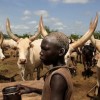
SOUTH SUDAN: Protecting Cattle Saves People
With his bright orange hair, Angelo Waranyang cuts a striking figure as he strides amongst his cattle. His hair colour – dyed with a mixture of cow urine and ash from burnt dung – is symbolic of the close connection that he and the majority of South Sudanese have with their revered animals.
"We Are Facing the Threat of a Social and Health Catastrophe"
The health of families enrolled in Brazil’s “Bolsa Familia” cash transfer program has improved and infant mortality has decreased, reports physician Paulo Buss in this interview.Ecobreves – BRAZIL: Brazilians Oblivious to Rio+20
When questioned in a recent survey about Rio+20, the United Nations Conference on Sustainable Development taking place in 2012, two decades after the historic Earth Summit held in the same city, a mere 11 percent of Brazilians knew what it was.Ecobreves – HONDURAS: The High Cost of Environmental Vulnerability
Honduras devotes around 30 million dollars a year to confronting disasters caused by its environmental vulnerability and assisting their victims.Ecobreves – VENEZUELA: Manatee Born in Captivity
A manatee (Trichechus manatus) that has been living since Oct. 13 at the Bararida Park Zoo in Barquisimeto, in west-central Venezuela, is the third member of this endangered species to be born in captivity in South America.
AFRICA: Gov’ts Fail to Invest in Hungriest, Poorest Regions
For millennia, people have coped with drought in the Horn of Africa, comprised mainly of drylands. Yet today, more than 13 million people there are starving because of political instability, poor government policies and failure to invest in the world's poorest people, say experts here in Changwon.DR CONGO: No Hope for Free and Fair Elections
With six weeks to go before the presidential and parliamentary elections in the Democratic Republic of Congo, civil society organisations say the elections will not be fair, as many doubt the ability of the country’s electoral authorities to ensure transparency.LIBYA: WHAT SHOULD HAVE BEEN DONE?
It is a safe assumption that people in general neither like nor love war, they prefer peace. There are distinguished prizes for peace, and peace people like Gandhi, Luther King., Dalai Lama and Mandela to name a few are revered by everyone. There is nothing similar for those who bomb, kill and rape. In consequence all wars and security and defence policies are legitimated by noble motives, among them the wish to maintain or create peace.Finland to Host Conference for WMD-Free Middle East
After much delay, Finland has been chosen to host a 2012 conference to establish a zone free of weapons of mass destruction (WMDs) in the Middle East. The meeting aims to bring together all Middle Eastern countries, some of which share a long history of disagreement, such as Iran and Israel.THE END OF RECOVERY AND THE START OF A NEW GLOBAL DOWNTURN
It is growing increasingly likely that the world will face renewed risks of instability and slowdown before fully recovering from the so-called Great Recession. This is largely because the fragility and imbalances that have built up over recent years as a result of misguided policies in the US and Europe cannot be easily undone, regardless of the policy pursued today.« Previous Page — Next Page »


The Week with IPS

NEXT STOP - SDGs
Tracking global progress towards a sustainable world
Tracking global progress towards a sustainable world
