Languages
Saturday, November 7, 2026



News and Views from the Global South
Ecobreves – VENEZUELA: National Park Restricts Vehicles
Access of all-terrain four-wheel-drive vehicles is being limited in the Cainama National Park, in southeastern Venezuela, bordering Brazil and part of the Guiana massif.EUROPEAN UNION: IDENTITY CRISIS IN THE SOCIALIST PARTIES
The first good news regarding the economic crisis is arriving from the United States, about certain improvements in the banking sector as well (Goldman Sachs, Citigroup, Morgan Chase, etc). For now, they are but faint signs. But Barack Obama continues to fight on all fronts, with rigour and courage.
Indigenous Wisdom Against Climate Change
Native peoples, with their ancestral links to the land, have learned some useful lessons over the millennia about how to fight and adapt to climate change.
Wanted: A Truly Clean Development Mechanism
The international climate rules that emerge in 2012 should contain a reformulated Clean Development Mechanism, says German expert Lambert Schneider in this Tierramérica interview.Ecobreves – BRAZIL: New National Science Team for Climate Change
Brazil has created its own 300-scientist panel to assess climate change. The team will update the national inventory of greenhouse-effect emissions, which is still based on 1994 data.Ecobreves – ARGENTINA: Eco-Promoters for Polluted River
Argentina's Secretariat for Environment and Sustainable Development signed an agreement with the National University of La Matanza to train community environment promoters for the Matanza-Riachuelo Basin, the country's most polluted, located south of Buenos Aires.Ecobreves – HONDURAS: Forest Fires Claim 17,000 Hectares
In the first three months of this year, forest fires destroyed 17,000 hectares of forest in the southern, northeastern and Atlantic regions of Honduras, say official sources.Ecobreves – MEXICO: School Kids Turn Eco-Monitors
Esteban Carrillo, 12, committed his parents to reducing electricity and water consumption at their home in the state if Mexico, neighboring the capital. Along with 549 children, he was named an ecological monitor for his district.CUBA – CHANGE VS EMBARGO
It's important to remember that before an end of the US embargo of Cuba became even remotely conceivable, certain major international developments had to take place: the profound political shift in Latin America, the moving election of the first black president of the United States (a man, moreover, committed to change in its widest sense), and the financial and economic cataclysm that has shaken the capitalist system to its roots. Without these events, the embargo/blockade of Cuba, decreed 47 years ago, may have continued for who knows how long in its perennial form, condemned by many in international fora, denounced by the Cuban government, suffered through by the Cuban people, and kept in place by successive US administrations that believed it could force political change in Havana.Ecobreves – VENEZUELA: Women Defend Coastal Wetland
Dozens of women from the town of Tacarigua, 80 kilometers from Caracas and located within the boundaries of a 39,000-hectare national park, have begun a project for collecting and recycling garbage.Ecobreves – CUBA: Natural Insecticide Production Gets a Boost
A Havana cooperative, beneficiary of the Global Environment Facility's Small Grants Program, is planning an increase in natural insecticide production in order to supply several Cuban provinces.Ecobreves – CHILE: Delay in Carrying Out Environmental Ruling
Nearly three years after Chile's Supreme Court ordered a business owner in the central region of Valparaíso to restore a native forest that had been replaced by a vineyard, the government's forest agency, CONAF, is conducting an appraisal of the site.Ecobreves – HONDURAS: Renewable Energy Classes
The Honduran government has organized training sessions about the production and use of renewable energy, ahead of implementing a series of energy projects in the country's interior over the next six
Dengue Spreading and Increasingly Lethal
The mosquito-borne disease dengue is becoming more virulent and lethal in South America.
Electronic Garbage Can Produce Marvels
While learning to recycle electronic waste, young Brazilians are acquiring skills and greater awareness about the impacts of material consumption.
Indigenous Peoples Demand Greater Role in Climate Debate
Indigenous organizations and communities want their voices heard in the international negotiations on how to deal with climate change.WORLD MUST KEEP UP PRESSURE ON AFGHAN LAW AGAINST WOMEN
When news broke about the new Shi'ite Personal Status Law in Afghanistan, many were appalled by the fact that it legalises rape within marriage. "Marital Rape Legal in Afghanistan", screamed the headlines, and we all reacted with shock and horror. On closer inspection, however, the law is actually much worse than we had all thought.MEDIA METAMORPHOSIS
Major global depressions, like the current one, always have a domino effect that reaches almost every economic and social activity. The media, however, tend to focus on only a few of its manifestations -those that strike the centres of power- while neglecting the periphery where poverty deepened by the crisis has far more dramatic consequences.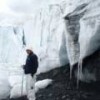
In Peru, Water Isn't For Everyone
The frozen treasure of Peru's glaciers is melting away, leaving the population facing a dry future.
Littering the Cosmos
European scientists are proposing the controlled removal of thousands of dangerous pieces of space debris in the Earth's orbit by sending up robotized missions.Ecobreves – CLIMATE CHANGE: Cold Debate in Bonn
The first of the five special meeting this year towards achieving a new climate change agreement failed to advance in terms of commitments for reducing emissions that cause global warming.« Previous Page — Next Page »





The Week with IPS

NEXT STOP - SDGs
Tracking global progress towards a sustainable world
Tracking global progress towards a sustainable world
