Languages
Tuesday, September 1, 2026



News and Views from the Global South
Active Citizens

Healthy Homes – A Right of Rural Families in Peru
Adopting a “healthy housing” approach is improving the living conditions of rural Peruvian women like Martina Santa Cruz, a 34-year-old farmer who lives with her husband and two children in the village of Sacllo, 2,959 meters above sea level in the Andes highlands municipality of Calca.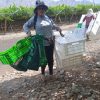
Peru’s Agro-Export Boom Has not Boosted Human Development
Peru’s agro-export industry is growing steadily and reached record levels in 2022. But this has not had a favorable impact on human development in this South American country, where high levels of inequality, poverty, childhood anemia and malnutrition persist, as well as complaints about the poor quality of employment in the sector.
Kenyan Scientist’s Trend-Setting Research into Health Benefits of Snails
Snails and slime are usually followed by the thought ‘EEW!’ from most people … some might even scream at seeing a snail near them. For Dr Paul Kinoti, however, these slimy creatures could earn him international recognition because his research on snails landed his institution, Jomo Kenyatta University of Agriculture and Technology (JKUAT), a Ksh. 127 million (USD 1 million) grant.[related_articles]
Menstrual Health and Hygiene Is Unaffordable for Poor Girls and Women in Latin America
Menstrual hygiene management is elusive for millions of poor women and girls in Latin America, who suffer because their living conditions make it difficult or impossible for them to access resources and services that could make menstruation a simple normal part of life.
Cooperatives in Argentina Help Drive Expansion of Renewable Energy
When the residents of Armstrong, a town of 15,000 in western Argentina, began to meet to discuss a renewable energy project, they agreed that there could be many positive effects and that it was not just a question of doing their bit in the global effort to mitigate climate change.
Women’s Cooperatives Work to Sustain the Social Fabric in Argentina
Nearby is an agroecological garden and a plant nursery, further on there are pens for raising pigs and chickens, and close by, in an old one-story house with a tiled roof, twelve women sew pants and blouses. All of this is happening in a portion of a public park near Buenos Aires, where popular cooperatives are fighting the impact of Argentina's long-drawn-out socioeconomic crisis.
Cuba: Elections Without Choices
The uncertainty that’s the hallmark of a democratic election was absent on 26 March, the day Cubans were summoned to appoint members of the National Assembly of People’s Power, the country’s legislative body. A vote did take place that day – people went to the polls and put a ballot in a box. But was this really an election? Cubans weren’t able to choose their representatives – their only option was to ratify those selected to stand, or abstain.
Andean Indigenous Women’s Knowledge Combats Food Insecurity in Peru
Paulina Locumbe, a 42-year-old peasant farmer who lives in the Andes highlands of southern Peru, learned as a child to harvest and dry crops, one of the ancestral practices with which she combats the food insecurity that affects millions in this Andean country.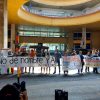
The LGBTIQ+ Community Still Oppressed in Venezuela
The vulnerability and struggles of the LGBTIQ+ community in Venezuela were once again highlighted when the Supreme Court finally annulled the military code statute that punished, with one to three years in prison, members of the military who committed " acts against nature.”
Civil Society a Vital Force for Change Against the Odds
Brave protests against women’s second-class status in Iran; the mass defence of economic rights in the face of a unilateral presidential decision in France; huge mobilisations to resist government plans to weaken the courts in Israel: all these have shown the willingness of people to take public action to stand up for human rights.
Beatriz v. El Salvador Case Could Set Precedent on Abortion in Latin America
An open hearing in the Inter-American Court of Human Rights in the Beatriz v. El Salvador case is raising hopes that this country and other Latin American nations might overturn or at least mitigate the severe laws that criminalize abortion.
BRAC International Signs MoU with Rwanda to Empower People in Extreme Poverty
Last week, BRAC International signed a Memorandum of Understanding (MoU) with the Government of Rwanda under the Ministry of Local Government (MINALOC) to support efforts to empower people in extreme poverty to develop sustainable livelihoods and break the poverty trap long term. This is part of the Government’s broader efforts to eradicate extreme poverty by 2030.
Civic Space – the Bedrock of Democracy – is Scarce & Contested
On 29 and 30 March, the US government, in partnership with Costa Rica, Netherlands, South Korea and Zambia, will co-host the second virtual Summit for Democracy. Several elected leaders and state representatives will come together to highlight achievements in advancing democratic principles.
Digital Gender Gap in Latin America Reflects Discrimination Against Women
The digital gender gap is multifactorial in Latin America and as long as countries fail to address discrimination against women, inequality will be reflected in the digital space, excluding them from access to opportunities and enjoyment of their rights.
Indigenous Conflicts over Land Spread, Fueling Debate in Argentina
In 1994 Argentina recognized in the constitution the ethnic and cultural pre-existence of indigenous peoples. However, enforcement of respect for their rights has fallen short and almost 30 years later the question of land is generating growing conflicts, which sometimes pit native communities against the rest of society.
Venezuela Drafts Legal Stranglehold on NGOs
The Venezuelan parliament, in the hands of the ruling party, is moving towards passing a law to control non-governmental organizations (NGOs) so that, in practice, they could not exist independently.
Russia and Ukraine: Civil Society Repression and Response
Over the year since the start of Russia’s war on Ukraine, on one side of the border civil society has shown itself to be a vital part of the effort to save lives and protect rights – but on the other, it’s been repressed more ruthlessly than ever.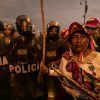
Privilege and Centralism in Lima Goad Protesters in Peru
The current political and social upheaval in Peru is not a temporary problem, but has to do with deeply-rooted inequality and social hierarchies, according to historian José Carlos Agüero.
NGOs Campaign for a Torture-Free UN Trade Treaty
Hinting at “Western hypocrisy”, a senior UN official once told a group of reporters, perhaps half-jokingly: “When you go on one of those sight-seeing tours in Europe, they will show you their palaces and castles-- but never their medieval prisons or torture chambers.”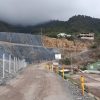
Pact Protecting Environmentalists Suffers Threats in Mexico
In the municipality of Papantla, in the southeastern Mexican state of Veracruz, the non-governmental Regional Coordinator of Solidarity Action in Defense of the Huasteca-Totonacapan Territory (Corason) works with local communities on empowering organizations, advocacy capacity in policies and litigation strategies.
Management of Protected Areas Is a Latin American Priority for 2023
The environmental priority for South America in 2023 can be summed up in the management of its terrestrial and marine protected areas, together with the challenges of the extractivist economy and the transition to a green economy with priority attention to the most vulnerable populations.« Previous Page — Next Page »


Active citizens are committed to social change because they know that it is achievable. Yet, for most Africans, a shift towards elected government in recent decades has yet to translate into an effective voice in decision-making. Now, the Strengthening Citizen Demand for Good Governance using evidence based approaches - funded by DFID's Governance and Transparency Fund - seeks to raise their voices. Through its partnership with the Overseas Development Institute (ODI) and CIVICUS,, IPS reporters across the continent will seek to define the extent and limits of state capability, government accountability and the responsiveness of leaders to the needs of citizens.

The Week with IPS

NEXT STOP - SDGs
Tracking global progress towards a sustainable world
Tracking global progress towards a sustainable world
