Languages
Monday, September 28, 2026



News and Views from the Global South
Civil Society

Trump’s First 100 Days Portend Long-Lasting Damage to Press Freedom
Press freedom is no longer a given in the United States 100 days into President Donald Trump’s second term as journalists and newsrooms face mounting pressures that threaten their ability to report freely and the public’s right to know.
Indispensable—Native Hawaiian Elder Says of Indigenous Ocean Management Systems
Indigenous people play a vital role in ocean protection due to their deep-rooted connection to the marine environment and their traditional knowledge of sustainable resource management. They often possess centuries-old practices and stewardship ethics that prioritize ecological balance and community well-being.
Sights Set on Highest Ambition as World Rows Through Toughest Ocean Crisis
Participants from over 100 countries will leave the 10th Our Ocean Conference in Busan, the Republic of Korea, with stark reminders that with sea levels rising dangerously, coastal regions and low-lying areas globally, particularly densely populated areas, are threatened.
Mexico Bans GM Corn Cultivation in Constitutional Reform: Action Follows Trade Ruling That Ignored Evidence of Genetic Contamination
On March 17, Mexican President Claudia Scheinbaum signed into law a constitutional reform banning the cultivation of genetically modified (GM) corn. The action followed a December ruling by a trade tribunal, under the U.S.-Mexico-Canada (USMCA) trade agreement, in favor of a U.S. complaint that Mexico's 2023 presidential decree, with broader restrictions on the consumption of GM corn, constituted an unfair trade practice by prohibiting the use of GM corn in tortillas.
Tanzania’s Women Miners Digging for Equality in a Male-Dominated Industry
Under the scorching Tanzanian sun, Neema Mushi wipes sweat from her dust-covered face and swings her pickaxe into the earth. The impact sends dust swirling into the air, coating her tattered clothes. She barely notices. For the past eight years, this has been her life—digging, sifting, sieving, and hoping to strike gold in the male-dominated pits of Geita. It is a grueling task riddled with obstacles.
The Disappeared: Mexico’s Industrial-Scale Human Rights Crisis
They found shoes, hundreds of them, scattered across the dirt floor of an extermination camp in Jalisco state. These abandoned shoes, once belonging to someone’s child, parent or spouse, stand as silent witnesses to Mexico’s deepest national trauma. Alongside charred human remains and makeshift crematoria meant to erase all evidence of humanity, they tell the story of a crisis that has reached industrial-scale proportions.
Global Community in Busan to Define Sustainable Future for Life Under Water
“As the son of a haenyeo, a traditional Korean female diver, I grew up by the sea, often watching the ocean with my mother. Captivated by the beauty and majesty of the sea, I chose to study marine science and have devoted my entire career to the ocean,” said Do-hyung Kang, Minister of the Ministry of Oceans and Fisheries of the Republic of Korea.
Korea’s Troubled Waters: Traditional Women Divers Protecting an Ocean in Crisis
Ahead of the 10th Our Ocean Conference, with the theme "Our Ocean, Our Action," comes a global call to protect the world's oceans.
Kashmir Reels After Pahalgam Attack, Fear Long Term Impacts on Livelihoods
Abdul Majeed Mir strolls leisurely among the purple crocus flower rows in Pampore's saffron fields as the morning mist hovers low over them. His family has been growing this valuable spice, called "red gold," for many generations, but now his hands go through the harvest mechanically. There is a noticeable lack of the typical commotion of tourists haggling over saffron packets.
‘Noboa Did Not Receive a Blank Cheque: He Will Have to Show Tangible Results’
CIVICUS discusses Ecuador’s presidential election with Jorge Tapia de los Reyes, Coordinator of the Democracy and Politics Department and the Political Funding Observatory of the Citizenship and Development Foundation (FCD). FCD is an Ecuadorian civil society organisation that promotes participation, citizen monitoring and open government.
African Countries Still Underfunding Health by as Much as 50 Percent
The majority of African countries are yet to commit 15 percent of their GDP to funding the health sector, despite the growing disease burden weighing down the continent and two decades after the coming into force of the Abuja declaration on health sector funding.
Slave Trade: Gorée Island and the ‘Fragility of Freedom’
Gorée Island, off the coast of Dakar, is a somber reminder of the transatlantic slave trade. Listed as a UNESCO World Heritage Site, it embodies both the duty to remember and the challenges of passing on a painful past.
Children at the Center
Creativity and innovation are essential to finding extraordinary solutions to abnormal problems. Now more than ever we must continue finding creative solutions to protect the world’s most vulnerable children from the excruciating pain of war, dispossession and destruction of their last hope: a quality education. The current humanitarian and development funding levels are falling. However, with creativity we can prevent further deterioration and instead turn towards an upward direction.
Shaken and Strained: Myanmar’s Earthquake Adding to the Misery of 4 Years of Conflict
As I walked through the streets of Sagaing and Mandalay, the scenes unfolding in the wake of the 7.7 earthquake were hard to comprehend. Tall buildings and hundreds of homes are now lying in rubble. Of those that are still standing, many are lurching at dangerous angles, defying gravity for now, but could collapse at any moment.
Smallholder Farmers Are Not ‘Beneficiaries’, but the ‘Co-Creators of Change’
Eliud Rugut comes from generations of farmers, yet his family expected him to move out of their home and pursue another career.
Standing Firm: Civil Society at the Forefront of the Climate Resistance
The recent US court case that ordered three Greenpeace organisations to pay damages of over US$660 million to an oil and gas company was a stunning blow against civil society’s efforts to stop runaway climate change and environmental degradation. The verdict, following a trial independent witnesses assessed to be grossly unfair, came in reaction to Indigenous-led anti-pipeline protests. It’s vital for any prospects of tackling the climate crisis that Greenpeace’s appeal succeeds, because without civil society pressure, there’s simply no hope of governments and corporations taking the action required.
Genocide Prevention & Responsibility to Protect
April marks Genocide Prevention and Awareness Month, a time to reflect on the history, causes and victims of past genocides and to mobilize the necessary resolve to confront risks facing populations around the world today who face the threat of genocide and other mass atrocity crimes not for anything they have done, but for who they are.
How to Ensure Election of the First Woman Secretary-General: A Daunting Challenge Before the United Nations
On 21 March 2025, the 69th session of the Commission for the Status of Women, popularly referred to as the CSW69, concluded its two-week-long annual meet which commenced on 10 March.
CGIAR Gender Accelerator: A Tool to Advance Gender Equality Research in Agri-Food Systems
To advance the participation of women, the youth, and minority communities in the agricultural sector, measures must be taken to recognize and break down the barriers that hold them back. Experts in the agricultural sector agree that even as they constitute a significant percentage of the agricultural workforce, women face persistent challenges. The picture that emerges is a lack of due recognition of their presence and their challenges, such as limited access to resources and knowledge.
Want To Fix the World, Ubuntu (Humanity to Others) Can Help
The world needs an urgent fix and humanity could just be it.
Reflections on CGIAR’s Week-Long Discussions on Food System Science
More than 13,600 participants from around the world registered for the inaugural CGIAR Science Week at the UN Complex, Nairobi, April 7-12, 2025. Dr. Ismahane Elouafi, the organization’s Executive Managing Director, said, “This is a testament that people are thirsty for science and for good news.”« Previous Page — Next Page »


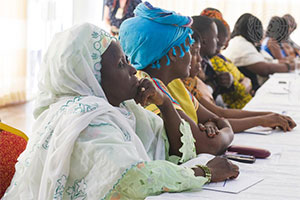 Representatives of Civil Society, Sierra Leone. Credit: UN Photo/Eskinder Debebe
Civil society faces mounting threats worldwide, even as it remains essential for democratic accountability, especially in countries struggling with economic instability and social inequality. However, at the same time, nations with weak democratic governance structures also systemically suppress the power of civil society. Human rights activists across the Global South frequently challenge issues such as political persecution and gender oppression, but in return face state-sanctioned punishment for their advocacy. Imprisonment and exile are common mechanisms of punishment that seek to erode the strength of civil society. The 2026 World Press Freedom Index has reached its lowest level in 25 years, with more than half of the world’s countries now falling into the "difficult" or “very serious” category for press freedom. IPS seeks to highlight the work of civil society across the Global South as well as the challenges that they face.
Updated by Yilan Batista and Shuli Wong August 2026

The Week with IPS

NEXT STOP - SDGs
Tracking global progress towards a sustainable world
Tracking global progress towards a sustainable world
