Languages
Saturday, October 3, 2026



News and Views from the Global South
Civil Society

‘We Will Not Go Quietly Into the Rising Sea,’ Tuvalu Tells International Court of Justice
Rising sea level caused by greenhouse gas emission-fueled climate change is threatening existence in coastal communities and island nations. At the International Court of Justice (ICJ), on Thursday, December 12, 2024, small island states, including Tuvalu and a Pacific-based fisheries agency detailed their ongoing existential threats caused by the climate change-induced sea level rise and impacts on fishery-based livelihood.
Nobel Peace Prize Forum Breaks Down Nuclear Risks and Solutions
The existential threat that nuclear weapons present remains as pertinent as ever, even when they have not been deployed in war for nearly 80 years. As some countries seek out nuclear weapons or to upgrade and modernize their existing warheads, global voices in nuclear politics and disarmament warn of the potential risk of a new nuclear arms race amid the weakening of nuclear treaties that prohibit the proliferation and use of nuclear arms.
COP29: Advancing work for Climate Finance and for Climate-Adapted Agri-Food Systems
Frustrations over the pace of climate action and the size of the finance target agreed in Baku are valid from the perspective of low-income countries, especially Small-Island Developing States (SIDS). It is also important to recognize that there has been real progress in some countries at the agri-food-nutrition-climate-water-nature-livelihoods intersection, and this seems to be particularly the case in some countries in the Alliance of Champions for Food Systems Transformation (ACF).
Breaking Latin America’s Cycle of Low Growth and Violence
Violent crime and insecurity have a disproportionate impact on Latin America and the Caribbean, with severe consequences for socioeconomic development.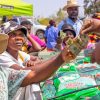
In Zimbabwe, Women Are Leading the Battle Against Climate Change
When Susan Chinyengetere started to focus on farming in her home village in south-eastern Zimbabwe, she wondered if she could earn a living and raise her children. With climate catastrophes ravaging the country, her hesitation on rain-fed agriculture worsened. But two years later, the 32-year-old mother of two from Mafaure village in Masvingo, about 295 km from the capital Harare, is now a champion in farming.
This Year Saw Most of the World Repressed – but in Civil Society there is Hope
Today is International Human Rights Day, Normally, it should be an occasion to celebrate the work of those who strive to create peaceful, just, equal and sustainable societies. But conditions for human rights defenders and their organisations to operate freely are extremely challenging around the world.
Central American Countries Backtrack on Metal Mining Ban
Metal mining has a renewed momentum in Central America, encouraged by populist rulers who, in order to soften environmental damage, claim they can develop it in harmony with nature, which is hard to believe
Pacific Community Calls Out Urgency of Climate Loss and Damage Finance for Frontline Island Nations
Advancing development of the new Climate Loss and Damage Fund was a key call by Pacific Island nations at the COP29 United Nations Climate Change Conference being held in Azerbaijan in November. For Pacific Island Countries and Territories, the fund represents a critical step towards addressing what they consider a gross climate injustice: despite contributing less than 0.03 percent of global greenhouse gas (GHG) emissions, they bear the brunt of climate change's devastating impacts.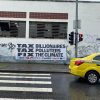
South Africa’s G20 Presidency: A Call for Transformative Leadership in a Fractured World
South Africa’s G20 Presidency begun in December, with only 12% of SDG targets on track and significant backsliding on more than 30%. As we write this today, there is an urgent need for a paradigm shift and practical solutions for a progressive, people-centred, and development-driven agenda in a fractured global landscape that needs collective healing.
Bold Donor Action Urgently Needed to Give Ethiopia’s Crisis-Impacted Children a Lifeline
Ethiopia’s education system is buckling under the weight of complex, competing challenges. The aftermath of a deadly war in the north, ongoing violence, climate-induced disasters, and widespread forced displacements have converged to push as many as 9 million children out of school. With close to 18 percent of schools in the country destroyed or damaged and persisting intercommunal conflicts in various regions, there are fears that many might never find their way back to school.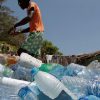
Plastics, Power, and Politics: The High-Stakes Fight for a Global Treaty
As the fifth round of negotiations of the Intergovernmental Negotiating Committee (INC) for a global plastics treaty concluded in Busan, South Korea (25 November-December 1 2024), the meeting underscored both the complexities and the promises of multilateralism. What we saw in Busan was indicative of other environmental treatymaking spaces, including ones on climate and biodiversity.
Zambia: Civil Society Fighting New Legislative Threats and Restrictive NGO Bills
Over the past few years, new “tools of control” affecting the work of civil society organisations have multiplied, often imposing forms of “bureaucratic criminalisation” and “administrative harassment”. In particular, more and more restrictive and demanding laws are hurting civil society organisations’s capacity to operate across the globe.
UNCCD COP16 Raises Hopes for Ambitious Global Land Action
While many delegates at the 16th meeting of the Conference of the Parties to the UN Convention to Combat Desertification (UNCCD COP16) hope that this could be the convention’s own Paris moment—referring to the historic Paris agreement inked by UNFCCC signatories—however, this hedges heavily on the UN parties’ seriousness to combat drought, desertification and land degradation.
COP29 Outcomes – A Call to Action for the World’s Most Vulnerable Nations
The conclusion of the 29th Conference of Parties (COP29) brings with it a blend of urgency, frustration, and a glimmer of hope for the Least Developed Countries (LDCs), Landlocked Developing Countries (LLDCs), and Small Island Developing States (SIDS).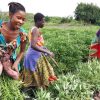
How an App Transformed Farming for Rural Tanzanian Women
In the sun-scorched soils of Moshi, where every drop of rain counts, two female farmers have defied the odds through technology. Mwajuma Rashid Njau and Mumii Rajab, once locked in a daily struggle to survive, have found a mobile phone their best ally.
Courage, not Compromise? A Rallying Cry that Failed a Deadlocked COP Meeting
Courage and not compromise. That was the motto desperately launched by members of the civil society in the twilight of the negotiations of the Plastic Pollution Treaty in Busan, South Korea last week.
‘Quilombola Communities Live in Fear Because the Laws That Are Supposed to Protect Them Are Ignored’
CIVICUS discusses threats to the security, rights and ancestral lands of Brazil’s quilombola communities with Wellington Gabriel de Jesus dos Santos, leader and activist of the Pitanga dos Palmares Quilombola community in Bahia state.

COP29 Falls Short on Finance
COP29, the latest annual climate summit, had one job: to strike a deal to provide the money needed to respond to climate change. It failed. This was the first climate summit dedicated to finance. Global south countries estimate they need a combined US$1.3 trillion a year to transition to low-carbon economies and adapt to the impacts of climate change. But the last-minute offer made by global north states was for only US$300 billion a year.
Confronting the Global Crisis of Land Degradation
A major new scientific report was launched December 1, a day ahead of the opening of the 16th meeting of the Conference of the Parties to the UN Convention to Combat Desertification (UNCCD COP16).
Youth-Led Landmark Climate Change Case Starts in The Hague
The intersection of law, diplomacy, and science will come under the spotlight at the International Court of Justice hearings starting today (Monday, December 2, 2024) in The Hague as the court starts its deliberations into the obligations under international law of UN member states to protect people and ecosystems from climate change.
Lahore’s Smog: With the Sun Out, the Government Lifts Restrictions
Atif Manzoor, 45, the owner of the renowned blue pottery business in Multan, had every reason to feel cheerful last week when the sun finally came out. For a good three weeks, the city of Sufi shrines had been shrouded in an envelope of thick smog.« Previous Page — Next Page »


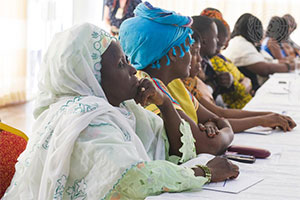 Representatives of Civil Society, Sierra Leone. Credit: UN Photo/Eskinder Debebe
Civil society faces mounting threats worldwide, even as it remains essential for democratic accountability, especially in countries struggling with economic instability and social inequality. However, at the same time, nations with weak democratic governance structures also systemically suppress the power of civil society. Human rights activists across the Global South frequently challenge issues such as political persecution and gender oppression, but in return face state-sanctioned punishment for their advocacy. Imprisonment and exile are common mechanisms of punishment that seek to erode the strength of civil society. The 2026 World Press Freedom Index has reached its lowest level in 25 years, with more than half of the world’s countries now falling into the "difficult" or “very serious” category for press freedom. IPS seeks to highlight the work of civil society across the Global South as well as the challenges that they face.
Updated by Yilan Batista and Shuli Wong August 2026

The Week with IPS

NEXT STOP - SDGs
Tracking global progress towards a sustainable world
Tracking global progress towards a sustainable world
