
Saturday, October 3, 2026



News and Views from the Global South
Civil Society
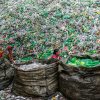
Bangladesh Bans Polythene Bags Again, Sparking Hopes for the Eco-Friendly ‘Sonali Bag’
After Bangladesh’s interim government banned polyethene bags, a new sense of hope has emerged for the Sonali bag—a jute-based, eco-friendly alternative developed in 2017 by Bangladeshi scientist Dr. Mubarak Ahmed Khan. Sonali bag, or the golden bag, is named after the golden fiber of jute from which it is made.
Now it’s Officially the Israeli-American Genocide in Gaza
As of last week, in the wake of the Nov. 21 issuance by the International Criminal Court (ICC) of arrest warrants for Israeli Prime Minister Benjamin Netanyahu and former IDF Defense chief Yoav Gallant, all eyes turned to Washington to see the what the response of Israel’s main backer would be.
Explainer: Why COP29 Baku Outcome is a Bad Deal for Poor, Vulnerable Nations
The culmination of bitter, difficult, and challenging climate negotiations concluded with an announcement from the COP29 Presidency of Azerbaijan of the "agreement of the Baku Finance Goal—a new commitment to channel USD1.3 trillion of climate finance to the developing world each year by 2035." This is on top of the USD 300 billion that the developed world is to extend to developing nations annually by 2035.
Expand choices for Women, Prevent New HIV Infections in Africa
In Uganda, women and girls are more affected by HIV. Out of 1.4 million people living with the disease, 860 000 are women and girls. According to UNAIDS, every week, 4,000 adolescent girls and young women aged 15–24 years became infected with HIV globally in 2023, with 3,100 of these infections occurring in sub-Saharan Africa.
60 Percent of Femicides Are at the Hands of a Partner or Family
Every 10 minutes, one woman or girl is killed at the hands of their partner or other family member. This is only scratching the surface on how femicide, one of the most extreme forms of violence against women, persists at high levels around the world. UN-Women and the UN Office of Drugs and Crime (UNODC) released a joint report, Femicides in 2023: Global Estimates of Intimate Partner/Family Member Femicides, on November 25, the International Day for the Elimination of Violence against Women.
Ensuring Violence-Free Homes for Sri Lankan Women
A woman’s right to live free from violence is upheld by international agreements like the 1979 Convention on the Elimination of All Forms of Discrimination against Women and the 1993 UN Declaration on the Elimination of Violence against Women.
It’s About our Entire Planet: The Pandemic of Violence Against Women
The 16 Days of Activism to end gender-based violence, started with seeking to eliminate violence against women (VAW). This year’s theme highlights the reality that violence against women and girls is of pandemic proportions. The figures are galling.
Can Pay, Won’t Pay—COP29 Outcome Far from Promised Historic Deal of a Lifetime
They say it is taboo to talk about money. But this is exactly what developing countries came for: to haggle and push for the climate finance deal of a lifetime, as the climate crisis is, for them, a matter of life and death. Wealthy nations also came for their own deal of a lifetime—to hoist the climate finance burden on the private sector as they take the bare minimum financial responsibility.
Insights From Negotiator into How COPs Move Needle Towards Healthy, Liveable Planet
Every year, the Conference of the Parties creates a global milestone for the climate movement, setting new standards and advancing action towards a net-zero planet to sustain all life on earth. COPs provide a platform for the global community to agree on what it would take to restore planet Earth and the contributions that all signatories to the Paris Agreement should make.
‘AI-powered Weapons Depersonalise the Violence, Making It Easier for the Military to Approve More Destruction’
CIVICUS discusses the dangers arising from military uses of artificial intelligence (AI) with Sophia Goodfriend, Post-Doctoral Fellow at Harvard Kennedy School’s Middle East Initiative.

Climate Change in Azerbaijan is Putting Women at Increased Risk of Gender-Based Violence
Climate change exacerbates existing gender inequalities and gender-based violence. At COP29 in Azerbaijan, governments have been urged to prioritize gender-responsive climate policies that address the specific needs of women and girls, and serious concerns have been raised about backtracking on women’s rights during these crucial negotiations on climate action.
Stand Up, Speak Out: A Global Call to Men on the 25th Anniversary of International Day for the Elimination of Violence Against Women
In 1960, the Rafael Trujillo regime in the Dominican Republic assassinated the Mirabal sisters— renowned and respected for their courage and activism against dictatorship. To give their senseless violent death some meaning and to preserve their legacy, in 1999, the United Nations inaugurated November 25—the day of their assassination—as the International Day for the Elimination of Violence Against Women (EVAW).
UN’s OCHA Calls to Correct the Imbalance in Climate Finance Allocation
As climate-induced disasters continue to wreak havoc worldwide, the Office for the Coordination of Humanitarian Affairs (OCHA), a UN body specializing in emergency response, has issued a clarion call for an ambitious and fair global climate finance goal at COP29. Greg Puley, Head of the Climate Team at OCHA, highlighted the pressing need for enhanced disaster risk reduction and climate resilience measures, particularly in vulnerable and conflict-affected regions.
Healing Minds, Empowering Women: Ghana’s Climate Change Battle
As climate change wreaks havoc across the globe, its effects are most acutely felt by those living in vulnerable coastal and rural communities.
Breaking Cycle of Violence to Save Mothers & Children: Why Ending Gender-Based Violence is Essential for Global Health
Each year, millions of women and children around the world die from preventable causes. Maternal, newborn, and child health (MNCH) is a shared global priority, yet we often overlook one of its most pressing—and preventable—barriers: violence against women.
Brazil Vows to Make COP30 a Catalyst for Climate Action and Biodiversity Celebration
As Brazil gears up to host COP30 in Belém next year, Moisés Savian, the country's Secretary of Land Governance, Territorial and Socio Environmental Development, outlined the event's significance in showcasing Brazil's environmental policies and fostering global collaboration.

It’s a Deal—Wealthy Nations Pledge Not to Build New Unabated Coal-Power Plants
Of all fossil fuels, coal has had the most serious and long-term effects on global warming. When burnt, coal releases more carbon dioxide than oil and gas, producing an estimated 39 percent of the global carbon dioxide emissions. Yet, coal is still the number one energy source, providing nearly 40 percent of the world’s electricity.

COP29 Focus On Climate Migration as Hotter Planet Pushes Millions Out of Homes
Migration is growing as the planet gets even hotter. Climate change is fuelling a migration crisis and millions of people in vulnerable nations are continually being uprooted from their homes. The climate and migration nexus are undeniable and the global community has turned to the Baku climate talks for urgent and sustainable solutions.
Women in Africa are Better Off Today but Gender Equality Remains Out of Reach
Today, women in Africa generally have better access to education, healthcare, and opportunities than ever before. Yet, as they step into the world, a gap between them and their male counterparts persists, a reminder that gender equality remains out of reach.
One in Three Women Experiences Gender-based Violence
Every year, the 16 Days of Activism against Gender-Based Violence (GBV) campaign led by UN Women serves as a powerful reminder of the widespread violence women and girls face worldwide.
Dazzling Wildlife Portraits at COP29: A Conversation with Photographer Brad Wilson
As delegates at COP29 stroll through the venue in Baku, Azerbaijan, many pause to marvel at the stunning portraits of animals and birds adorning the pavilion walls. These 16 captivating images, showcasing Azerbaijan's rich biodiversity, are more than just art—they’re a call to action.
« Previous Page — Next Page »


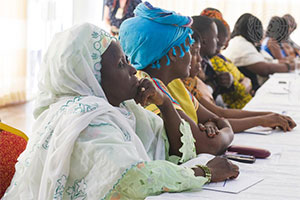 Representatives of Civil Society, Sierra Leone. Credit: UN Photo/Eskinder Debebe
Civil society faces mounting threats worldwide, even as it remains essential for democratic accountability, especially in countries struggling with economic instability and social inequality. However, at the same time, nations with weak democratic governance structures also systemically suppress the power of civil society. Human rights activists across the Global South frequently challenge issues such as political persecution and gender oppression, but in return face state-sanctioned punishment for their advocacy. Imprisonment and exile are common mechanisms of punishment that seek to erode the strength of civil society. The 2026 World Press Freedom Index has reached its lowest level in 25 years, with more than half of the world’s countries now falling into the "difficult" or “very serious” category for press freedom. IPS seeks to highlight the work of civil society across the Global South as well as the challenges that they face.
Updated by Yilan Batista and Shuli Wong August 2026

The Week with IPS

Tracking global progress towards a sustainable world
