Languages
Sunday, November 29, 2026



News and Views from the Global South
Civil Society
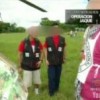
COLOMBIA: Video Raises Numerous Questions About Rescue Mission
"It is a serious matter that members of the armed forces clandestinely leaked news without coordination with their superiors," says a presidential communiqué issued in Colombia after a local TV station broadcast a video on the operation in which Ingrid Betancourt and 14 other hostages held by the FARC guerrillas were rescued last month.EGYPT: Bashir Finds Strong Support
In its first ever move against a head of state, the International Criminal Court (ICC) prepared last month to indict Sudanese President Omar al-Bashir for war crimes allegedly committed in Darfur. Since then, most Arab and African leaders have condemned the move, which some local commentators see as politically motivated.
HEALTH: Time To Base Public Policy On Rights
Preaching abstinence to the young has not worked, nor has sex work been eradicated. Experts gathered here for the 17th International AIDS Conference say it is time to put public policies under the microscope and see why they have failed.HEALTH: Not Enough AIDS Funds and Not Always Well Spent
Developing countries are in need of large sums of money to fight diseases like HIV/AIDS, but international aid will not entirely cover their needs.
Q&A: “Policy Incoherence” Frustrates Funding for Gender Equity
Inequality between men and women "is not always linked to poverty. We must not postpone action until we are rich and happy, because we may get rich without achieving gender equality," Roberto Bissio, coordinator of the international network Social Watch, told IPS.MALAYSIA: Make or Break Election for Ibrahim, Reforms
Undaunted by serious new charges of sodomy, which he says is a frame-up, opposition icon Anwar Ibrahim is making a bid to return to parliament in a by-election that he calls the final battle for a "New Malaysia" sans racial discrimination.POLITICS-BANGLADESH: Truth Commission Flawed Say Critics
As President Iajuddin Ahmed’s newly formed Truth and Accountability Commission became functional this week, it ran into criticism from experts as conceptually flawed.HEALTH: March Sets Tone For AIDS Conference
The rain gods failed to dampen spirits of activists gathered at the old city centre of Zocalo to protest discrimination against those with the HIV virus. Hundreds of activists dressed in bright tribal costumes, women dressed as skeletons and one gay man wearing tights assembled ahead of the six-day XVII International AIDS conference, Aug. 3 to 8.ENVIRONMENT: Tierramerica Centre Born in Heart of Amazon Jungle
The Tierramérica International Centre for Sustainable Development and Environmental Defence held its founding assembly Thursday in Manaus, a city in the heart of the Brazilian Amazon, during a seminar on the world’s big environmental challenges.
Q&A: Nuclear Arms Are No Longer "Necessary Evils"
As citizens of Hiroshima and Nagasaki are painfully reminded of the horrors of atomic bombings that devastated the two Japanese cities in August 1945, one of the country's most influential peace organisations is intensifying its longstanding efforts for nuclear disarmament.HEALTH: People Living with HIV Lead the Fight for Life
Anuar Luna was diagnosed with HIV 17 years ago. "I had to overcome feelings of guilt, fear and shame before I became a leader in the HIV-positive community," she said Thursday at the opening of Living 2008: The Positive Leadership Summit, in the Mexican capital.BOOKS-US: A Path Out of the Wilderness
Helena Cobban's new book, "Re-Engage! America and the World After Bush", is not aimed at a target audience of officials, policy wonks and Washington elite think-tank types. So much is clear from a tagline running across the bottom of the cover: "An informed citizen's guide."MALAYSIA: Rights Body Faces Downgrade by UN
The Malaysian Human Rights Commission or ‘Suhakam’ risks a downgrade by the United Nations for failing to proactively defend human rights, combat an alarming rise in rights abuse of students, minorities and indigenous people.
NORWAY: Oil Fund Finds Ethical Success
Norway's 'oil fund' has risen to become the second largest fund in the world despite housing an ethical investments council which has kicked out major companies such as Wal-Mart, Lockheed Martin and Boeing.
DEVELOPMENT-PAKISTAN: Major MDG Initiative Winds Down
On Thursday, Mohammad Ibrahim loses his job at the United Nations-partnered National Commission for Human Development (NCHD) as part of ‘downsizing’ that will see 22,404 employees (including literacy coordinators and healthcare programme staff) sacked.HEALTH-US: AIDS Plan Stronger But Still Flawed, Groups Say
HIV/AIDS activists Wednesday hailed President George W. Bush's reauthorisation of the President's Emergency Plan for AIDS Relief (PEPFAR) to 48 billion dollars for fiscal years 2009 to 2013 as a major step in the global fight against AIDS, tuberculosis and malaria.CENTRAL AMERICA: Backsliding on Human Rights
Central America is backsliding badly on human rights issues, and social unrest could flare up into civil wars like those experienced in the last decades of the 20th century, according to a new report on Human Rights and Conflicts in Central America 2007-2008.CAMBODIA: Polls Were Fair – EU Observers
An attempt by Cambodia’s four main opposition parties to reject the result of national elections, in which the ruling Cambodian People’s Party (CPP) was returned in a landslide, has met with little support from local and international organisations monitoring the poll.LATIN AMERICA: AIDS Threat Still Looming
The HIV/AIDS epidemic remains stable in Latin America and the Caribbean, mainly affecting high-risk groups like gay men and sex workers, according to the UNAIDS report for 2008, released Tuesday.COLOMBIA: Indigenous Groups in Danger of Disappearing
The Permanent People’s Tribunal warned in its final statement on Colombia of "the imminent danger of physical and cultural extinction faced by 28 indigenous groups," adding that 18 of the communities have less than 100 members, "and are suspended between life and death."
LATIN AMERICA: Ingenuity at the Service of Sustainable Business
A company will extract silver from the same contaminants it proposes to clean up; a cooperative of the formerly unemployed will export designer clothing; some small farmers are planting new varieties of manioc that double the yield with fewer agro-toxins; others are linking agriculture in the Amazon with protection of the forest.« Previous Page — Next Page »


 Representatives of Civil Society, Sierra Leone. Credit: UN Photo/Eskinder Debebe
Civil society faces mounting threats worldwide, even as it remains essential for democratic accountability, especially in countries struggling with economic instability and social inequality. However, at the same time, nations with weak democratic governance structures also systemically suppress the power of civil society. Human rights activists across the Global South frequently challenge issues such as political persecution and gender oppression, but in return face state-sanctioned punishment for their advocacy. Imprisonment and exile are common mechanisms of punishment that seek to erode the strength of civil society. The 2026 World Press Freedom Index has reached its lowest level in 25 years, with more than half of the world’s countries now falling into the "difficult" or “very serious” category for press freedom. IPS seeks to highlight the work of civil society across the Global South as well as the challenges that they face.
Updated by Yilan Batista and Shuli Wong August 2026

The Week with IPS

NEXT STOP - SDGs
Tracking global progress towards a sustainable world
