Languages
Wednesday, November 11, 2026



News and Views from the Global South
Civil Society

Towards an Equal Future in Parliaments
In elections last October in Georgia, women’s share of seats in parliament went up by nearly seven percent, following the enforcement of a 25 percent quota for women candidates.
Weaponizing Science in Global Food Policy
In July, the United Nations will convene “Science Days”, a high-profile event in preparation for the UN Food Systems Summit later this year. Over the course of two days, the world will be treated to a parade of Zoom sessions aimed at “highlighting the centrality of science, technology and innovation for food systems transformation.”
Water Harvesting Strengthens Food Security in Central America
At the school in El Guarumal, a remote village in eastern El Salvador, the children no longer have to walk several kilometers along winding paths to fetch water from wells; they now "harvest" it from the rain that falls on the roofs of their classrooms.
Maldives’ UN General Assembly Presidency Renews Hope for Small Island Developing States
Earlier this month, Abdulla Shahid, the Maldives’ foreign minister, was elected President of the 76th Session of the United Nations General Assembly (UNGA), which commences in September.
From Climate Change to Covid, Are We Ready to Deal with Disasters?
In the last 20 years, disasters affected over 4 billion people. At global level we witness on average one sweeping disaster a day, the majority of which are floods and storms. From the Covid-19 pandemic to climate change, calamities are taking new shapes and sizes, infiltrating every dimension of society. From the emotional to the political, how do we deal with disasters? How can we create a whole-of-society approach to disaster risk reduction?
Nigeria’s Twitter Ban Is Part of a Larger Attack on Civil Society
Four years ago, Omoregie* and his friends were arrested without cause and taken into custody. When they got to the station, Omoregie watched as the police began to beat his friends. Afraid, he began to discreetly tweet about the attacks as they took place.
Time to End Generational Injustice with a ‘Global Blue New Deal’ to Protect Oceans
Increasingly, youth are rising up to declare that they've had enough of the cyclical exploitation of the environment that jeopardizes their own future.
‘Let’s Talk About Sex’ Discussion Highlights Risks to Women
Every two minutes, a girl or woman dies from pregnancy or childbirth-related complications, including unsafe abortions. Every year, around 12 million girls are married while in their childhoods. An additional 10 million are now at risk of child marriage due to the Covid-19 pandemic.
From Non-aligned to One Aligned
June 4, 2021 marks 30 years since the killings of an undisclosed number of Chinese protestors at Beijing’s Tiananmen Square. For many years, the Chinese government and its ruling Chinese Communist Party (CCP), with characteristic understatement, called it the ‘June Fourth incident’.
Sowing Water by Restoring Ancient Ditches in the Peruvian Highlands
In the highlands near the capital of Peru, more than 3,000 metres above sea level, ageold water recovery techniques are being used to improve access to water for 1,400 families, for household consumption and for crops and livestock.
People Power: Why Mobilisations Matter Even in a Pandemic
It has been one year since the police murder of George Floyd, an outrage that resonated around the world. The killing forced people to the streets, in the USA and on every inhabited continent, to demand respect for Black lives and Black rights, proving that protest was essential even during the pandemic.
– Mining giant Rio Tinto Face Environmental, Human Rights Complaint in Papua New Guinea –
On the occasion of World Environment Day, 5 June 2021, drawing from IPS’s bank of features and opinion editorials published this year, we are re-publishing one article a day, for the next two weeks. The original article was published on January 4 2021

CORRECTED VERSION: Struggle for the Future of Food
Producers and consumers seem helpless as food all over the world comes under fast growing corporate control. Such changes have also been worsening environmental collapse, social dislocation and the human condition.
To Effectively Combat Climate Change, Listen and Act on Ideas from the Youth
Recently, I participated in Kids Climate Summit 2021, a virtual event that gave younger students an opportunity to take a stance on climate change, express their concerns, and learn about global climate and the actions we all can take to mitigate climate change.
Global Austerity Alert: Looming Budget Cuts in 2021-25 and Alternatives
Last week Ministers of Finance met virtually at the Spring Meetings of the International Monetary Fund (IMF) and the World Bank to discuss policies to tackle the pandemic and socio-economic recovery.
Studying Marine Life’s Brief Break from Human Noise
Travel and economic slowdowns due to the COVID-19 pandemic have combined to brake shipping, seafloor exploration, and many other human activities in the ocean, creating a unique moment to begin a time-series study of the impacts of sound on marine life.
Generation Equality: Women’s Leadership as a Catalyst for Change, Say 49 UN Women Envoys
March, women’s history month, closes with the Generation Equality Forum in Mexico and against the background of significant setbacks on the empowerment of women caused by the COVID-19 pandemic.
Recipes with a Taste of Sustainable Development on the Coast of El Salvador
Salvadoran villager Maria Luz Rodriguez placed the cheese on top of the lasagna she was cooking outdoors, put the pan in her solar oven and glanced at the midday sun to be sure there was enough energy for cooking.
Debt Moratoria in the Next Pandemic: Be Prepared, and Be Fair
Imagine it is 2025 and that, unfortunately, another pandemic is sweeping the world. Much like in the 2020 crisis, borrowers have seen their livelihoods upended and are struggling to repay loans.
The UN Food Systems Summit: How Not to Respond to the Urgency of Reform
Global food systems have been failing most people for a long time, and the COVID-19 pandemic has made a critical situation even worse. 265 million people are threatened by famine, up 50% on last year; 700 million suffer from chronic hunger; and 2 billion more from malnutrition, with obesity and associated diet-related diseases increasing in all world regions.
Women Will Not Reach Parity at the Pinnacle of Power for Another 130 Years, Predicts UN
The United Nations says the highest levels of political power remain the furthest from achieving gender parity in an increasingly male-dominated power structure worldwide.« Previous Page — Next Page »





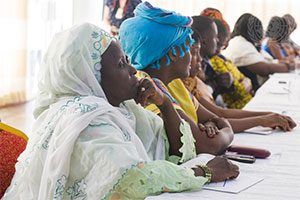 Representatives of Civil Society, Sierra Leone. Credit: UN Photo/Eskinder Debebe
Civil society faces mounting threats worldwide, even as it remains essential for democratic accountability, especially in countries struggling with economic instability and social inequality. However, at the same time, nations with weak democratic governance structures also systemically suppress the power of civil society. Human rights activists across the Global South frequently challenge issues such as political persecution and gender oppression, but in return face state-sanctioned punishment for their advocacy. Imprisonment and exile are common mechanisms of punishment that seek to erode the strength of civil society. The 2026 World Press Freedom Index has reached its lowest level in 25 years, with more than half of the world’s countries now falling into the "difficult" or “very serious” category for press freedom. IPS seeks to highlight the work of civil society across the Global South as well as the challenges that they face.
Updated by Yilan Batista and Shuli Wong August 2026

The Week with IPS

NEXT STOP - SDGs
Tracking global progress towards a sustainable world
Tracking global progress towards a sustainable world
