Languages
Wednesday, November 11, 2026



News and Views from the Global South
Civil Society

Why Do Organizations Fail to Keep Workplace Harassments in Check
“Sexual harassment is not about sexual attraction, it is about power. If an individual uses power plays to subjugate other people, when we have such dynamics going on in the workplace, what we need is a system that fights back against it, which unfortunately a lot of workplaces, they allow it to persist,”, says Adrienne Lawrence, anchor and legal analyst in an interview given to me here.
Parliamentarians Determined to Reach ICPD 25 Goals
Politicians from Asia and Africa shared activism anecdotes demonstrating their determination to meet ICPD 25 commitments. They were speaking at a hybrid conference held simultaneously in Kampala, Uganda, and online.
NDC Partnership: Supporting a Global Network of Youth Climate Advocates
Just over six months after launching its Youth Engagement Plan, the NDC Partnership, the coalition assisting governments with their climate action plans, has brought together youth climate advocates for its inaugural NDC Global Youth Engagement Forum.
Solar Energy Revitalises Indigenous and Farming Communities in Chile
Communities in Arica y Parinacota, the region in the extreme north of Chile, are using solar energy and are being empowered by projects for shrimp and trout farming, the production of yarn from camelid wool, the production of tomatoes and cheese, and even the sale of surplus solar power to the national electric grid.
‘Proud of Being Able to Speak the Truth’: Journalist Nidhi Razdan on her Cyber Attack
Earlier in January, Indian journalist Nidhi Razdan found out she was a victim of one of the most sophisticated and elaborate cyber attacks. Razdan wrote in a piece that it was all an attempt to access her bank account details, personal data, emails, medical records, passport and access to all her devices, including computer and phone.
Olympian Turned Volunteer Keeps Traffic Running in Busy Lagos
Bassey Etim Ironbar is a rare example of an Olympian that transformed from an athlete to a volunteer who does menial jobs like sweeping the streets and clearing debris from open sewers.
Multilateral Peace Operations in 2020: Developments & Trends
The first year of the Covid-19 pandemic saw wide-ranging impacts on multilateral peace operations. The crisis simultaneously affected all operations, host nations, headquarters and contributing countries. It caused major disruption—from the political-strategic level where mandates are drawn up, down to the operational and tactical levels.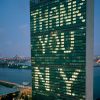
After Vilifying the UN, US Returns to the World Body
Ed Koch, a sharp-tongued Mayor of New York city (1978-89), once stopped short of using a four-letter word to denounce the United Nations. Instead, he opted for a five-letter word dismissing the UN as a “sewer” relegating it to the lower depths of degradation.
Civil Society Leading Covid-19 Mask Campaign in South Asia – Podcast
 Footage of flames engulfing bodies at makeshift funeral pyres and stories of people dying in cars as drivers desperately raced from hospital to hospital seeking a bed. These scenes marked the second wave of the Covid-19 pandemic in India just months ago.

Latin America Sets an Example in Welcoming Displaced Venezuelans
The exodus of more than five million Venezuelans in the last six years has led countries in the developing South, Venezuela's neighbours, to set an example with respect to welcoming and integrating displaced populations, with shared benefits for the new arrivals and the nations that receive them.
UNFPA Calls for Protection & Justice for Women & Girls in Tigray
The 2018 Nobel Laureate, Dr. Denis Mukwege, a gynaecologist celebrated for his work with survivors of sexual assault in the Democratic Republic of the Congo's Panzi Hospital once said: “Rape is a strategy of war – it is meant to destroy women and communities physically and mentally”.
Beware UN Food Systems Summit Trojan Horse
Undoubtedly, the world needs to reform existing food systems to better serve humanity and sustainable development. But the United Nations World Food Systems Summit (UNFSS) must be consistent with UN-led multilateralism. For the first time ever, the World Economic Forum (WEF), a partnership of some of the world’s most powerful corporations, is partnering the UN in launching the Summit, now scheduled for September, with its ‘Pre-Summit’ beginning today.
Conceptual Advances for United Nations 2.0
The UN Secretary-General’s forthcoming “Our Common Agenda” report, to be released before this year’s UN General Assembly High-Level Week, is expected to offer ambitious recommendations to accelerate the realization of the UN75 Declaration as the world comes to grips with the COVID-19 pandemic.
The Fight for the “Lost Souls.”
In June, the Department of Homeland Security made a critical announcement. For the first time in U.S. history, more than 15 national and local agencies and civilian organizations conducted a simultaneous major binational operation to find missing children inside and outside the United States.
The New Social Contract: an Opportunity for Deliberative Participation
These days there hasn’t been certainly a shortage of reports portraying the decline of liberal democracy around the world. With rising popularism and a divisive use of social media, we should not be surprised about a general malaise taking roots in most advanced liberal democracies.
Calls to Halt Construction of Massive Oilfield in One of Africa’s last Wildernesses
Wildlife and environmental campaigners have called for international action as concerns grow over a project to create a massive oilfield in one of Africa’s last wildernesses.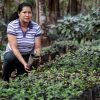
Why we Need to Build Economies– not Walls– to Stop Migration
If you speak to farmers in El Salvador, many will tell you about the time they were driven to head north across Central America towards the US. The routes to the border are many, but the origins are so often the same: desperation and hope that better employment opportunities can be found elsewhere.
UN Ready for Breakaway Nations but the Pace Remains Slow
When the United Nations renovated its building at a cost of over $2.1 billion, as part of a seven-year refurbishing project back in 2014, the seating in the cavernous General Assembly hall was increased from 193 to 204—primarily in anticipation of at least 11 new member states joining the world body sooner or later.
Flaws in Asia’s Pearl
For well over a century Ceylon, now Sri Lanka, has been known to the world as the ‘Pearl of the Indian Ocean’ for its multifaceted attractions. That is until blurb writers ruined it all with hyperbolic epithets that obscured the country’s magnetic charms, which attracted visitors from around the globe.
Stopping Marine Plastic Pollution: A Key IUCN Congress Goal
Documented images of albatross chicks and marine turtles dying slow deaths from eating plastic bags and other waste are being seared into our consciences. And yet our mass pollution of Earth’s seas and oceans, fuelled by single-use plastics and throw-away consumerism, just gets worse.
Universal Civil Registration and Vital Statistics Are Critical for Truth, Trust and COVID Recovery in Asia and the Pacific
With health systems at a breaking point, hospitals at capacity and desperate family members searching for oxygen for loved ones, the devastating second wave of COVID-19 that has swept across South Asia has felt ¬surreal. Official figures have indicated record-breaking daily coronavirus cases and deaths, not only in South Asia, but across the entire Asia-Pacific region during the latest surge. As devastating as it has been, the truth is we may never know how many people have died during the pandemic.« Previous Page — Next Page »





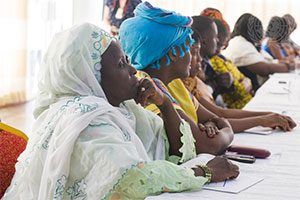 Representatives of Civil Society, Sierra Leone. Credit: UN Photo/Eskinder Debebe
Civil society faces mounting threats worldwide, even as it remains essential for democratic accountability, especially in countries struggling with economic instability and social inequality. However, at the same time, nations with weak democratic governance structures also systemically suppress the power of civil society. Human rights activists across the Global South frequently challenge issues such as political persecution and gender oppression, but in return face state-sanctioned punishment for their advocacy. Imprisonment and exile are common mechanisms of punishment that seek to erode the strength of civil society. The 2026 World Press Freedom Index has reached its lowest level in 25 years, with more than half of the world’s countries now falling into the "difficult" or “very serious” category for press freedom. IPS seeks to highlight the work of civil society across the Global South as well as the challenges that they face.
Updated by Yilan Batista and Shuli Wong August 2026

The Week with IPS

NEXT STOP - SDGs
Tracking global progress towards a sustainable world
Tracking global progress towards a sustainable world
