Languages
Wednesday, November 11, 2026



News and Views from the Global South
Civil Society

Leprosy has a Cure, so has Prejudice, says Miss Universe Brazil
A new dawn has come, and it was through the work of Yohei Sasakawa, the WHO Goodwill Ambassador for Leprosy Elimination, that those affected by leprosy now had a voice to speak for themselves.
Delivering On the Promise of Health For All Must Include Gender Equality and SRHR
Gender-responsive universal health coverage (UHC) has the proven potential to transform the health and lives of billions of people, particularly girls and women, in all their intersecting identities. At tomorrow’s kick-off to the 2023 UN High-Level Meeting (HLM) on UHC, Member States and stakeholders will review progress made on the 2019 HLM’s commitments and set a roadmap to achieve UHC by 2030. We, as the co-convening organizations of the Alliance for Gender Equality and UHC, call on Member States to safeguard gender equality and sexual and reproductive health and rights (SRHR) as part of UHC implementation, especially in light of the gendered impacts of the COVID-19 pandemic.
Rural Water Boards Play Vital Role for Salvadoran Farmers
After climbing a steep hill along winding paths, you reach a huge water tank at the top that supplies peasant farmer families who had no water and instead set up their own community project on this coastal strip in central El Salvador.
Scientific Panel’s Scoping Report Instructive for Global Food Systems Transformation
On September 10th, on a sweltering summer afternoon, three fishers drove a van around the residential community of Castle Comfort in Dominica, blowing forcefully into their conch shells – the traditional call that there is fresh fish for sale in the area.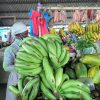
Nurturing a New Generation of Food Leaders
Food security experts have raised an alarm that with as many as 811 million people the world over or 10 percent of the global population going hungry, the world is off-track to ending hunger and malnutrition.
The UN Food Systems Summit and Some Issues of Concern
Why is the UN holding a Food Systems Summit? Two issues that need discussion at the international leadership level are: Long before the Covid crisis was upon us, the number of hungry people in the world was increasing. Why ? What is the cause of this disturbing trend? And, can a country really claim to be food secure, unless it produces or can buy enough food to feed its population and its people can access sufficient quantities to keep themselves fit and healthy? Disquietening questions as extreme weather begins to show the destructive power that climate change will have on the planet and its people.
If Women Farmers were Politicians, the World Would be Fed, says Danielle Nierenberg
Women, key contributors to agriculture production, are missing at the decision table, with alarming consequences, says Food Tank President Danielle Nierenberg in an exclusive interview with IPS.
COVID-19 Recovery Requires Justice Beyond Rhetoric
Policy responses to the COVID-19 pandemic and resulting economic crisis have exacerbated rather than reduced global inequalities. On the one hand, the net wealth of billionaires has risen to record levels since the outbreak of the pandemic (increasing by more than US$ 5 trillion to US$ 13.1 trillion from 2020 to 2021), on the other hand, the number of people living in extreme poverty has also increased massively (by approx. 100 million to 732 million in 2020).
White Privilege: What It Is, What It Means and Why Understanding It Matters
A prestigious, private school in Pretoria, South Africa, recently became a site of protest. Black learners and parents accused Cornwall Hill College of rejecting calls to make its whites-only board more representative of its diverse learner body.
As War Keeps Poisoning Humanity, Organizing Continues to Be the Antidote
Last weekend, U.S. corporate media continued a 20-year repetition compulsion to evade the central role of the USA in causing vast carnage and misery due to the so-called War on Terror. But millions of Americans fervently oppose the military-industrial complex and its extremely immoral nonstop warfare.
Food Systems Summit’s Scientistic Threat
Timely interventions by civil society, including concerned scientists, have prevented many likely abuses of next week’s UN Food Systems Summit (UNFSS). The Secretary General (UNSG) must now prevent UN endorsement of what remains of its prime movers’ corporate agenda.
A Milestone Anniversary Reiterates The Culture of Peace is a Movement, not a Revolution
Today, on 13 September 2021, the UN Declaration and Programme of Action adopted by the General Assembly in 1999 will be turning 22. You would recall that the 20th anniversary of The Culture of Peace of its adoption by the world’s highest multilateral body in 2019 was observed by the United Nations in an appropriate and befitting manner, as called for by the Assembly. It was an occasion for reiteration and recommitment by us all to create the culture of peace in our world, beginning with each one of us.
South-South & Triangular Cooperation to Help Achieve UN’s Development Goals
The 2021 high-level commemoration of the United Nations Day for South-South Cooperation, organized ahead of the opening of the seventy-sixth session of the United Nations General Assembly, provided an opportunity to discuss Southern solidarity in support of a more inclusive, resilient and sustainable future while effectively responding to the global COVID-19 crisis across the global South.
In a Watershed Year for Climate Change, the Commonwealth Secretary-General calls for Urgent, Decisive and Sustained Climate Action
This November, five years after signing the Paris Agreement and pledging to limit global warming to 2 degrees Celsius above pre-industrial levels, with a further target of below 1.5 degrees Celsius, world leaders will meet in Glasgow, UK amid COVID-19 pandemic shocks, rising hunger and an Intergovernmental Panel on Climate Change report that warns of more extreme temperature, droughts, forest fires and ice sheet loss due to human activity.
A Regional Agreement for Healthy Eco-Systems in Latin America & the Caribbean
In August 31st 2021, five Nations including Costa Rica - the country where the Escazú Agreement was adopted - announced publicly working towards a proposal for UN Human Rights Council to recognize globally the right to a clean, safe, healthy and sustainable environment at its 48th session in September.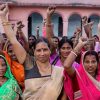
“Time Is A-Wasting”: Making the Case for CEDAW Ratification by the United States
The U.S. is one of only a handful of countries that has yet to ratify the Convention on the Elimination of Discrimination against Women (CEDAW), rendering it “strange bedfellows” with Sudan, Somalia, Iran, Tonga, and Palau.
Civil Society Must Build on Protest Movements – Podcast
 2020 was a year of tremendous upheaval. The murder of George Floyd, followed by global Black Lives Matter protests, Covid-19 and the stark light that the pandemic shone on inequality within countries and between the global north and south, protests and brutal repression after elections in Belarus, ongoing demonstrations for climate action led by youth around the world, to name just a few.
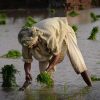
The Future of Food & Water Systems in Pakistan & Central Asia?
An intense monsoon season in Pakistan means the country’s food system faces the challenge of both extreme floods and extended droughts. In an effort to address these challenges through cross-sectoral collaboration, Dr. Mohsin Hafeez, IWMI’s Country Representative for Pakistan and Regional Representative for Central Asia, convened a regional dialogue in advance of the UN Food Systems Summit (which is scheduled to take place at the United Nations, September 23) .
IUCN Congress to Push for Stronger Regulations against ‘Imported Deforestation’
As Arti Prasad rode the Kuala Lumpur Pavilion mall escalator up to the third floor, a pair of luscious lips pouted down at her. Next to the towering and oversized lips, the vibrant red shades of lipstick on the giant screen immediately caught the 36-year-old Indian tourist’s fancy.
South Korea’s Women Fire Back
A strong movement of feminism is sweeping South Korea. While women feel empowered to stand their ground, the men are retaliating. When South Korean archer An San won two gold medals in just two days during the recent Tokyo Olympics, the response the 20-year-old received at home was a mixed. Some men were angered and said her medals should be taken away. Why? Because her short hair was a sign that she was a ‘man-hating’ feminist.
Fiddling in Nairobi While Africa Goes Hungry
As the United Nations gears up for its Food Systems Summit September 23, the urgent need for structural changes in how we grow, harvest, distribute, and consume food has never been more apparent.« Previous Page — Next Page »





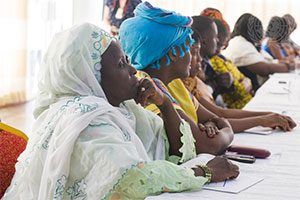 Representatives of Civil Society, Sierra Leone. Credit: UN Photo/Eskinder Debebe
Civil society faces mounting threats worldwide, even as it remains essential for democratic accountability, especially in countries struggling with economic instability and social inequality. However, at the same time, nations with weak democratic governance structures also systemically suppress the power of civil society. Human rights activists across the Global South frequently challenge issues such as political persecution and gender oppression, but in return face state-sanctioned punishment for their advocacy. Imprisonment and exile are common mechanisms of punishment that seek to erode the strength of civil society. The 2026 World Press Freedom Index has reached its lowest level in 25 years, with more than half of the world’s countries now falling into the "difficult" or “very serious” category for press freedom. IPS seeks to highlight the work of civil society across the Global South as well as the challenges that they face.
Updated by Yilan Batista and Shuli Wong August 2026

The Week with IPS

NEXT STOP - SDGs
Tracking global progress towards a sustainable world
Tracking global progress towards a sustainable world
