Languages
Wednesday, November 11, 2026



News and Views from the Global South
Civil Society
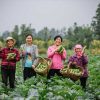
International Women’s Day, 2021
Women’s Leadership in the Global Recovery from COVID-19 Pandemic
Today is International Women’s Day (IWD), and the theme for this year’s celebration is "Women in leadership: Achieving an equal future in a COVID-19 world." We recognize the tremendous contribution and leadership demonstrated by women and girls around the world in shaping our recovery from the COVID-19 pandemic and a more sustainable future.

International Women’s Day, 2021
A Just COVID-19 Recovery – Not Without Women’s Leadership
Almost exactly a year ago today, I packed my computer and a couple of necessities in the office in New York, hugged the colleagues, and headed home to what most people thought would be a couple of week’s Covid-19 lockdown. Little did we know.

International Women’s Day, 2021
#MarchWithUs: 5 Activists on Dismantling “Gender Lies”
Today, despite centuries of activism and mobilisations, women and non-binary people continue to remain disadvantaged in almost every sphere – from “public life” to the “shadow pandemic” of gender-based violence.

International Women’s Day, 2021
The World Not Only Needs Women Leaders – It Needs Feminist Leaders
International Women's Day pays tribute to the achievements of women worldwide and reminds us what still needs to be done for full gender equality. In 2021, we are taking stock of the many ways in which COVID-19 has disproportionately affected women and girls around the world.

International Women’s Day, 2021
Gender Equality is The Roadmap We Need to Overcome Our Most Pressing Global Challenges
In 2020, progress on gender equality stalled or regressed in many countries in large part because of the far-reaching impacts of the COVID-19 pandemic. According to a recent analysis, by 2021, around 435 million girls and women will be living on less than $1.90 a day, including 47 million pushed into poverty as a result of the pandemic. Global lockdowns contributed to a surge of gender-based violence worldwide, and estimates show that sexual and reproductive health and rights (SRHR), the bedrock of gender equality, have been severely disrupted, resulting in an additional 49 million women at risk of experiencing an unmet need for modern contraception. Our most pressing global issues have seldom been so daunting, and fault lines in existing social, political, and economic systems have never been so deep.

Myanmar: Protestors Plea for International Help as Analysts Fear Full Military Might
Myanmar activists have called on the international community for help as security forces loyal to the military continue their draconian sweep against the civil disobedience campaign that has brought the country to a standstill since the Feb. 1 coup. The pleas come as analysts, commentators and diplomats who know Myanmar fear that more bloodshed is almost inevitable.
International Women’s Day, 2021
To Lead is to Serve — A Pacific Woman’s Perspective
An often quoted indigenous reference in the Samoan language is, O le ala i le pule o le tautua, literally translated, “the pathway to leadership is through service” because to be able to lead is to be willing to serve.
Lebanon: A Lion Pit for Journalism
Our deadliest nightmare is back: Political assassinations in Lebanon is back with the horrific murder of Luqman Slim, a vocal critic of Hezbollah. Slim’s assassination is the first killing of a high-profile activist and outspoken journalist in years. What do the political assassinations in Lebanon tell us about the history of this country?
UN Peacebuilding Commission must Prioritise Protecting Youth Activists Facing Retaliation
The United Nations Peacebuilding Commission must prioritise the protection of youth activists who face retaliation from state and non-state actors, said UN Youth Envoy Jayathma Wickramanayake.
Is the USA Fit to Rejoin the UN Human Rights Council?
A month into Joe Biden’s presidency, the U.S. has rejoined nearly all the multilateral institutions and international commitments that it withdrew from under Trump. These include the World Health Organization and the Paris Climate Accords.
The Boon and Bane of LDC Graduation: The Bangladesh Experience
Bangladeshis at the present time share a modicum of justifiable pride in the fact that the world merits this country worth watching in terms of its economic potentials. To my mind , we have reached this stage for the following reasons: First, effective utilization of early foreign assistance; second a steady ,albeit sustained, move away from a near -socialistic to an open and liberal economy; third , a shift from agriculture to manufacturing as land-space shrank to accommodate urbanization; fourth , an unleashing of remarkable entrepreneurial spirit among private sector captains of industry, as evidenced in the Ready Made Garments industry: fifth, the prevalence of a vibrant civil society intellectually aiding the social transformation with its focus on health, education, and gender issues: and finally ,a long period of political stability notwithstanding the traditional predilections of Bengali socio-political activism.
Is This The End of Myanmar’s Quasi-Democracy?
On February 1st, 2021 the military of Myanmar overthrew the country’s democratic government in a coup d’etat followed by arresting more than 40 government officials including Aung San Suu Kyi. The military declared a year-long state of emergency under the rule of it’s Commander-in-Chief Senior General Min Aung Hlaing. Troops took over the streets, a night-time curfew has been put into force. Tens of thousands of protestors have taken to the streets across Myanmar, in what is seen as the biggest street protests in more than a decade. The anti-coup demonstrators are undeterred by police attacks and increasing violence from the security forces.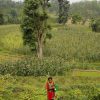
Climate Change & Policy Making in Nepal
Raju Pandit Chhetri is one of the most acclaimed climate change policy experts in Nepal and South Asia. As Director of the Prakiriti Resource Centre, an action focused think tank based in Kathmandu, Pandit Cheetri shares his opinion on the latest climate focused policies being undertaken by the Government of Nepal, especially the 2nd Nationally Determined Contribution NDC that was recently submitted by the Government.
Is Turkey a Proof that Religion and Democracy Cannot Coexist?
Over the years, Turkey has survived three Coup d'état in which its military forces took power, in 1960, 1971 and 1980. The coup in 1997, was carried out in a “post-modern way”, where generals sat down with the then prime minister, Necmettin Erbakan and forced him to resign. However the turning point in Turkey has been the failed coup attempt in July 2016, which has till date been one of the bloodiest coup attempts in its political history, leaving 241 people killed, and 2,194 others injured.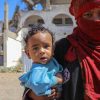
A Counter-Narrative? Ruminations Around Holocaust Memorial Day
For more than two decades, the mantra was “PVE” (preventing violent extremism) and/or “CVE” (countering violent extremism). Millions of dollars were spent, new NGOs and think tanks emerged, government policy papers were drafted, countless books and articles were published, large and small scale initiatives developed - indeed almost an entire industry in development and foreign policy spaces thrived.
Sri Lanka’s Deteriorating Human Rights Situation Raises Multiple Alarms
A decade has passed since the end of Sri Lanka’s civil war between the government and the LTTE, where at least 100,000 people were killed in the over three-decade long conflict. Families of victims of enforced disappearances continue to seek justice, the government is yet to end impunity and put accountability for crimes under international law and human rights violation and abuses in its transitional justice process.
Q&A: What Nigerian Feminists Hope will Come Out of the #EndSARS Movement & Pandemic
As Nigeria’s biggest city, Lagos, reportedly experienced a massive shortage of oxygen cylinders last week — with demand increasing fivefold in one of the city’s main hospitals just as the country recorded some of its highest number of coronavirus cases — its youth leaders are concerned about the impact on vulnerable women.
Volunteerism in the Decade of Action
After the pioneer Global Technical Meeting on Volunteerism last July, a recently-held on-line follow up helped gathering new insights from experts and practitioners from the world on how to move forward with positioning volunteering at the center of development agenda.
Imprisoned Saudi Activist and Other Rights Defenders Seek Justice in 2021
Two events generated significant interest and global solidarity in the final days of December 2020. A court in Saudi Arabia handed down a five years and eight months sentence to activist Loujain Al-Hathloul for publicly supporting women’s right to drive. Nicholas Opiyo, Ugandan human rights lawyer and defender of persecuted members of the LGBTQI community and political opponents of the president was arbitrarily detained on trumped up charges of ‘money laundering.’ Nicholas Opiyo was granted bail on 30 December following an outpouring of global support for his activism for justice. In handing out the verdict to Loujain Al-Hathloul, the court partly suspended her sentence raising hope that she might be released from prison in a couple of months due to time already served.
Italy and the Dubious Honor of Chairing the G20
For 2021, Italy has been given chairmanship of the Group of 20, which brings together the world’s 20 most important countries. On paper, they represent 60% of the world’s population and 80% of its Gross Domestic Product (GDP). While the shaky Italian government will somehow perform this task (in the general indifference of the political system), the fact remains that this apparently prestigious position is in fact very deceiving: the G20 is now a very weak institution that brings no kudos to the rotating chairman. Besides, it is actually the institution which bears the greatest part of responsibility for the decline of the UN as the body responsible for global governance, a task that the G20 has very seldom been able to face up to.
Mining giant Rio Tinto Face Environmental, Human Rights Complaint in Papua New Guinea
Local communities in the vicinity of the abandoned Panguna copper mine, have taken decisive action to hold the global mining multinational, Rio Tinto, accountable for alleged environmental and human rights violations during the mine’s operations between 1972 and 1989.« Previous Page — Next Page »





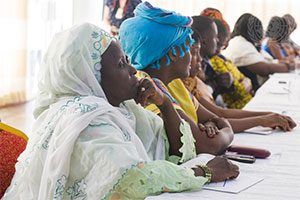 Representatives of Civil Society, Sierra Leone. Credit: UN Photo/Eskinder Debebe
Civil society faces mounting threats worldwide, even as it remains essential for democratic accountability, especially in countries struggling with economic instability and social inequality. However, at the same time, nations with weak democratic governance structures also systemically suppress the power of civil society. Human rights activists across the Global South frequently challenge issues such as political persecution and gender oppression, but in return face state-sanctioned punishment for their advocacy. Imprisonment and exile are common mechanisms of punishment that seek to erode the strength of civil society. The 2026 World Press Freedom Index has reached its lowest level in 25 years, with more than half of the world’s countries now falling into the "difficult" or “very serious” category for press freedom. IPS seeks to highlight the work of civil society across the Global South as well as the challenges that they face.
Updated by Yilan Batista and Shuli Wong August 2026

The Week with IPS

NEXT STOP - SDGs
Tracking global progress towards a sustainable world
Tracking global progress towards a sustainable world
