Languages
Wednesday, November 11, 2026



News and Views from the Global South
Civil Society

Empowering Women through Wisdom
During the COVID 19 lockdown in Sri Lanka, seven women from diverse religious and ethnic backgrounds came together to deliver Wisdom and their message that women must be empowered and their voices for national unity must be heard through this movement.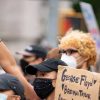
USA Downgraded as Civil Liberties Deteriorate Across the Americas
Few images better illustrate the recent decline in civil liberties in the United States than that of peaceful protesters near the White House being violently dispersed so Donald Trump could stage a photo-op.
Intellectual Property Monopolies Block Vaccine Access
Just before the World Health Assembly (WHA), an 18 May open letter by world leaders and experts urged governments to ensure that all COVID-19 vaccines, treatments and tests are patent-free, fairly distributed and available to all, free of charge.
If Your Civic Space is Closed, your Human Rights Dissolve
On Human Rights Day, civil society calls for the protection of civic space as a fundamental freedom, as more than 80% of the world’s population live in countries where civic space is closed, repressed or obstructed.
Reduce Military Spending – the Much-Needed Response to Violence Against Women
The COVID-19 pandemic is NOT the biggest pandemic the world confronts at the moment, despite over 69 million cases and 1.5 million deaths worldwide.1 If it’s not COVID, what is it then? It is violence against women!
Escazú: Historic Step Towards Protecting Human Rights Defenders in Latin America and the Caribbean
The global health crisis that has marked 2020 did not put an end to another pandemic that has been plaguing Latin America and the Caribbean: murders and attacks against environmental defenders.
Biden’s Opportunity To End Israeli-Palestinian Conflict
Recently I had an opportunity to brief a group of European diplomats and journalists on a variety of conflicts, with a focus on the Middle East. During the Q&A I was asked which of the region’s conflicts Biden should tackle first.
Lost in Translation? Understanding Relevance of Women, Peace & Security in Arms Control & Disarmament
“What does the Women, Peace and Security Agenda have to do with arms control and disarmament?”. Under varying formulations, this question keeps coming up whenever someone refers to the Women, Peace and Security (WPS) Agenda as a basis for ensuring that women’s voices and their specific security needs were taken into account in multilateral arms control discussions.
Millions of New Poor Are on the Way – Who Cares?
The recent meeting of the G20 – scheduled to take place in Riyadh but held virtually due to the Coronavirus pandemic – has been an eloquent example of how the world is drifting, in a crisis of leadership.
Could the Finance Sector Hold the Key to Ending Deforestation?
At the beginning of 2020, there were hopes that this would be a ’super year for nature’. It has not turned out that way. Tropical forests, so crucial for biodiversity, the climate and the indigenous communities who live in them, have continued to be destroyed at alarming rates. In fact, despite the shutdown of large parts of the global economy, rates of deforestation globally have increased since last year.
The Importance of Investing in Volunteerism
The International Volunteer Day will approach soon and the 5th of December will become a day to celebrate the actions of millions of volunteers from all over the world, in the south as well in the north of the world.
India: How Did Young People Access Care During the Lockdown?
COVID-19 has developed into an unprecedented public health crisis, the impact of which has been seen across global health systems and services. As the crisis continues to evolve in India, there is a need to examine the impact of the pandemic and ensuing nation-wide shutdown on young people’s lives, particularly, their experience of mental ill health.
20th Anniversary of UNSCR 1325: Much Remains to Be Done
In 2010, at the opening session of the civil society forum observing the tenth anniversary of UN Security Council Resolution 1325 on “Women and Peace and Security”, I had the honor to declare 1325 as “the common heritage of humanity” indicating the wide-ranging nature of the potential benefits which will flow from the landmark resolution’s full and effective implementation by all at all levels.
Global Data Community’s Response to COVID-19
The world is currently counting more than 42 million confirmed cases of the COVID-19 and over 1 million deaths since the start of the pandemic.1
Not in Our Name, Never in Our Name: A Conversation with Muslim Faith Leaders Echoing the Wisdom of a Pontiff
As the Grand Imam of Al-Azhar, Ahmed Al-Tayeb said on October 20: “As a Muslim and being the Grand Imam of Al-Azhar, I declare before Almighty God that I disassociate myself, the rulings of the religion of Islam, and the teachings of the Prophet of Mercy, the Prophet Muhammad (pbuh), from such heinous terrorist act and from whoever would embrace such deviant, false thought.
Mahatma’s Non-Violence: Essence of Culture of Peace for New Humanity
I will begin by presenting to you excerpts from the message from UN Secretary-General António Guterres on the International Day of Non-Violence.
The Plight of Domestic Workers in Brazil
The inclusivity of Brazilian society is put to the test as the coronavirus pandemic highlights a labour sector ripe with historical and structural inequality: domestic work.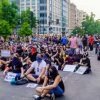
Amid COVID-19, What is the Health of Civic Freedoms?
More than half a year after the World Health Organization declared the COVID-19 outbreak a pandemic, governments are continuing to waste precious time and energy restricting human rights rather than focusing on fighting the virus.
To Achieve Gender Equality Within, the UN Must Do More to Tackle Sexual Harassment
In September 2017, Secretary-General António Guterres launched the “System-wide strategy on gender parity”, which set the goal of reaching gender parity within the United Nations by 2028 and outlined a strategy on how to achieve this, including the introduction of special measures, senior appointments, targets and accountability, amongst other things.
Community Hydropower Dam Illuminates Life in Salvadoran Villages
Ermelinda Lobos's life has improved substantially since she and the rest of the people in her small village, hidden in the mountains of northeastern El Salvador, worked hard to build a mini hydroelectric plant and become self-sufficient in energy.
Congolese ‘Kings’ of Art on Exhibition in Paris
Chéri Samba has a sly sense of humour, both in person and in his work. Standing in front of his 2018 painting “J'aime le jeu de relais” (I Love the Relays) - which criticizes politicians who cling to power instead of passing the baton - Samba is asked about the resemblance of one of his subjects to a famous statesman.« Previous Page — Next Page »





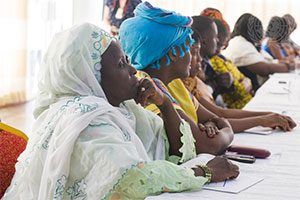 Representatives of Civil Society, Sierra Leone. Credit: UN Photo/Eskinder Debebe
Civil society faces mounting threats worldwide, even as it remains essential for democratic accountability, especially in countries struggling with economic instability and social inequality. However, at the same time, nations with weak democratic governance structures also systemically suppress the power of civil society. Human rights activists across the Global South frequently challenge issues such as political persecution and gender oppression, but in return face state-sanctioned punishment for their advocacy. Imprisonment and exile are common mechanisms of punishment that seek to erode the strength of civil society. The 2026 World Press Freedom Index has reached its lowest level in 25 years, with more than half of the world’s countries now falling into the "difficult" or “very serious” category for press freedom. IPS seeks to highlight the work of civil society across the Global South as well as the challenges that they face.
Updated by Yilan Batista and Shuli Wong August 2026

The Week with IPS

NEXT STOP - SDGs
Tracking global progress towards a sustainable world
Tracking global progress towards a sustainable world
