Languages
Thursday, November 12, 2026



News and Views from the Global South
Civil Society

Japan Boosts Complex Fight to Eliminate Leprosy in Brazil
When cases of Hansen's disease, better known as leprosy, increase in Brazil, it is not due to a lack of medical assistance but to the growing efficacy of the health system in detecting infections, contrary to the situation in other countries.
Solar Collectors and Solidarity Change Lives in Argentina
"This is the best thing ever invented for the poor," says Emanuel del Monte, pointing to a tank covered in black tarps protruding from the roof of his house. It forms part of a system built mostly from waste materials, which heats water through solar energy and is improving lives in Argentina.
Chilean Schools Recycle Greywater to Combat Drought
Children from the neighboring municipalities of Ovalle and Río Hurtado in northern Chile are harvesting rain and recycling greywater in their schools to irrigate fruit trees and vegetable gardens, in an initiative aimed at combating the shortage of water in this semi-arid region.
Indigenous Communities Head Towards Energy Self-Sufficiency in Guatemala
 Because the government has never provided them with electricity, indigenous communities in the mountains of northwest Guatemala had no choice but to generate their own energy.

Sri Lanka on Security Alert Long After Easter Bombings
Sri Lanka continues to be on a security alert long after the devastation caused by a string of bombings on Easter Sunday this year. Raisa Wickrematunge, Editor of Groundviews, told IPS: “There has been a tightening of security. There are now security checks being carried out outside hotels and shopping malls - either through scanners or bag and body searches”.
Are We Fighting a Losing Battle in the War Against Drugs?
How effective is the global war on drugs? The latest statistics released by the UN Office on Drugs and Crime (UNODC) are staggering: 35 million people across the globe currently have a substance use disorder, and as of 2017, 585,000 people have died worldwide as a result of drug use.
Indigenous Rights Approach a Solution to Climate Change Crisis
The Global Landscapes Forum (GLF) was held in Bonn, Germany to rally behind a new approach to achieving a future that is more inclusive and sustainable than the present – through the establishment of secure and proper rights for all.
A Roadmap for Children as Victims, not Terrorists
The feeling in the air at a recent meeting of the United Nations Office on Drugs and Crime (UNODC) was one of compassion and benevolence. The focus was on children as Foreign Terrorist Fighters (FTFs), a subject that everyone at the panel discussion argued is delicate and politically sensitive.
International conference in Vienna: Successful societies are those that manage diversity and stimulate empathy towards the Other
Societies must work together to build more tolerance, solidarity and peace within and between nations, said the Executive Director of the Geneva Centre for Human Rights Advancement and Global Dialogue, Ambassador Idriss Jazairy, during the 19 June international conference on "From Interfaith, Inter-Civilizational Cooperation to Human Solidarity.” He emphasized that all such societies are built on shared aspirations and not shared ethnicity.
International conference in Vienna: Executive Director of the Geneva Centre meets with officials of Azerbaijan and the United Arab Emirates, religious leaders and civil society representatives
Following the 19 June international conference on “From the Interfaith and Inter-Civilizational Cooperation to Human Security” held in Vienna, the Executive Director of the Geneva Centre for Human Rights Advancement and Global Dialogue Ambassador Idriss Jazairy concluded his visit to Austria with a series of meetings with government officials and decision makers.
There’s No Continent, No Country Not Impacted by Land Degradation
The coming decades will be crucial in shaping and implementing a transformative land agenda, according to a scientist at the United Nations Convention to Combat Desertification (UNCCD) framework for Land Degradation Neutrality (LDN).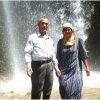
UN Says Kyrgyz Journalist Should be Freed
On a recent morning in Bazar-Korgon, southern Kyrgyzstan, Khadicha Askarova was giving hasty instructions to her daughter about what needed to be packed.
What Standardised Testing Doesn’t Tell Us About Learning
When we look at learning outcomes for children, we only look at standardised tests, ignoring any indigenous knowledge, language, or problem solving strategies they might have.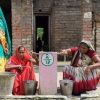
India’s Most Significant Innovations Have Roots in Civil Society
When we look at some of the things we take for granted in India today, there is a common thread to all of them. Every single one. They all originated from civil society.
The New Face of Activism: Youth
Rather than waiting for adults to act, more young girls and boys are standing up and speaking out on the world’s pressing issues.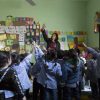
A Call for Concrete Changes to Achieve a More Gender Equal World
On the eve of the Women Deliver conference in Vancouver June 3-6, Princess Sarah Zeid of Jordan interviewed Dr. Olfat Mahmoud, a Palestinian refugee and women’s rights advocate.
Class Analyst: Global Income Inequality
As a child growing up in Communist Yugoslavia, Branko Milanovic witnessed the protests of 1968, when students occupied the campus of the University of Belgrade and hoisted banners reading “Down with the Red bourgeoisie!”
Emergency Assembly on the Rise of Global Racism: Providing new impetus to the implementation of the Durban Declaration and Programme of Action
On 9 May 2019, the Geneva Centre for Human Rights Advancement and Global Dialogue, the World Against Racism Network and the Global Coalition for the International Decade for People of African Descent organized an Emergency Assembly on the Rise of Global Racism. It was held at the United Nations Office in Geneva in the presence of more than 150 representatives of Permanent Missions, UN staff, civil society and academics.
UN’s Mandate to Protect Human Rights Takes Another Hit
The UN’s longstanding mandate to promote and protect human rights worldwide –- undermined recently by right-wing nationalist governments and authoritarian regimes – has taken another hit.
Growing Authoritarianism, Social Inequalities Often a Prelude to Conflict
I want to talk about peacebuilding and inclusive peace. My main point is that peace begins in the minds of people, and people, communities, societies must be allowed to participate in peace for it to be sustainable. Peace means a lot more than just the absence of war.
Women Human Rights Defenders Face Greater Risks Because of their Gender
Does the name Ihsan Al Fagiri ring a bell? How about Heba Omer or Adeela Al Zaebaq? It’s likely that these names, among countless others, are not known to the average news consumer. But their tireless and dangerous work, however, has made news headlines as protests led to historic political change in Sudan.« Previous Page — Next Page »


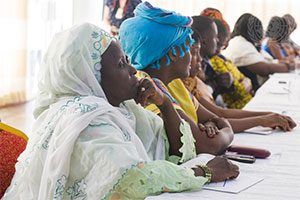 Representatives of Civil Society, Sierra Leone. Credit: UN Photo/Eskinder Debebe
Civil society faces mounting threats worldwide, even as it remains essential for democratic accountability, especially in countries struggling with economic instability and social inequality. However, at the same time, nations with weak democratic governance structures also systemically suppress the power of civil society. Human rights activists across the Global South frequently challenge issues such as political persecution and gender oppression, but in return face state-sanctioned punishment for their advocacy. Imprisonment and exile are common mechanisms of punishment that seek to erode the strength of civil society. The 2026 World Press Freedom Index has reached its lowest level in 25 years, with more than half of the world’s countries now falling into the "difficult" or “very serious” category for press freedom. IPS seeks to highlight the work of civil society across the Global South as well as the challenges that they face.
Updated by Yilan Batista and Shuli Wong August 2026

The Week with IPS

NEXT STOP - SDGs
Tracking global progress towards a sustainable world
Tracking global progress towards a sustainable world
