Languages
Friday, November 13, 2026



News and Views from the Global South
Aid
SOMALIA: U.S. Greenlights Aid to Shabaab-Controlled Areas
The Barack Obama administration promised Tuesday that the U.S. would not prosecute relief agencies for delivering aid to parts of Somalia controlled by the Islamist insurgent group al- Shabaab, despite concerns that unrestricted aid in the failed state would be diverted to the wrong hands.
Famine Relief in Somalia Stymied by Access
While an estimated 12.4 million people linger on the brink of starvation in the Great Horn of Africa, U.S. officials and world relief agencies said Monday that even in a "best case scenario" the crisis will worsen as the areas in most desperate need remain cut off from access to relief.
SOMALIA: “I Carried Him a Whole Day While He Was Dead, Thinking He Was Alive”
As the first of food aid from the United Nations World Food Programme was airlifted into Mogadishu on Wednesday, it came too late for Qadija Ali's two- year-old son Farah.
EAST AFRICA: ‘It’s Not a Heartless Mother Leaving a Child Behind, Just One Who Wants to Survive’
On the road between the Kenyan and Somali border lie the dead bodies of children who have succumbed to the famine and the hardships of making the journey from their drought-stricken villages to Kenya.
Haiti’s Reconstruction Still an Uphill Battle
As Haiti struggles to recover from the deadly January 2010 earthquake that killed over 200,000 people and forced nearly 1.5 million into camps, international funding is failing to keep pace with the generous pledges made last year, and in- fighting in Haiti's new government is hindering the disbursement of aid.
EAST AFRICA: Massive Aid Needed to Stave off Disaster
International donors have given more than one billion dollars to ease the famine in Somalia and elsewhere in the Horn of Africa, but U.N. officials say another billion will be needed to prevent the situation from deteriorating in other areas.
HORN OF AFRICA: Poor Attention to Forecasts to Blame for Famine in Somalia
The world had an opportunity to save thousands of lives that are being lost in parts of Somalia due to the famine, if only the donor community had paid attention to the early warning systems that predicted it eight months ago.
SOMALIA: “Children on the Verge of Death Left Behind to Save Those Who Had a Chance”
Tens of thousands of starving Somalis have made their way to the government- held part of Mogadishu in search of food, but many parents have made the anguished decision to leave a child too weak to make the journey behind in hope of saving the others.
Eleven Million at Risk in Horn of Africa
"I have never seen anything like it. Many mothers have lost three or four children. It's a tragedy out here," Austin Kennan, regional director for the Horn of Africa for Concern Worldwide, told IPS from within the crisis zone.
EAST AFRICA: Millions Stare Death in the Face Amidst Ravaging Drought
While Kenya struggles to cope with the influx of refuges fleeing the drought in Somalia, it is estimated that about 1,300 people arrive daily at the Dadaab refugee camp, the country is facing its own crisis of malnutrition and starvation.Somalia to Dadaab: The Journey from Hell
The lorry sways slowly from side to side along a dirt track as it ambles towards its place of rest. The red straw bags, clothes and empty yellow water bottles tied to the rear end of the open cargo hold tower above the pensive faces peering over colourfully painted steel panels.U.S. Warns of Dark Path Ahead Without Cooperation in Sudan
As South Sudan was admitted as the 193rd member of the United Nations on Thursday, officials in Washington said the hard work in the fragile new country has just begun.OP-ED: Foreign Policy Goes Gaga
Lady Gaga and Alice Walker don't have much in common. One dresses in red meat; the other doesn't even eat the stuff. One writes lyrics like "I want your ugly, I want your disease, I want your everything as long as it's free." The other writes "The Color Purple".UN: Somalia Is ‘Worst Humanitarian Disaster’
The head of the United Nations refugee agency has described the situation in drought-hit Somalia as the "worst humanitarian disaster" in the world, after meeting with those affected at the Dadaab refugee camp in Kenya.SUDAN: Southern Kordofan – A State of Ghost Towns
While humanitarian organisations try to bury the corpses scattered across Southern Kordofan, aid to the thousands of people displaced by the fighting is slow as the country's humanitarian commission has prohibited most aid organisations from working in the area.
UNICEF Leads ‘Back to School’ Initiative in Cote d’Ivoire
When the five-month-old political standoff in Cote d'Ivoire came to an end in early April, the strife-torn West African nation was expected to return to normal - later than sooner.Mental Health Work in Humanitarian Crises
When the devastating ‘Boxing Day' tsunami hit Sri Lanka in December 2004, claiming over 35,000 lives and rendering 1.5 million people homeless, the World Health Organization (WHO) was confronted by a second disaster soon after it arrived to begin relief efforts in early January.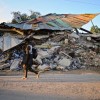
HAITI: Behind the Closed Doors of Port-au-Prince “Reconstruction”
Almost 17 months after the Jan. 12, 2010, earthquake that devastated Port-au-Prince and three other cities, reconstruction of the capital's downtown appears stalled, and over 800,000 people still live in tents – some 30,000 of them right across from the collapsed National Palace.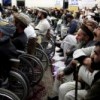
Armed Conflicts Claim Unprecedented Number of Civilians
Afghanistan, once described as the graveyard of empires, is ranked number one as the country with the most "significant rise" in civilian deaths last year, turning it into a veritable killing field, according to a new report by the London-based Minority Rights Group International (MRG).
MEDIA: Uniting in the Face Of “Unnatural” Disasters
"In my opinion, there is no such thing as a natural disaster," says Sylvia Richardson, a volunteer broadcaster, mother of two, assistant librarian, and the new vice president of the North American region of the World Association of Community Radio Broadcasters (AMARC).
Developing Nations Protest Move to Slash U.N. Budget
The Group of 77 (G77), the largest single coalition of developing countries, has issued a strong letter of protest against a proposal to cut some 155 million dollars from the U.N.'s 2012-2013 biennium budget beginning next January.« Previous Page — Next Page »


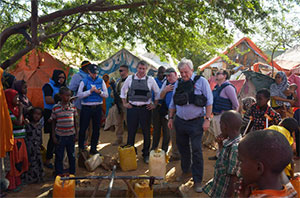 UN Emergency Relief Coordinator Visits Somalia. Credit: UN Photo/Tobin Jones
In recent years, conflicts have broken out across the world with no sign of slowing down or stopping. In times like this, millions of people globally are in dire need of humanitarian aid. Famine, warfare, natural disasters, and economic decline plague a host of nations, including Palestine, Sudan, Chad, Lebanon, and Haiti, to name a few. Humanitarian aid provides millions of people with critical services including healthcare, food, clean drinking water, psychosocial support, housing, and access to education. UN agencies such as the UNDP, UNICEF, the World Food Programme (WFP), UNHCR, UNRWA, and UNEP work with the UN Office for the Coordination of Humanitarian Aid (OCHA) and local organizations to come up with the best possible strategies to support affected communities. At the same time, humanitarian aid and those working on the frontlines are consistently threatened by both actors directly involved in conflict as well as those who are meant to contribute to the international humanitarian regime at large. The near-collapse of United States international aid structures in 2025, including the termination of 83% of USAID’s 6,300 global initiatives, has left millions of people without access to vital humanitarian assistance. 98 million people in 2025, only 65% of people targeted for humanitarian assistance, received the help they needed. In contrast, 123 million people received some form of humanitarian assistance in 2024, and OCHA’s 2026 Global Humanitarian Overview estimates that 239 million people are in need of assistance in 2026. IPS is well-positioned to discuss current initiatives to provide aid and relief through in-depth reporting and opinion content.

The Week with IPS

NEXT STOP - SDGs
Tracking global progress towards a sustainable world
Tracking global progress towards a sustainable world
