Languages
Thursday, October 22, 2026



News and Views from the Global South
Aid

Q&A: Needing Surgery Shouldn’t Be a Death Sentence
Surgery saves the lives of millions of people around the world, but only a tiny percentage of them live in low- and middle-income countries (LMICs), where a shortage of skills, supplies and infrastructure can turn easily treatable accidents and illnesses into lifelong disabilities and even death.MAGHREB: For Migrants, Crisis Worsens Economic Situation At Home
The mass exodus of immigrant workers from Libya is aggravating the social and economic situation in the migrants' home nations - from Sudan and Chad in sub-Saharan Africa, to Bangladesh in Asia - according to labour and economic experts.
LIBYA: Aid Groups Struggle with Rising Tide of Refugees
The international community is ramping up efforts to alleviate the growing humanitarian crisis in Libya, which has affected over 200,000 people since the Muammar Gaddafi regime first began a violent crackdown on opposition forces some three weeks ago.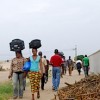
Growing Humanitarian Crisis in Cote D’Ivoire
The U.N. has announced that some 200,000 people have already fled the Abobo neighbourhood, in the north of Abidjan. Each morning for a week now, luggage on their backs, bundles on their heads, the sick riding in wheelbarrows, new borns cradled in their arms, thousands of people have fled Abobo on foot.LIBYA: Thousands of Foreign Labourers Trapped in Turmoil
As violent unrest continues unabated in Libya, with the potential to descend into what U.S. Secretary of State Hillary Clinton called a "protracted civil war" in statements to lawmakers here this week, international rights groups are raising the alarm over the resulting humanitarian crisis and the particularly desperate plight of stranded immigrant labourers.Pregnancies Don’t Wait for Emergencies to End
When disaster strikes, the initial humanitarian response tends to focus on basic commodities like food and shelter. But as the crisis or conflict drags on, other critical needs often go unmet – such as prenatal care for pregnant women, and emergency contraception for victims of sexual assault.Great Green Wall to Stop Sahel Desertification
Imagine a green wall - 15 kilometres wide, and up to 8,000 kilometres long - a living green wall of trees and bushes, full of birds and other animals. Imagine it just south of the Sahara, from Djibouti in the Horn of Africa in the east, all the way across the continent to Dakar, Senegal, in the west.US-SUDAN: Priorities Shift to Mounting Violence in Darfur
As peace negotiations over Sudan's Darfur region come to a close in Doha, Qatar and a number of issues related to last month's referendum remain unresolved, several Washington-based advocacy groups have warned against the pitfalls of losing focus on a comprehensive peace agreement for Darfur.U.S.: Military Intervention Trumping Humanitarian Aid
In the midst of a belt-tightening political climate in which pledges by prominent lawmakers to slash the United States' foreign affairs budget will likely soon be realised, some rights groups and experts are concerned about the increasingly blurry distinction between security and development in the face of shrinking resources.Pakistan Sinking Into Water Crisis
Pakistan is still reeling from flooding that caused one of the world's costliest natural disasters in 2010, with millions of people lacking shelter, infrastructure in ruins and donations falling short of appeals. But worse may come.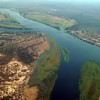
Floodwaters Rising Across Southern Africa
As South Africa declares a national disaster due to flooding, other countries in the region hold their breath while water levels continue to rise.
Mozambique Prepares for Worst Floods in 10 Years
Flood alert levels are on orange in parts of Mozambique as disaster management services mobilise to respond to flooding potentially as bad as the catastrophe in 2000.
HAITI: Haphazard Aid Hindering Long-Term Recovery
That Haiti will not recover from the trauma of 2010 for many years is an unfortunate but understood fact. More disturbing, according to a new analysis, is that aspects of current aid efforts are undermining Haiti's ability to begin the reconstruction process and develop a strong, functional state infrastructure.
GAMBIA: Families Left Homeless by Floods
Amie Manneh and her family lived securely in their single-bedroom home in Bundung, 15 kilometers from the capital, Banjul. Then their home was destroyed by heavy rainfall in September. Since then Amie, her husband and six children have been living in the damaged house.
HUMAN RIGHTS: Festive season a nightmare for Kenya’s Displaced
The Christmas season comes with joy and merrymaking in Kenya, where preparations for the festivities are underway as people crowd the street to shop for clothes and gifts. But even as the cheer spreads all around, the situation is different for the thousands of internally displaced Kenyans (IDP's) still living in various camps.
POLITICS: Human Suffering Escalates in Cote d’Ivoire
For three days, 25-year-old Ousmane Traoré attended the private clinic in the populous district of Abobo, north of Abidjan. Suffering from gunshot wounds to the head and abdomen as a result of the Ivorian opposition demonstrations, he was forced to leave the main hospital in Treichville, south of Abidjan, due to a lack of assistance.
REFUGEES: Liberians Struggle to Cope With Fleeing Ivorians
Albertine Yahwah sits on a hard wooden bench, cradling her little baby in her arms. The 20 year-old walked from the Ivory Coast with her two children and her husband to reach this small town across the border in Northern Liberia.
HAITI: “Cash-for-Work” Seen as a Double-Edged Sword
All across Haiti, United Nations, bilateral and non- governmental agencies are running scores of "cash-for-work" programmes. But are they "working"?
HAITI: As Cholera Spreads, Heavy Rains Wreak Havoc in Camps
Standing on a raised piece of pavement across from the makeshift home where she has lived for the past 10 months, Violet Nicola threw up her hands.
Lurching from One Disaster to the Next
The world is ill-prepared for the human toll from the expected increase in floods, droughts and extreme storms and hurricanes on the horizon.
SWAZILAND: Scramble to Meet Shortfall in Food Aid
November will see the World Food Programme launch its Food by Prescription programme in Swaziland, but tens of thousands in urgent need of food aid are set to go without as a donor shortfall restricts assistance.« Previous Page — Next Page »





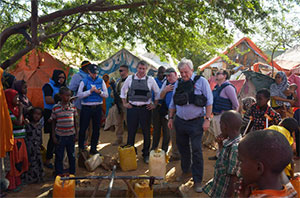 UN Emergency Relief Coordinator Visits Somalia. Credit: UN Photo/Tobin Jones
In recent years, conflicts have broken out across the world with no sign of slowing down or stopping. In times like this, millions of people globally are in dire need of humanitarian aid. Famine, warfare, natural disasters, and economic decline plague a host of nations, including Palestine, Sudan, Chad, Lebanon, and Haiti, to name a few. Humanitarian aid provides millions of people with critical services including healthcare, food, clean drinking water, psychosocial support, housing, and access to education. UN agencies such as the UNDP, UNICEF, the World Food Programme (WFP), UNHCR, UNRWA, and UNEP work with the UN Office for the Coordination of Humanitarian Aid (OCHA) and local organizations to come up with the best possible strategies to support affected communities. At the same time, humanitarian aid and those working on the frontlines are consistently threatened by both actors directly involved in conflict as well as those who are meant to contribute to the international humanitarian regime at large. The near-collapse of United States international aid structures in 2025, including the termination of 83% of USAID’s 6,300 global initiatives, has left millions of people without access to vital humanitarian assistance. 98 million people in 2025, only 65% of people targeted for humanitarian assistance, received the help they needed. In contrast, 123 million people received some form of humanitarian assistance in 2024, and OCHA’s 2026 Global Humanitarian Overview estimates that 239 million people are in need of assistance in 2026. IPS is well-positioned to discuss current initiatives to provide aid and relief through in-depth reporting and opinion content.

The Week with IPS

NEXT STOP - SDGs
Tracking global progress towards a sustainable world
Tracking global progress towards a sustainable world
