Languages
Saturday, November 7, 2026



News and Views from the Global South
Energy
ENERGY: Crisis Has Hurt Investment in Renewables
In Latin America, Brazil is the leader in the development of renewable energies, while nations like Mexico, Peru, Chile and Argentina are taking slow steps to change their energy mix.
Q&A: “We Can’t Afford to Let the Planet Get Much Hotter”
Lester Brown says his views sometimes appear extreme - because the mainstream media largely doesn't understand the urgency and challenges in avoiding catastrophic climate change.CLIMATE CHANGE: Firms Divided Over Obama’s Emissions Cuts
Momentum is building in Washington for an overhaul of climate policy, with President Barack Obama signing an executive order Monday directing federal agencies to monitor their greenhouse gas emissions and set targets to reduce their emissions by 2020.ENERGY-BRAZIL: Putting (Human) Waste to Work
Biodigester technology, which originated in Asia as a natural process for treating sewage waste, is reemerging in Latin America as an integrated system providing cheap energy, improved sanitation, and even attractive landscaping.DEVELOPMENT: Resource Crunch Signals Larger Ecological Crisis
How would development programmes look if viewed from the position of scarcity, especially the scarcity of food, water, and energy?
ENVIRONMENT-CHILE: Authorities May Sue Geothermal Energy Firm
The Council for the Defense of the State (CDE), the Chilean government's legal watchdog, is considering bringing a suit for environmental damages against an Italian-Chilean consortium carrying out geothermal studies a few kilometres away from the El Tatio geyser field, a tourist attraction in the northern region of Antofagasta.
ENVIRONMENT-US: Advocates Fight Mountaintop Removal
Environmental groups across the southeast United States, from Georgia to the Appalachia region, are stepping up their opposition to a controversial but widespread practice by coal companies of removing the tops of mountains with explosives.
Q&A: Heavy Vehicle Market Taking Off in Africa
Russian president Dmitry Medvedev’s recent official visit to a handful of African countries has provided new impetus to Russian business’s interest in the region.ENVIRONMENT: Could Food Shortages Bring Down Civilisation?
In early 2008, Saudi Arabia announced that, after being self-sufficient in wheat for over 20 years, the non-replenishable aquifer it had been pumping for irrigation was largely depleted.GERMANY: Crisis Shackles New Govt
The economic crisis looks set to reduce the new government's commitments in development and environmental policy.
SOUTH AMERICA-AFRICA: Summit for South-South Cooperation
South American and African leaders are meeting over the weekend on the Caribbean island of Margarita in their second summit in three years, to forge stronger cooperation between the two regions and discuss their positions with regard to a number of pressing international concerns.
SOUTHERN AFRICA: Journey of a Working River: the Orange-Senqu
In the steep valleys of Lesotho's Maluti mountains, women carry yellow plastic buckets of water across fields of dark-brown earth; a group of men form a human chain to pass rocks between them to build a small dam wall across a mountain stream; clothes are being washed in rivers; and men draped in blankets ride donkeys or horses along the roadside.CLIMATE CHANGE: Time Running Out on Vows to Act, Scientists Warn
Promises are easy to make. But promises by world leaders will not halt the heat-trapping carbon emissions that are dialing-up global temperatures and altering the climate, say critics and climate researchers meeting in this U.S. Midwestern city.
ENERGY: Trees: Out of the Forest and Into the Oven
Millions of trees, especially from the developing countries of the South, are being shipped to Europe and burned in giant furnaces to meet "green energy" requirements that are supposed to combat climate change.
BRAZIL: Electric Car Revolution in the Making
The electric vehicle - pure or hybrid - will trigger an energy and industrial revolution worldwide in the coming decades, dealing a blow to liquid fuels. But plant-based ethanol will survive and grow, say Brazilian experts consulted for this report.ENERGY-VENEZUELA: Great Business for Good Friends
While Spanish energy giant Repsol and Italy's Eni reported finding huge deep sea reserves of natural gas in the Gulf of Venezuela, a consortium of Russian companies agreed to pay the Venezuelan government one billion dollars to secure access to the oil-rich Orinoco Belt.BRAZIL: Green Challenges Posed by Black Gold
Brazil's discovery of vast offshore oil and natural gas reserves raises the question of how to tap the newfound wealth without causing severe environmental impacts and without leaving aside the development of clean energy alternatives.
ENERGY: To Fly Around the World – Without Fuel
A solar-powered aircraft will take flight next month from Switzerland with hopes ultimately to circle the Earth in 2012, without fuel, and stopping every five days only to change pilots.MALI: Technology Transfer So Slow "We’ll Have to Copy Like China"
Cars and motorcycles are stuck because of the heavy rains that have drenched Mali’s capital for the past few days. It is late afternoon and the water, mud and damaged fruit from nearby stalls make the journey for those heading home to celebrate Ramadan even more treacherous.DEVELOPMENT: NGOs Question World Bank’s Clean Energy Roadmap
The World Bank's 2010 World Development Report (WDR), released Tuesday, calls on the developed world to lead global efforts to cut carbon emissions, but some civil society groups remain highly sceptical of the bank's role in brokering climate finance.ECONOMY: Speculators Undermining Recovery, Report Says
The current economic meltdown will continue for years if the world community does not take firm and coordinated action to regulate the flow of capital, say researchers who have just concluded a new study for the United Nations.« Previous Page — Next Page »





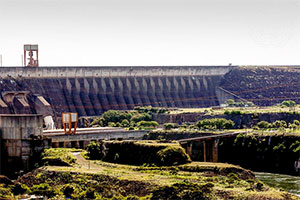 UN Power Plant, Paraguay. Credit: UN Photo/Evan Schneider
Energy has posed a great challenge for economies around the world. As global energy consumption skyrockets throughout the years, so does the need for sustainable solutions. The Sustainable Development Goals are essential in providing people with access to safe, affordable, and sustainable energy sources that minimize harm on the planet. Progress towards these goals opens the door for an advancement in modernization for communities on a global level and allows for a potential mitigation of tensions between nations.
The UN’s Summit of the Future in 2024 offered new initiatives that are being taken to achieve these goals, including a decreased reliance on fossil fuels, a switch to renewable energy sources, and improved climate financing.
IPS is well positioned to provide relevant, insightful, and compelling analysis of recent updates and measures being taken around the world to achieve a cleaner future.

The Week with IPS

NEXT STOP - SDGs
Tracking global progress towards a sustainable world
Tracking global progress towards a sustainable world
