Languages
Saturday, November 7, 2026



News and Views from the Global South
Energy
ENVIRONMENT: Desert Winds Stir New Hope
With oil and gas reserves running dry, the most populous country in the Arab world is eyeing wind power as a solution to its looming energy crunch.SOUTH AMERICA: Glaciers – Going, Going…Gone?
South America is perhaps most often associated with the Amazon jungle, the world's largest tropical rainforest. But along its western edge, from Ecuador to southern Chile and Argentina, it also harbours huge glaciers which are rapidly melting due to global warming.BRAZIL: More Growth, Less Carbon
Achieving sustainable growth is one of the major challenges facing Brazil, an emerging power and the fourth largest emitter of greenhouse gases in the world. To do this it will have to curb emissions, 30 percent of which are caused by industry and power generation.VENEZUELA: Alarm over First Contraction of GDP in Five Years
The Venezuelan economy, which has grown steadily for more than five years, contracted by 2.4 percent in the second quarter of this year, heightening fears of stagflation, an unwelcome combination of recession and high inflation.
ENERGY-CANADA: “It’s Like the Wild West Out Here”
The once serene road to Tim and Linda Ewert's organic farm near Tomslake in northeastern British Columbia has become a mess of dust clouds, drilling rigs and hordes of pick-up trucks as the area transforms into the newest frontier of Canada's natural gas boom.
DEVELOPMENT-US: Gentrification Fears Dog Sustainable Transport
As U.S. cities consider the urgent need for sustainable public transportation options, advocates are looking for ways to achieve the environmental benefits of such projects without displacing residents through gentrification of surrounding areas.
MEXICO: Biological Remedy for Sickened Soil
Mexico is beginning to take on the environmental debts left by the oil industry, applying biological techniques to break down alcohols, solvents, glycerines, gasoline, benzene and acetone, turning them into carbon dioxide and water.
ENERGY: Pipeline Sabotage Blows Image of Stable Canada
North America's largest natural gas corporation hopes a one-million-dollar bounty will take down the saboteur who is blowing up their pipelines in northern Canada.EUROPE: Wind Becomes More Energising
The 12 giant wind turbines tower more than 100 metres above the sea, some 50 kilometres north of Borkum island in the North Sea close to the border with the Netherlands.DISARMAMENT: Africa Joins the Nuclear-Free Club
Africa, the second-largest continent after Asia, has now become the world's largest nuclear-free zone comprising 53 countries with about a billion people. This means denuclearisation of one of the richest uranium producing regions.EUROPE: Easterly Wind Picks Up
The natural conditions in Romania and Bulgaria make these countries some of the best placed in Europe for producing wind energy. Interest in investing in wind power is high in both countries, but legislative ambiguity and the limited capacity of national electricity grids are delaying the building of new wind parks.TRADE-VENEZUELA: Out with Colombia, In with Argentina
Ten thousands cars, 80,000 tons of beef, 100,000 tons of corn, 18,000 tons of milk, 9,000 tons of beans, 18 million eggs, two million pairs of shoes: Argentina has agreed to 1.1 billion dollars worth of sales to Venezuela, which has decided to stop importing goods from Colombia and get its supplies from other sources.EGYPT: Israel Gas Deal Inflames Opposition
Opposition figures and political activists have slammed a new deal to sell Egyptian liquefied natural gas (LNG) to Israel at what they say are vastly reduced prices.ENVIRONMENT-CHILE: Anti-Coal Plant Activists Get Death Threats
Five social activists and community leaders opposed to the construction of coal-fired thermoelectric plants near fishing villages in northern Chile filed a complaint with the prosecution service denouncing that they had received anonymous death threats warning them to stop their struggle.ENERGY-CAMEROON: Dam Project Questioned
Construction has begun on a new dam at the confluence of the Lom and Pangar rivers in Cameroon. The government is pushing the project as key to addressing an energy shortfall, allowing for economic growth; observers believe the plan may only increase the country's vulnerability to drought.CAMEROON: Fears for Forest as Dam Construction Begins
Crouched on a low wooden stool in front of his mud hut in the village of Pangar, Alain Selembe puffs away at his clay pipe, his gaze lost in the surrounding forest, quite oblivious to the noise made by his two playing daughters. All he hears is the rumbling of bulldozers opening up a 30 kilometre road from Deng Deng village to the confluence of the Lom and Pangar rivers, where the government plans to construct a new dam.U.S.: Coal Power Hitting Roadblocks
As more and more states are turning against coal power facilities in the U.S., advocates have been using the legal system to halt new pending plants.GERMANY: Nuclear Power Fails, And Nobody Notices
Seven German nuclear plants have failed to generate any electricity this month due to technical breakdowns. They have about half the production capacity of Germany's 17 nuclear reactors, but Germany did not suffer any power shortages.ENERGY: "Nuclear Steals Billions from Other Technologies"
Why is nuclear energy back on the table?ENVIRONMENT: Lavish US Lobbying Pushes Nuclear Energy
Climate change and the resulting need for low-carbon energy sources is driving the current interest in nuclear energy despite the industry's near universal legacy of staggering cost-overruns, technical difficulties and dependence on enormous government subsidies.EGYPT: Plenty of Sun, Nobody Catching any Rays
Egypt receives some of the highest annual solar radiation in the world, yet the desert country remains heavily dependent on fossil fuels.« Previous Page — Next Page »





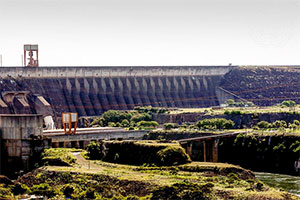 UN Power Plant, Paraguay. Credit: UN Photo/Evan Schneider
Energy has posed a great challenge for economies around the world. As global energy consumption skyrockets throughout the years, so does the need for sustainable solutions. The Sustainable Development Goals are essential in providing people with access to safe, affordable, and sustainable energy sources that minimize harm on the planet. Progress towards these goals opens the door for an advancement in modernization for communities on a global level and allows for a potential mitigation of tensions between nations.
The UN’s Summit of the Future in 2024 offered new initiatives that are being taken to achieve these goals, including a decreased reliance on fossil fuels, a switch to renewable energy sources, and improved climate financing.
IPS is well positioned to provide relevant, insightful, and compelling analysis of recent updates and measures being taken around the world to achieve a cleaner future.

The Week with IPS

NEXT STOP - SDGs
Tracking global progress towards a sustainable world
Tracking global progress towards a sustainable world
