Languages
Saturday, November 7, 2026



News and Views from the Global South
Energy
CHILE: International Campaign for a Dam-Free Patagonia
"Patagonia is THE symbol of nature in the world," says U.S. lawyer Aaron Sanger, who is leading an international campaign against Hidroaysén, a joint venture that is planning to build five huge hydroelectric stations in the south of Chile.ENERGY-BRAZIL: Elephant Grass for Biomass
Sugarcane is gradually being edged out of pole position for biofuel efficiency, as studies by the Agrobiology Centre at the state Brazilian Agricultural Research Corporation (Embrapa) are finding that elephant grass has even greater potential.ENERGY: Report Challenges EU Subsidies for Biofuels
The European Union's support for biofuels may not be the most cost-effective way for the 27-country bloc to tackle climate change, a new study has concluded.ENERGY: Citigroup, Bank of America Raked Over Coal
U.S. environmentalists seeking to turn up the heat on the coal industry, which they blame for a litany of problems, are targeting two banks they say have taken the lead in financing mines.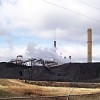
CLIMATE CHANGE: U.S. Moving Backwards
As global warming melts the Arctic, the United States's biggest banks are investing billions of dollars in as many as 150 new coal-fired power plants around the country.
SOUTH AFRICA: High Stakes Battle Between Mining and Environment
Environmentalists and tour operators appear to be losing the battle against mining companies in Mpumalanga, a province in the east of South Africa. This confrontation - which also pits two ministries against each other - will determine the future of hundreds of lakes and rivers, and has implications for the economic sustainability of the province.
ENVIRONMENT: Algae Against Climate Change?
Research into the use of algae to capture carbon dioxide from the air is changing the negative reputation of these organisms, often seen as a plague associated with agricultural fertiliser run-off.ENERGY-AFRICA: Big Potential and Challenges for Biofuels
Biofuels offer Africa the chance to supply itself with alternative energy sources, and also to become a major supplier of these sources for developed markets. Yet, challenges - from creating the relevant infrastructure to competition for biofuel crops from food markets - remain.BOLIVIA: Visit by Iranian President Kicks Up Dust Storm
Bolivia’s President Evo Morales is beginning to forge his foreign policy in the conflict-torn Middle East as he announced the establishment of diplomatic relations with Iran, under the worried gaze of the United States and against stiff opposition from the local business community.ENERGY-SWEDEN: Wood Cellulose – Alternative to Brazilian Ethanol?
The world’s car makers are racing each other to produce powerful new models that run on ethanol-based fuels for the booming Swedish market.CHILE: Mega Dams, Mega Impacts, Mega Half-Truths
An organisation in the Aysén region in the south of Chile which opposes the building of five hydroelectric stations on two large rivers has made a documentary film about the reactions of communities affected by dams and power lines in Chile and Argentina.TRADE-CANADA: Losing Water Through NAFTA
Under the North American Free Trade Agreement, Canada lost control over its energy resources. Now, with "NAFTA-plus", it could also lose control over its freshwater resources, say experts.SURINAME-GUYANA: Maritime Settlement Sparks Oil Rush
Late Thursday afternoon a United Nations court settled once and for all a simmering maritime border row between two of the smallest nations in South America, opening the way for international companies to exploit suspected vast oil and gas resources below the sea.
AGRICULTURE-BRAZIL: Using Alternative Methods to Adapt to Drought
"It is painful to think that global warming will further aggravate the lack of rainfall" in Brazil’s semiarid northeast, said Luiz Tomacheski, who was stunned to see firsthand the dry landscape of twisted thorny shrubs and patches of brown grass in this region.POLITICS-BURMA: Buddhist Clergy on Collision Course With Junta
Burma’s Buddhist monks are threatening to turn an on-going protest against steep hikes in fuel prices into a religious and moral showdown with the country’s oppressive military regime.ENERGY-ARGENTINA: Handing Out Concessions ‘In Perpetuity’
Political leaders and activists have asked the justice system in Argentina to rule on the legality of the Chubut provincial government’s extension until 2047 of a foreign corporation’s concession to the country’s largest oil reserve. The decision was taken 10 years before the current concession expires.
ECONOMY-IRAN: Petrol Rationing – Bumpy Ride
Two months after the government of President Mahmoud Ahmadinejad began rationing petrol to ‘’vaccinate’’ itself against possible sanctions, critics say the plan has failed to cut down gasoline consumption. Instead it has hurt the agriculture, tourism, transportation and other sectors of the economy.
ENERGY-CANADA: Wind vs. Water in Giant Dam Dispute
A controversial hydroelectricity expansion project in Quebec has drawn sharp criticism from aboriginal and environmental organisations on both sides of the Canadian-U.S. border.ICELAND: Hydropower Scheme Generates Heat
Controversy is building up over a proposal to erect a set of three hydroelectric power plants and their associated dams in the lower Thjorsa river in South Iceland.FRANCE: Sarkozy Hedges Free Market With Gov’t Control
Following nearly two years of squabbling, this month France’s national gas utility, Gaz de France, finally agreed to team up with the Franco-Belgian utility Suez, to create an energy behemoth with some 72 billion euros in revenue.
ENVIRONMENT-GERMANY: What a Lake Says About Climate Change
When the East German nuclear power plant Rheinsberg was shut down almost 20 years ago, environmentalists expected that fauna and flora in nearby Stechlin lake would survive without further damage.« Previous Page — Next Page »





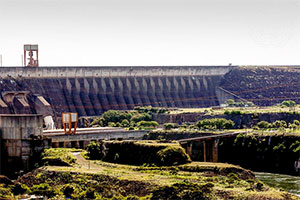 UN Power Plant, Paraguay. Credit: UN Photo/Evan Schneider
Energy has posed a great challenge for economies around the world. As global energy consumption skyrockets throughout the years, so does the need for sustainable solutions. The Sustainable Development Goals are essential in providing people with access to safe, affordable, and sustainable energy sources that minimize harm on the planet. Progress towards these goals opens the door for an advancement in modernization for communities on a global level and allows for a potential mitigation of tensions between nations.
The UN’s Summit of the Future in 2024 offered new initiatives that are being taken to achieve these goals, including a decreased reliance on fossil fuels, a switch to renewable energy sources, and improved climate financing.
IPS is well positioned to provide relevant, insightful, and compelling analysis of recent updates and measures being taken around the world to achieve a cleaner future.

The Week with IPS

NEXT STOP - SDGs
Tracking global progress towards a sustainable world
Tracking global progress towards a sustainable world
