Languages
Sunday, November 1, 2026



News and Views from the Global South
Energy

Q&A: Sudan and South Sudan Will Resolve Oil Issues
Sudan and South Sudan will eventually agree on a reasonable oil-sharing agreement between the two nations as there has been political will from both sides to find a resolution.
SRI LANKA: Solar Lights Dispel Post-War Gloom
The one thing that a quarter century of civil war has taught the local population in the north of the island is how to make the best use of local resources - starting with plain sunshine.Biofuels, Speculators Driving Food Price Surges
A new report on global hunger pinpoints factors at the heart of spikes in food prices it says are exacerbating the unfolding food crisis in the Horn of Africa.GERMANY: Anti-Nuclear Exhibit Calls for Culture of Peace
The question which is safer - the heavily armed world we live in now, or a world in which all peoples' basic needs are met - is one core issue of an antinuclear exhibition that has reached Germany after touring more than 220 cities in 28 countries.Pressure Builds on Iran at Nuclear Watchdog Agency
As Iran continues a slow march toward potential nuclear weapons capability, diplomatic action to contain the programme is likely to shift to the International Atomic Energy Agency (IAEA), whose director general, Yukiya Amano, has taken a harder line than his predecessor about alleged military research by Iran's nuclear scientists.Anti-Nuclear Struggle Has Large Fallout
The anti-nuclear struggle in India did not gain the same national prominence as the hunger strike waged by Anna Hazare against rampant corruption among India’s top politicians. Yet a landmark it surely was in the history of India’s nuclear programme.
U.S.: Solar Homes Offer New Hope for Renewable Energy
As a light drizzle fell Saturday, U.S. Energy Secretary Steven Chu pointed to solar houses constructed by students on the National Mall park in Washington as evidence that the U.S can compete internationally in the renewable energy market to create jobs and win "the war against climate change".
Renewable energy will drive up SA’s energy costs
 South Africa wants to move from its reliance on coal for the generation of electricity to renewable energy sources like wind power and solar electricity. Zukiswa Zimela compiled this audio report:

SOUTH SUDAN: Oil Conflict Threatens to Break Out
The communities living on the South Sudan-Sudan border may face genocide if the conflict between the two countries disputing control of oil reserves is not resolved.
SUDAN: China Could Oil the Peace Process
China, a major player in the oil industries of South Sudan and Sudan, could use its influence to stop the escalating violence between the two countries that has seen the displacement of thousands of people and a reduction in oil production, a United States State Department official says.BRAZIL: Undersea Oil Revives Shipbuilding Industry
So far in Brazil, the "curse of oil" is only apparent in the political sphere, where Congress is divided about how to distribute the country's increasingly large oil earnings. But in the meantime the recent discoveries of offshore reserves in the Atlantic ocean are breathing new life into the shipbuilding industry.JAPAN: New Radiation Limits Demanded for Children
The threat of radioactive contamination faced particularly by children after the Mar. 11 nuclear disaster in Japan has touched the heart of the Japanese public, and become a major political and social issue.
Q&A: Big Polluters Should “Stay Home” from Climate Conference
In order for global climate change policies and efforts to progress, intense local activism and countries most adversely affected by climate change must play a leading role.
Q&A: “It Pays Off to Become More Energy Efficient”
With the Kyoto Protocol's first commitment period set to expire in 2012, Connie Hedegaard, EU commissioner for climate action, is pushing for more countries to agree on binding commitments to reduce greenhouse gas (GHG) emissions.In Expanding Energy Access, Businesses Can Reap Benefits
The United Nations is partnering with private sector firms to promote universal access to energy, improved efficiency and wider deployment of renewable sources.
INDIA: Kashmiris Hail Hague Stay on Dam
A ruling by the International Court of Arbitration (ICA) at The Hague, staying construction of a dam across a river that flows into Pakistan, has brought cheer to the tribal people who live around the site.U.N. Meetings Push for Nuclear Safeguards and Test Bans
History is strewn with proof of the destructive capabilities of nuclear weapons and power, yet science is also replete with evidence that nuclear power has many advantages.
Bangladesh Draws Pakistan’s Garment Makers
Faced with serious political instability and a deteriorating industrial climate, Pakistan’s garment exporters are turning to Bangladesh, a territory which splintered away after a bloody war of independence in 1971.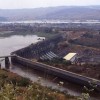
DR CONGO: No Water, No Management, No Power
Frequent power cuts have led to the firing of the board of the Democratic Republic of Congo's national electricity company. But it is not clear if sub-par generation from the Inga hydroelectric power stations supplying the capital Kinshasa is due to poor management or to unusually low water levels in the Congo River.China Breaks Latin America’s ‘Hundred Years of Growth Solitude’
With a shifting global landscape breeding strange bedfellows in the realm of international trade, analysts and economists gathered at the World Bank headquarters Tuesday to discuss what will likely be one of the defining partnership of the decade – China's connection with Latin America and the Caribbean (LAC).
Indian Activists Bring Anti-Coal Campaign to World Bank
As leaders from two of the world's largest financial institutions, the World Bank and International Monetary Fund, met for annual meetings here Tuesday, a delegation of activists from India called on the World Bank to follow through with its proposal to dramatically cut funding for coal-burning power stations.« Previous Page — Next Page »





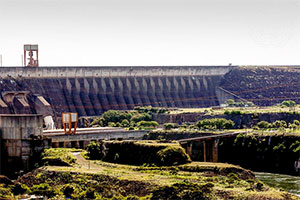 UN Power Plant, Paraguay. Credit: UN Photo/Evan Schneider
Energy has posed a great challenge for economies around the world. As global energy consumption skyrockets throughout the years, so does the need for sustainable solutions. The Sustainable Development Goals are essential in providing people with access to safe, affordable, and sustainable energy sources that minimize harm on the planet. Progress towards these goals opens the door for an advancement in modernization for communities on a global level and allows for a potential mitigation of tensions between nations.
The UN’s Summit of the Future in 2024 offered new initiatives that are being taken to achieve these goals, including a decreased reliance on fossil fuels, a switch to renewable energy sources, and improved climate financing.
IPS is well positioned to provide relevant, insightful, and compelling analysis of recent updates and measures being taken around the world to achieve a cleaner future.

The Week with IPS

NEXT STOP - SDGs
Tracking global progress towards a sustainable world
Tracking global progress towards a sustainable world
