Languages
Monday, November 2, 2026



News and Views from the Global South
Energy
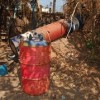
WEST AFRICA: Households Turning to Cow Dung for Energy
There are dusty barrels carefully positioned outside many of the family compounds in the Léona neighbourhood of Kaolack, a city of 20,000 in western Senegal: signs of success for a project to introduce the use of biogas as a source of fuel. Amadou Faye, whose family herds cows, goats and sheep as well as growing groundnuts on the side, is among the early adopters.
INDIA: ‘Women Make Good Business Sense’
Harish Hande believes that involving women in design, manufacture and sales pays dividends in any business, but especially in those making products that women ultimately use.
Record Arctic Ice Melt Threatens Global Security
All the analysis and commentary about safety and security on the tenth anniversary of 9/11 ignored by far the biggest ongoing threat to global security: climate change.Citizen Actions Turn Up the Heat for a Warming Planet
Civil society leaders meeting here for the 2011 CIVICUS World Assembly are looking ahead toward next year's Rio+20 summit – a milestone anniversary of the 1992 Rio Earth Summit, and a crucial meeting of U.N. member states and non-governmental organisations to work towards a greener future.U.S.: Citizens Ramp Up Battle Against Fossil Fuel Industry
The fight against oil and gas giants is heating up in the U.S., with new waves of protest and civil disobedience springing up across the country.ARGENTINA: Against the Current in Nuclear Energy
While the tendency in the industrialised world in the wake of the Mar. 11 nuclear meltdown in Japan is to abandon plans for further nuclear energy development, in Argentina the capacity of existing plants is being strengthened, and new reactors are being built.JAPAN: Fukushima Blows Lid Off Exploited Labour
The Fukushima disaster has thrown up the first opportunity in decades to bring justice to thousands of unskilled workers who risk radioactive contamination to keep Japan’s nuclear power plants running.
/CORRECTED REPEAT*/: U.S. Awash in Oil and Lies, Report Charges
With four times as many oil rigs pumping domestic oil today than eight years ago and declining domestic demand, the United States is awash in oil.Obama Challenged to Stand Up to Big Oil Lobby
The United States' biggest environmental groups put aside their differences last week to make an urgent intervention on the country's addiction to oil. The first step on the long road to recovery, they say, is to stop the proposed construction of the Keystone XL pipeline that will "mainline" the world's dirtiest oil from northern Canada into the U.S. heartland.
U.S.: New Oil Pipeline Sparks Civil Disobedience
On the tenth day of a protest wave that has been gaining momentum since Aug. 20 and will continue until Sep. 3, nearly 300 people gathered in Lafayette Park directly across from the White House in Washington D.C., chanting, "When I say 'tar sands', you say 'no!' When I say 'action', you say 'go!'"JAPAN: Fukushima Gives Renewable Energy a Chance
After decades of not bothering to switch off the lights in unoccupied rooms in their Tokyo home, Masayoshi Sakurai and his children now meticulously make sure they do.THAILAND: The Green Cause Can Kill
In a country where the going rate for a contract killing is around Thai baht 15,000 (500 dollars), the price paid to eliminate Thongnak Sawekchinda, an environmental activist, has caught the police by surprise.
MALAWI: Remaining in the Dark
Malawi’s attempts to improve trade and investment in the country have taken a huge step backwards following a decision by the Millennium Challenge Corporation (MCC), a United States government foreign aid agency leading the fight against global poverty, to put on hold 350.7 million dollars meant to improve the country’s flawed energy sector.
CLIMATE CHANGE: Welcome to Bizarro World
Canada and the United States are now the centre of Bizarro World. This is where leaders promise to reduce carbon emissions but ensure a new, supersized oil pipeline called Keystone XL is built, guaranteeing further expansion of the Alberta tar sands that produce the world's most carbon-laden oil.
NEPAL: Improved Wood Stoves Save Health, Environment
When Binita Lamichhane got married she was troubled by her husband's bloodshot eyes. "What happened to your eyes?" the 18-year-old bride asked. "Smoke," came the answer.
Q&A: “Governments Must Listen to the People, Not the Polluters”
The historic 1992 Earth Summit in Rio de Janeiro marked one of the world's seminal international conferences on the environment, creating or reinforcing a slew of U.N. treaties and protocols on climate change, biodiversity, desertification and forests.NIGERIA: Refined Oil Shortage Continues for Africa’s Largest Producer
"We are suffering in the midst of plenty." That was how Nelson Ilemchi summed up his plight as he spent an entire day queuing to buy kerosene. Since January Africa’s largest producer of crude oil has been experiencing a protracted nationwide scarcity of the refined product.Fukushima Clouds Hiroshima Anniversary
Matashichi Oishi, 78, a radiation victim from Bikini Atoll, the site of a U.S. hydrogen bomb test in 1954, will make his annual lone visit this week to commemorate the Aug. 6 anniversary of the nuclear bombing of Hiroshima 66 years ago.
Haitians Go to Africa, Bringing Solar Energy
Jean Ronel Noël, a young Haitian engineer, stood in a centuries-old fort on a small island just off Dakar and looked out at the Atlantic through a portal that once led enslaved Africans to the ships of the Middle Passage.Nuclear Plant Now an Anti-Nuclear Attraction
Environmental groups hope that a mothballed nuclear power plant on Bataan peninsula will become a major tourist attraction and earn green dollars for the country.Data Shows All of Earth’s Systems in Rapid Decline
Protecting bits of nature here and there will not prevent humanity from losing our life support system. Even if areas dedicated to conserving plants, animals, and other species that provide Earth's life support system increased tenfold, it would not be enough without dealing with the big issues of the 21st century: population, overconsumption and inefficient resource use.« Previous Page — Next Page »





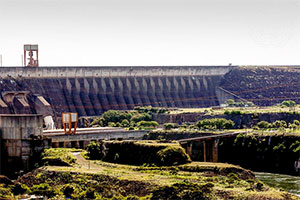 UN Power Plant, Paraguay. Credit: UN Photo/Evan Schneider
Energy has posed a great challenge for economies around the world. As global energy consumption skyrockets throughout the years, so does the need for sustainable solutions. The Sustainable Development Goals are essential in providing people with access to safe, affordable, and sustainable energy sources that minimize harm on the planet. Progress towards these goals opens the door for an advancement in modernization for communities on a global level and allows for a potential mitigation of tensions between nations.
The UN’s Summit of the Future in 2024 offered new initiatives that are being taken to achieve these goals, including a decreased reliance on fossil fuels, a switch to renewable energy sources, and improved climate financing.
IPS is well positioned to provide relevant, insightful, and compelling analysis of recent updates and measures being taken around the world to achieve a cleaner future.

The Week with IPS

NEXT STOP - SDGs
Tracking global progress towards a sustainable world
Tracking global progress towards a sustainable world
