Languages
Monday, November 2, 2026



News and Views from the Global South
Energy
U.S.: New Clean Air Rules Force Some Coal Plants to Close
Utility companies across the U.S. have announced plans to shut down and retire several coal-fired power plants following a new rule published by the federal Environmental Protection Agency (EPA) intended to reduce emissions of sulfur dioxide and nitrogen oxide.SOUTH SUDAN: Row Over Exorbitant Fees for Pipeline Use
Less than three weeks after gaining independence, South Sudan is embroiled in a row with Sudan over pipeline fees charged by the latter to export oil.
Computers Help Create a Clean Energy Future
The use of information technology in energy planning can contribute not only to developing renewable energy sources but also to moving towards a green economy.OP-ED: Germany Shows the Green Path
The decision was expected, yet it shook the world’s nuclear establishment. On May 29, some two and a half months after disaster struck at Japan’s Fukushima- Daiichi nuclear complex, Germany’s right-wing government of Angela Merkel announced that Germany is exiting from the nuclear era.
MALAWI: Fuel Shortages Ignite Violent Nationwide Protests
In light of the recent spate of protests in Malawi, government should rethink its policy to devalue the local currency, economists say.U.S.: Coal Ash New Focus of Dispute Over Health Hazards
Survey your surroundings and you'll discover that coal ash - waste from coal burned to produce electricity - is more present in everyday life than you might expect. To name a few places: toothpaste, cosmetics, wallboard, cement, and agricultural and winter de-icing products.Latin America Has One-Fifth of Global Oil Reserves
Fossil fuels are an energy source condemned by environmentalists, but do not appear to be on the way out in Latin America and the Caribbean, given the rise in the region's proven oil reserves in recent years.ECUADOR: Fate of Untapped Oil Hangs in the Balance – of Trust Fund
"Ecuador will not wait ad infinitum" for a decision by the international community, and "at the end of the year" President Rafael Correa will decide whether to extract oil that was to have been left underground at the Yasuní nature reserve, non-renewable natural resources minister Wilson Pástor has announced.AUSTRALIA: Renewable Energy Wins, Controversially
Australia has taken a major step in reducing its future greenhouse gas output with the announcement of a plan that will initially place a tax on every tonne of carbon pollution produced by hundreds of the country’s major emitters.
Q&A: Cook Islands Aims for 100 Percent Green Energy by 2020
"One hundred percent renewable energy by 2020... It is ambitious but it is not impossible," Henry Puna, prime minister of the Cook Islands, told IPS in a recent interview.
ENERGY-BRAZIL: Small Dams, Big Problems
Several rivers in the western Brazilian state of Mato Grosso are likely to become chains of artificial reservoirs feeding small hydroelectric plants (SHP), sometimes with larger power stations in between.MIDEAST: Egypt-Israel Gas Pipeline Targeted
The pipeline that carries Egyptian natural gas to Israel was attacked by unknown perpetrators on Monday (Jul. 4), the third such incident since the Jan. 25 Revolution that ended the rule of longstanding former president Hosni Mubarak.SOUTH SUDAN: Equitable Oil Deal Needed For Peace
The sharing of oil between North and South Sudan needs to be urgently addressed otherwise conflict between the two regions will escalate and could possibly lead to civil war, according to government officials and rights organisations.Rising Temperatures Melting Away Global Food Security
Heat waves clearly can destroy crop harvests. The world saw high heat decimate Russian wheat in 2010. Crop ecologists have found that each one-degree Celsius rise in temperature above the optimum can reduce grain harvests by 10 percent. But the indirect effects of higher temperatures on our food supply are no less serious.INDIA: Unfazed by Nuclear Suppliers’ New Rules
Confident in the large market it offers to the world’s nuclear suppliers, India has decided to shrug off new restrictions by a 46-nation cartel on the transfer of uranium enrichment and reprocessing technologies that potentially have military applications.Selling Nature to Save Nature, and Ourselves
Avoiding the coming catastrophic nexus of climate change, food, water and energy shortages, along with worsening poverty, requires a global technological overhaul involving investments of 1.9 trillion dollars each year for the next 40 years, said experts from the U.N. Department of Economic and Social Affairs (UN-DESA) in Geneva Tuesday.U.S.: Floods and Wildfires Trigger New Fears over Nuke Safety
Just 100 days after a deadly earthquake and tsunami devastated the Fukushima Daiichi nuclear power plant in Japan, concerns are being raised about several U.S. nuclear stations that are facing natural disasters of their own.TRADE: Brazil and Africa Ready to Do the Samba
African trade with India and China flourished over the past decade but, with unemployment rising and industrialisation failing to take hold, cracks are appearing in Africa’s much-vaunted "Look East" doctrine. Meanwhile, from across the Atlantic, Brazil is making inroads into the continent.JAPAN: Renewable Energy Grabs Limelight
After decades of being relegated to the sidelines, Japan’s fledging renewable energy industry is now basking in the limelight as the nation struggles to cope with the Fukushima nuclear accident.The Oxymoron of Political Leadership
Political will is all that's needed to bring electricity to the 2.5 billion people with no or unreliable access to power, or to feed the one billion who go hungry every day, or to finally begin to slash carbon emissions to avoid dangerous climate change, or just about any other global problem.OP-ED: The Good News About Coal
During the years when governments and the media were focused on preparations for the 2009 Copenhagen climate negotiations, a powerful climate movement was emerging in the United States: the movement opposing the construction of new coal-fired power plants.« Previous Page — Next Page »





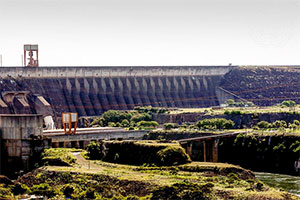 UN Power Plant, Paraguay. Credit: UN Photo/Evan Schneider
Energy has posed a great challenge for economies around the world. As global energy consumption skyrockets throughout the years, so does the need for sustainable solutions. The Sustainable Development Goals are essential in providing people with access to safe, affordable, and sustainable energy sources that minimize harm on the planet. Progress towards these goals opens the door for an advancement in modernization for communities on a global level and allows for a potential mitigation of tensions between nations.
The UN’s Summit of the Future in 2024 offered new initiatives that are being taken to achieve these goals, including a decreased reliance on fossil fuels, a switch to renewable energy sources, and improved climate financing.
IPS is well positioned to provide relevant, insightful, and compelling analysis of recent updates and measures being taken around the world to achieve a cleaner future.

The Week with IPS

NEXT STOP - SDGs
Tracking global progress towards a sustainable world
Tracking global progress towards a sustainable world
