Languages
Monday, November 2, 2026



News and Views from the Global South
Energy
COLOMBIA: Kidnapped in No Man’s Land
"Today we are launching the new campaign for demobilisation in Caguán. Planting seeds of hope against the terror of the FARC," Colombian Defence Minister Rodrigo Rivera recently wrote in his Twitter account.Nuclear for the Poor, Renewables for the Rich?
In a debate about the future of energy, the global south wants to spend tens of billions of dollars on nuclear plants while the global north looks to spend hundreds of millions on decentralised, renewable energy.On the Road to Green Energy for All
Like our cave-dwelling ancestors of 200,000 years ago, nearly three billion people still use fire for cooking and heating. Of those, some 1.5 billion people have no access to electricity. For a billion more, their only access is to sporadic and unreliable electricity networks.
“Microfinance Can Help Rural Communities Adapt to Climate Change”
Projects to fight climate change are being designed all around the world. But only five percent of them can be financed with the current international funds available, which means resources have to be used more wisely. Microfinance could be one solution.MALAWI: Power Interconnection Project Costly but Needed
In Malawi’s administrative and commercial capitals, Lilongwe and Blantyre, two things are clear, especially at night: blackouts and the sound of generators in various workplaces.
Gender Indicators for Global Climate Funds Still an Afterthought
Of the millions of dollars spent on climate change projects in developing countries, little has been allocated in a way that will benefit women. Yet, in Africa, it is women who will be most affected by climate change.JAPAN: Workers Bear Brunt of Nuke Clean-up
Twenty-eight-year-old Yushi Sato washes cars for a living, but they are no ordinary cars. Every day, Sato hoses down vehicles contaminated with radiation from the Fukushima Nuclear Power plant that was damaged by the earthquake and tsunami that hit north-east Japan Mar 11.SOUTH SUDAN: Fuel Shortages Grip Country
South Sudan is facing severe fuel shortages less than three weeks before it gains independence from the rest of the country. Many gas stations have shut down and those that remain open have people lining up overnight for fuel.
EGYPT: Solar Energy Projects Picking up Again After Uprising
On a blazingly hot summer’s day in Cairo, it’s 36 degrees Celsius in the shade. Air-conditioners and fans whirr across the city, burdening the national electricity grid. Last summer, the populous city experienced frequent water and power cuts, causing a furore. Consumption had grown by 2,600 megawatts, an increase of 13,5 percent from 2009.JAPAN: Anti-Nuke Policy to Bring Severe Economic Fallout
Three months after the devastating Mar. 11 earthquake that caused an accident at the Fukushima power plant, energy experts warn of economic fallout if nuclear energy is snuffed out too quickly, much to the dismay of an increasingly angry and frustrated public.PERU: Dam Project Temporarily Suspended to Calm Protests
The outgoing government of Peruvian President Alan García has suspended construction of the Inambari hydroelectric complex, part of an energy deal with Brazil. But activists say the move is merely aimed at calming tempers among local people opposed to the dam, while handing the problem on to García's successor, president-elect Ollanta Humala.
Hydropower Dams Hurt Amerindians in Brazil and Canada
Michael Lawrenchuk, a Cree political activist from Canada, was given a standing ovation at the International Hydropower Association congress held in this Brazilian border town, after depicting the suffering of his people since dams began to be built on rivers across their land.Postponing Emissions Cuts Carries Steep Price-tag
If we're lucky, by the time a tough but fair international treaty to meet the climate change challenge is finalised, it will be largely unnecessary. The snail's pace of negotiations certainly gives countries plenty of time to understand the financial, social and environmental advantages of kicking their dangerous addiction to fossil fuels.
OP-ED: Drilling Deep Mistakes in the Arctic
Nuuk is a long way from my hometown of Durban, and the Arctic is a long way for an African to come to campaign about climate change. Yet, here I sit, in a jail cell, with my colleague Ulvar Arnkvaern, in the ‘Institution’, a prison in Greenland’s capital. I sit here for breaching an exclusion zone and climbing aboard a dangerous deep water drilling rig some 120 km off Greenland’s coast.
ICELAND: New Energy Stinks, And Worse
Public health authorities in Reykjavik have criticised plans for the expansion of the Hellisheidi geothermal power plant. They say that levels of the gas hydrogen sulphide could increase by 40 percent if a new geothermal field, Grauhnukur, is developed and nothing is done to ensure that the levels of the gas remain below maximum permitted levels.LATIN AMERICA: Renewable Energies Will Devour Metal Resources
The expansion of renewable energies in Latin America will drive up demand for metals like copper, which only recycling will be able to meet.MALDIVES: Mining ‘Smoking Mountain’ of Rubbish for Energy
Most visitors to the Maldives – a string of islands southwest of Sri Lanka – won’t miss the so-called "smoking mountain" made from local residents’ trash as well as the garbage tourists leave behind in resorts nearby.Reducing Soot and Smog Would Help Stabilise Climate
Clean the air, cool the planet and prevent millions of deaths with fast action on soot and smog, a new report urges.Canada Spurns Kyoto in Favour of Tar Sands
Canada was roundly criticised by other nations at a major U.N. climate meeting last week after being caught underreporting carbon emissions from its tar sands oil production facilities, one of the country's biggest and fastest growing sources of global warming gases.
ZIMBABWE: Import of Second Hand Japanese Cars to be Banned
For Mathew Marufu, who has a disabled 10-year-old son, owning a second hand Japanese car has been an ‘answer from God’.MALAWI: Village Hands Join to Save Forest for Juice
Seventy kilometres outside Malawi's commercial capital, Blantyre, a profitable cooperative enterprise is providing villagers jobs and preserving forests.« Previous Page — Next Page »





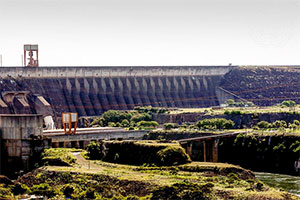 UN Power Plant, Paraguay. Credit: UN Photo/Evan Schneider
Energy has posed a great challenge for economies around the world. As global energy consumption skyrockets throughout the years, so does the need for sustainable solutions. The Sustainable Development Goals are essential in providing people with access to safe, affordable, and sustainable energy sources that minimize harm on the planet. Progress towards these goals opens the door for an advancement in modernization for communities on a global level and allows for a potential mitigation of tensions between nations.
The UN’s Summit of the Future in 2024 offered new initiatives that are being taken to achieve these goals, including a decreased reliance on fossil fuels, a switch to renewable energy sources, and improved climate financing.
IPS is well positioned to provide relevant, insightful, and compelling analysis of recent updates and measures being taken around the world to achieve a cleaner future.

The Week with IPS

NEXT STOP - SDGs
Tracking global progress towards a sustainable world
Tracking global progress towards a sustainable world
