Languages
Thursday, November 5, 2026



News and Views from the Global South
Energy
Canada Spurns Kyoto in Favour of Tar Sands
Canada was roundly criticised by other nations at a major U.N. climate meeting last week after being caught underreporting carbon emissions from its tar sands oil production facilities, one of the country's biggest and fastest growing sources of global warming gases.
ZIMBABWE: Import of Second Hand Japanese Cars to be Banned
For Mathew Marufu, who has a disabled 10-year-old son, owning a second hand Japanese car has been an ‘answer from God’.MALAWI: Village Hands Join to Save Forest for Juice
Seventy kilometres outside Malawi's commercial capital, Blantyre, a profitable cooperative enterprise is providing villagers jobs and preserving forests.
Millions May Soon Be Fleeing the Floodwaters
Mass migration will inevitably be part of human adaptation to climate change, experts agree, since parts of the world will become uninhabitable in the coming decades.Turning Toward the Sun for Energy
One key component of the Plan B climate stabilisation strategy is solar energy. Solar is even more ubiquitous than wind energy and can be harnessed with both solar photovoltaics (PV) and solar thermal collectors.Swiss Bid Disputed Goodbye to Nuclear Energy
Switzerland is witnessing a drastic turnaround in energy policy. Half a year ago, plans for the construction of new nuclear reactors were heavily debated. Now, three months after the disaster in Fukushima, the initial steps for a staged nuclear shutdown have been taken.Cautious Push Ahead for Nuclear Energy
Seeking to calm public opinion about the dangers of nuclear energy, government ministers and other representatives from 33 countries have agreed to carry out safety audits and "stress tests" on nuclear plants.Africa Looks To a Green Future
As G20 ministers met here Tuesday to discuss nuclear safety, another meeting has been taking place 6,000km away - to examine green business growth.Ahmadinejad’s Subsidy Reductions Squeeze Iran’s Producers
Owners of industrial and agricultural enterprises who initially welcomed Iranian President Mahmoud Ahmadinejad's plan to reduce subsidies by lifting the price-support system for basic goods have now become its chief critics.Bike vs Car on a Hot Planet
As global carbon emissions hit record-high levels last year, officials from leading Asian nations told the 2011 International Transport Forum in nearby Leipzig that their citizens want more cars.OP-ED: Climate Talks: Voices of the Vulnerable Must Be Heard
Last week, the world received a warning. A disturbing report from the International Energy Agency, the respected international authority on energy policy, found that CO2 emissions in 2010 were the highest ever recorded.ENVIRONMENT DAY: Radioactive Oil, Fertilisers and Tobacco
Emissions of radioactive materials from the burning of fossil fuels and the production of chemical fertilisers are another reason to come up with sustainable alternatives, experts say.Germany to Boost Renewables
The decision by the German government of Chancellor Angela Merkel to phase out nuclear power by 2022 will increase efficiency in the use of energy, boost investment and accelerate technical progress in renewable energy sources, and promote international energy cooperation, according to numerous experts.World’s Energy Poor See Receding Light at End of Tunnel
As the world continues to marvel at the widespread progress in modern technology and home electronics, there are still about 2.5 billion people - out of a global population of nearly 6.9 billion - who have little or no access to electricity.Lend Your Car, Save, and Save the World
The world's more than 850 million cars and small trucks are parked 20 to 22 hours a day. Why not use these vehicles more efficiently by letting other people drive them when the owners aren't, asks Robin Chase, CEO of Buzzcar, a car- sharing network to be launched shortly in France.
SOUTH AFRICA: Sound Policy Key to Renewable Energy
A radical rethink of current energy policy can cut South Africa's greenhouse gas emissions by 80 percent in 2050 compared to 1990 levels. More than that - after an initial spike in investment - South Africans four decades down the line would pay 23 billion dollars per year less for their electricity compared to business as usual.Germany Pledges Nuclear Shutdown By 2022
Germany has decided to shut all its nuclear reactors by 2022 in a drastic policy reversal in the wake of the nuclear disaster at Japan's Fukushima plant.Iceland Pushes Energetically Ahead
Iceland’s national power company, Landsvirkjun, has announced that it intends to double its generating capacity over the next 15 years, with a blend consisting mostly of hydroelectric and geothermal plants but potentially using wind and tidal energy as well.New Iran Sanctions Could Push Petrol Prices Even Higher
U.S. lawmakers have introduced a new package of unilateral sanctions targeting Iran that would challenge U.S. President Obama's discretionary authority to enforce such sanctions and would impose comprehensive restrictions on foreign entities that ship, refine or provide any other related services to Iran's energy sector.
ENVIRONMENT-CHILE: Wilderness Dams Galvanise Protesters
Environmental approval for the construction of five hydroelectric dams in Chile's southern Patagonia region has triggered nationwide protests in Chile, giving rise to a citizen's movement whose focus has gone beyond the question of the dams.
Q&A: “The Battle for Patagonia Has Just Begun” in Chile
The HidroAysén hydroelectric project in Chile’s Patagonia region is causing "a credibility crisis for institutionality and (President) Piñera," environmentalist Sara Larraín told Tierramérica.« Previous Page — Next Page »





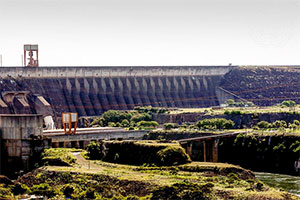 UN Power Plant, Paraguay. Credit: UN Photo/Evan Schneider
Energy has posed a great challenge for economies around the world. As global energy consumption skyrockets throughout the years, so does the need for sustainable solutions. The Sustainable Development Goals are essential in providing people with access to safe, affordable, and sustainable energy sources that minimize harm on the planet. Progress towards these goals opens the door for an advancement in modernization for communities on a global level and allows for a potential mitigation of tensions between nations.
The UN’s Summit of the Future in 2024 offered new initiatives that are being taken to achieve these goals, including a decreased reliance on fossil fuels, a switch to renewable energy sources, and improved climate financing.
IPS is well positioned to provide relevant, insightful, and compelling analysis of recent updates and measures being taken around the world to achieve a cleaner future.

The Week with IPS

NEXT STOP - SDGs
Tracking global progress towards a sustainable world
Tracking global progress towards a sustainable world
