Languages
Thursday, November 5, 2026



News and Views from the Global South
Energy
JAPAN: Respect for Authority Gives Way to Anger
More than a hundred young nursing mothers living in Fukushima and nearby areas have signed up to get themselves checked for radiation contamination, but they would rather do it on their own, with no help from the Japanese government.
Still Awaiting a Roadmap for Sustainable Development
The road to the crucial Rio+20 conference on greening the world economy next year has hit a setback with the breakdown of the 19th session of the U.N. Commission on Sustainable Development after 10 days of intense negotiations.
BRAZIL: Women Break Down Barriers in Heavy Construction
They represent just seven percent of the workers building the Santo Antonio hydroelectric dam on the Madeira River, which cuts across the Amazon jungle in northwest Brazil. But the women workers total 1,200, and many of them have had to break down barriers to jobs seen as the preserve of men.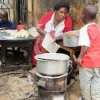
Uganda Stoves Saving Fuel and Forests
Carbon finance is putting new and efficient charcoal stoves into hundreds of thousands of kitchens in Uganda – reducing charcoal use and protecting forests as well as saving money for poor households.Humanity Hitting the Resource Ceiling
Better living through using far fewer material resources is the only possible future, experts agree. Humanity is pressing up against the limits of a finite planet to provide resources like water, oil, metals and food, according to a new report released Thursday.U.N. to Host World Summit on Nuclear Safety
The severity of the recent nuclear accident at the Fukushima Daiichi power plant in Japan has prompted U.N. Secretary- General Ban Ki-moon to convene a high-level meeting of world leaders on a politically-sensitive issue: nuclear security.
INDIA: Waste to Energy Project Not So Green
A waste-to-energy (WtE) project in the heart of the Indian capital run by a powerful industrial family is testing the enforceability of the country’s environmental and zoning laws.Japan Veers Away from Nuclear Energy
Prime Minister Naoto Kan’s decision to stop the building of new nuclear power plants and explore solar and wind energy signals a drastic turn in Japan’s energy policy that has brought a sigh of relief to wary scientists, anti-nuclear groups and an increasingly anxious public.
DEVELOPMENT: Women Demand Access to Water and Energy
"Women in LDCs bear the brunt of economic and social hardships," said Wubitu Hailu, managing director of an Ethiopian NGO, the Kulich Youth Reproductive Health and Development Organisation. The failure to provide access to basic services like clean water and electricity is a major factor preventing women from realising their full potential.Malawi Lays Out Its Agenda at U.N. Development Conference
Escalating fuel prices, climate change and the impact of the global financial crisis are the challenges currently compromising development in Malawi. The Southern African country wants to see a bold plan of action addressing these problems agreed upon at the Fourth U.N. Conference on Least Developed Countries (LDC-IV) currently taking place in Istanbul, Turkey.
AFRICA: Development Agencies Support Harmful Oil Palm Production
Increasing industrial production of oil palm in sub-Saharan African countries, carried out by foreign corporations, is destroying the livelihoods of thousands of Africans and the biodiversity of ecosystems. Despite this, industrialised countries’ governments and development agencies continue to promote such production.
AFRICA: Investment Growth Benefiting Only Some Poor States
While foreign direct investment in least developed countries (LDCs) in Africa has risen sharply over the past decade, most of it went to resource-rich economies and had little impact on employment creation.
BOLIVIA: Dam Spells Hope and Fear for Small Jungle Town
Arturo Sánchez, 72 years old and nearly blind, dreams of bringing ecotourism to Cachuela Esperanza, a Bolivian town of 1,336 people on the Beni river, and hopes the construction of a huge hydroelectric dam will give a boost to his dreams.AFRICA: Coalition Against the High Cost of Living
In Burkina Faso, Niger, Kenya, Uganda: governments are worried by soaring prices - and by newly confident and enraged civil society. Governments are being challenged to take decisive action, despite lacking the tools to address rising global oil prices. Their responses could have important consequences for their legitimacy and survival.
New Dangers Arise at Chernobyl
In the aftermath of the anniversary of the worst nuclear disaster in history, Ukrainian authorities have pledged not to abandon those still in need of assistance. But many of the country’s policies may be increasing the risk of a new catastrophe.INDIA: Fukushima Won’t Stop World’s Largest Nuclear Facility
While the Fukushima tragedy has not deterred India from going ahead with building the world’s largest nuclear power facility at Jaitapur on the western coast, the government has announced a tighter safety regime for its ambitious nuclear power programme.
HEALTH: Fukushima, Chernobyl Raise Questions about WHO’s Role
The nuclear disaster in Fukushima, Japan and the 25th anniversary of the catastrophe in the Chernobyl nuclear power plant in Ukraine have thrown into relief contradictions in the role played by the World Health Organisation, which civil society organisations have spent years pointing out.
BOLIVIA: The Boomerang Effect for Morales
It wasn't easy to get to the Bolivian city of Riberalta from Brazil. The adventurous journey included potholes on the Brazilian highway, a rickety boat that ferried us across the Mamoré - the border river - and an unnerving ride on a motorcycle taxi. But the biggest complication was the roadblocks.OP-ED: Maternal Meltdown From Chernobyl to Fukushima
On this day 25 years ago, a massive explosion at the Chernobyl nuclear power plant in Ukraine released clouds of radioactive particles into the atmosphere across Russia and Europe. The catastrophe had lasting effects on people's health, particularly on women and their unborn children. On this sober anniversary, we look back at Chernobyl and the lessons learned to ensure the health of Japanese women as the Fukushima disaster unfolds.
Death Hangs Over Homecoming at Chernobyl
It was almost 6am on April 26, 1986, when Alexey Breus left his flat in Pripyat and headed towards Chernobyl’s infamous reactor number 4, unaware that it had been five hours since his workplace had witnessed the beginning of the world’s worst nuclear disaster: "Only when I arrived with the bus I saw the destruction," he told IPS. "My hair stood up."OP-ED: Still No Escape From Killer Chernobyl
The accident could have served as a wake-up call to the whole of humanity. Twenty-five years ago, on Apr. 26 1986, disaster struck at the fourth reactor of the Chernobyl nuclear complex in the Ukrainian state of the former Soviet Union.« Previous Page — Next Page »





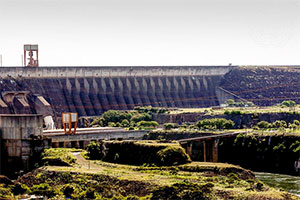 UN Power Plant, Paraguay. Credit: UN Photo/Evan Schneider
Energy has posed a great challenge for economies around the world. As global energy consumption skyrockets throughout the years, so does the need for sustainable solutions. The Sustainable Development Goals are essential in providing people with access to safe, affordable, and sustainable energy sources that minimize harm on the planet. Progress towards these goals opens the door for an advancement in modernization for communities on a global level and allows for a potential mitigation of tensions between nations.
The UN’s Summit of the Future in 2024 offered new initiatives that are being taken to achieve these goals, including a decreased reliance on fossil fuels, a switch to renewable energy sources, and improved climate financing.
IPS is well positioned to provide relevant, insightful, and compelling analysis of recent updates and measures being taken around the world to achieve a cleaner future.

The Week with IPS

NEXT STOP - SDGs
Tracking global progress towards a sustainable world
Tracking global progress towards a sustainable world
