Languages
Friday, November 6, 2026



News and Views from the Global South
Energy
OP-ED: A Developing Health Crisis Across the Gulf Coast
Days after the BP oil disaster began, on Apr. 20, 2010, BP and the U.S. administration pledged that Gulf Coast communities would be made whole. One year later that promise remains unfulfilled: across the Gulf there is a developing health crisis as a result of the oil spill.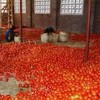
EAST AFRICA: Women Breaking Through Trade Barriers
For 12 years now, the women around Tsangano in Malawi’s southern district of Ntcheu have put together their tomato harvest, selling some 20 tons at the outdoor markets that abound in Lilongwe, the capital. But they have very little to show for their hard work.A Fair Wind for Clean Energy in Central America
Soaring international prices for oil and gas are driving the expansion of renewable energies in Central America, a region that has plenty of untapped potential for producing hydroelectricity, wind power and geothermal energy.
Impacts of BP Oil Spill Remain Hidden in Mexican Waters
One year after the BP oil spill in the Gulf of Mexico, the worst accidental offshore oil spill in history, the search for damages in Mexican territory remains inconclusive, while scientists continue gathering and testing samples.G24 Says Rich Nations’ Policies Hurting Developing World
Finance ministers of the G24 group of developing and emerging countries met on the sidelines the World Bank and International Monetary Fund spring meetings here on Thursday, warning against continued risks to their economies, despite largely "strong" growth as the world climbs out of the global financial crisis.
A Table for Nine Billion
As the World Bank and International Monetary Fund convene for their annual Spring Meetings here, soaring food prices are high on the agenda, prompting some analysts to fast-forward to 2050 and the question of how to nourish the mid-century's estimated world population of 8.9 billion people – the majority of whom will live in developing countries.
Emerging Powers Harnessing Neighbours’ Hydroelectricity
Emerging countries like Brazil and China are building numerous hydroelectric dams at home and abroad to help drive their economic growth. But while in Latin America the phenomenon is touted as an integration process, in Asia it has generated tension over the shared use of rivers.
Israel Leads the Electric Charge
A woman takes the driver's seat, turns on the radio, sliding through broadcasts of the tit-for-tat battles between Israel and the Palestinian Islamist movement Hamas till she finds a quiet music station.
BRAZIL: Belo Monte Dam Faces Endless Hurdles and Controversies
The Xingu river flows around small isles and islands and across rapids and waterfalls in Brazil's Amazon jungle, and has a dramatically reduced flow during dry season. Navigating it presents constant hurdles and risks.CUBA: Balancing Bane and Blessing of Oil
Cuba is sticking to its plans to begin oil exploration this year in its territorial waters in the Gulf of Mexico, and has assured neighbouring countries that "every reasonable" safety and environmental protection measure will be taken, in an area still haunted by the disastrous effects of the crude oil spill in 2010.
ENVIRONMENT: U.N. Tries to Put Its Own House in Order
In the past few years, United Nations headquarters in New York has undergone a transformation. Besides renovating the entire building, the U.N. is trying, as a leading international organisation, to take more responsibility and set an example for environmentally-friendly, sustainable practices by implementing such changes as cutting back on printing, posting more documents online, and creating water-saving measures.
Brazil Beefs Up Nuclear Emergency Plans
The Brazilian government is tightening safety procedures at its two nuclear power stations. Although this South American country is not prone to earthquakes or tsunamis, it is not exempt from natural disasters like landslides and flooding that could jeopardise evacuation plans if a radiation leak occurred.
ARGENTINA-BOLIVIA: Gas Pipeline to Boost Development, Revenues – But Not for Everyone
"The pipeline will carry gas to Bolivia and seven provinces in Argentina, but we who live in Campo Durán, where the pipeline starts, will not have gas," Julio Palavecino told IPS.‘No Safe Levels’ of Radiation in Japan
In a nuclear crisis that is becoming increasingly serious, Japan’s Nuclear Safety Agency confirmed that radioactive iodine-131 in seawater samples taken near the crippled Fukushima Daiichi nuclear power complex that was seriously damaged by the recent tsunami off the coast of Japan is 4,385 times the level permitted by law.CLIMATE CHANGE: Uncertain Future of Kyoto Protocol Alarms Green Groups
With just seven months to go before a pivotal U.N. climate change summit in South Africa, green groups are raising the alarm here about the future of the Kyoto Protocol, the world’s only international treaty that mandates most industrialised nations to cut their environment polluting greenhouse gases (GHG) to save the planet from overheating.BRAZIL: Science and Sugar Cane Produce Versatile Harvest
For nearly five hundred years, sugar cane was used almost exclusively for making sugar, with a handful of by-products like rum, alcohol and molasses. Now, in Brazil, it has become a source of multiple derivatives, and the focus of much scientific and technological research.
UGANDA: Sun Smiling on Renewable Energy Initiative
Clementine Auma was still living in a displaced person's camp in Gulu district when she acquired the treasure she's gone into the house to fetch. She re-emerges from her home with a white box in her arms: a solar oven.Fukushima Forces Europe to Rethink Nuclear Energy
The unfolding catastrophe at the Japanese nuclear power plant Fukushima has forced a number of European countries to radically rethink their energy policies and eventually renounce nuclear power.
Sky-High Oil Prices Here to Stay
As the Arab world continues to pitch and heave with flashes of popular uprisings here and sparks of brutal crackdowns there, analysts are painting a grim picture of the regional unrest's economic consequences, predicting the persistence of high oil prices in the coming years.Libya Uprising Hits West’s Dinner Tables
Linkages between the Libyan uprising and shelling out more money than usual at a local market in the West may not at first seem apparent but the common denominator is oil.MEXICO: Villagers Complain of Health Risks from Nuclear Plant
Brenda Mancilla, a 23-year-old Mexican woman, has suffered from tuberous sclerosis, a genetic disorder that causes the growth of benign tumours in body organs, since she was five months old.« Previous Page — Next Page »





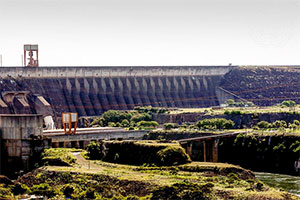 UN Power Plant, Paraguay. Credit: UN Photo/Evan Schneider
Energy has posed a great challenge for economies around the world. As global energy consumption skyrockets throughout the years, so does the need for sustainable solutions. The Sustainable Development Goals are essential in providing people with access to safe, affordable, and sustainable energy sources that minimize harm on the planet. Progress towards these goals opens the door for an advancement in modernization for communities on a global level and allows for a potential mitigation of tensions between nations.
The UN’s Summit of the Future in 2024 offered new initiatives that are being taken to achieve these goals, including a decreased reliance on fossil fuels, a switch to renewable energy sources, and improved climate financing.
IPS is well positioned to provide relevant, insightful, and compelling analysis of recent updates and measures being taken around the world to achieve a cleaner future.

The Week with IPS

NEXT STOP - SDGs
Tracking global progress towards a sustainable world
Tracking global progress towards a sustainable world
