Languages
Saturday, October 31, 2026



News and Views from the Global South
Energy
Shale Gas May Be a Mexican Mirage
In spite of mounting scientific evidence about its negative aspects, Mexico is getting ready to intensify exploration for shale gas, natural gas found trapped in shale, a sedimentary rock.
Sweden Runs Into South Sudanese Oilgate
Civil society leaders in South Sudan are closely watching a legal battle unfolding in Sweden, as prosecutors investigate an oil company accused of involvement in massive human rights abuses here.
U.S.: Nation’s Tallest Solar Tower Set for Arizona
In the western desert state of Arizona, a company called EnviroMission is planning to build a new solar tower, the first of its kind, an ambitious new way to produce energy with heat from the sun.CLIMATE CHANGE: Shale Gas Emerges as a Burning Issue
The issue seems rather similar to that of unconventional oil and has already sparked a major controversy in the West. But its implications for the debate on climate change are hardly known in countries of the Global South.
The Rush for Oil in West Africa – The New Wild West?
There is a new oil rush off the coast of West Africa. But there are fears that the sector is not sufficiently regulated, and watchdog groups are raising concerns about transparency and governance in the region.African Sun Prepares to Power Europe
Solar thermal power plants are indispensable to meet Europe’s energy demands and to reduce greenhouse gases emissions substantially, according to a new study by a European scientific commission.
World’s Biggest Hydropower Scheme Will Leave Africans in the Dark
South Africa and the Democratic Republic of Congo have signed an agreement to build a major hydroelectric power project, which is said to bring electricity to more than half of the continent’s 900 million people. But economic analysts warn that foreign investors will prevent the grid from benefiting the general public.MALAWI: Water Promises Light for Isolated Community
In just a few weeks, seven villages that had expected to remain "in the dark forever" will finally have electricity, courtesy of a small hydroelectric power plant on Lichenya River, one of the major rivers on the eastern slopes of Mulanje Mountain in southern Malawi.TAJIKISTAN: Dushanbe’s Plane Caper Not Flying with the Kremlin
Memo to leaders of Central Asian nations that lack abundant energy resources: messing with Moscow usually backfires.
Time to Derail Fossil Fuel Train, Energy Agency Warns
Countries have chained themselves to a fossil fuel train that is headed straight off a cliff, warns the International Energy Agency (IEA).
CANADA: Harper Government Guts Environment Programmes
Canada's Stephen Harper government is spending more than 60 billion dollars on new military jets and warships while slashing more than 200 million dollars in funding for research and monitoring of the environment.
Brazilian Winds Fuel Green Job Creation
The term "green jobs", coined to describe employment that contributes in some way to preserving or restoring the environment, is increasingly entering the vocabulary of companies keen to respond to the social demand for a cleaner economy.
JAPAN: Women Fight to Save Fukushima’s Children
Hundreds of Japanese women have been converging on the Japanese capital demanding better relief for some 30,000 children exposed to nuclear radiation by the Fukushima meltdown.OP-ED: A Rio+20 Activist Manifesto and Action Plan
Unless civil society activists launch their own programme of action at the United Nations Conference on Sustainable Development in Rio de Janeiro next summer (Jun. 4-6), the event will be little more than an expensive talkfest.
U.S. Carbon Emissions Down Seven Percent In Four Years
Between 2007 and 2011, carbon emissions from coal use in the United States dropped 10 percent. During the same period, emissions from oil use dropped 11 percent.
Climate Change Could Unravel Development Progress
The United Nations unveiled its 22nd annual Human Development Report on Wednesday, with grave warnings that unless countries take action against climate change and implement sustainable solutions, progress in human development will be in serious jeopardy.
WEST AFRICA: Niger River under Pressure from Dams
Several major new dams are being constructed on the Niger River. It's a positive sign of growing investment in agriculture and energy, but it also has some observers worried.WEST AFRICA: Solar Panels Light Up Remote Villages
Frequent power cuts have led people in rural areas of Burkina Faso, Mali and Senegal to turn to solar energy for electricity.
BRAZIL: Boycott of Dam Hearing Shows ‘Radical’ Foreign Policy Shift
Activists opposed to the construction of the Belo Monte hydropower dam in the Amazon jungle say the Brazilian government's decision to boycott an Inter-American Commission on Human Rights hearing represents a "radical" shift in the country's foreign policy.
Durban May Be Last Chance to Stabilise Climate Under Two Degrees
The window to limit global warming to less than two degrees C is closing so fast it can be measured in months, a new scientific analysis revealed Sunday.Climate Solutions Need Strong Decision-Making
The year 2010 endured 950 natural disasters, 90 percent of which were weather-related and cost the global community well over 130 billion dollars.« Previous Page — Next Page »





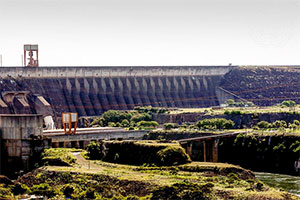 UN Power Plant, Paraguay. Credit: UN Photo/Evan Schneider
Energy has posed a great challenge for economies around the world. As global energy consumption skyrockets throughout the years, so does the need for sustainable solutions. The Sustainable Development Goals are essential in providing people with access to safe, affordable, and sustainable energy sources that minimize harm on the planet. Progress towards these goals opens the door for an advancement in modernization for communities on a global level and allows for a potential mitigation of tensions between nations.
The UN’s Summit of the Future in 2024 offered new initiatives that are being taken to achieve these goals, including a decreased reliance on fossil fuels, a switch to renewable energy sources, and improved climate financing.
IPS is well positioned to provide relevant, insightful, and compelling analysis of recent updates and measures being taken around the world to achieve a cleaner future.

The Week with IPS

NEXT STOP - SDGs
Tracking global progress towards a sustainable world
Tracking global progress towards a sustainable world
