Languages
Thursday, October 29, 2026



News and Views from the Global South
Energy
NIGERIA: Corruption Fuels Public Anger
As a nationwide strike and protests against the lifting of the fuel subsidy paralysed Nigeria for the third day in a row Wednesday, analysts say the billions of dollars a year lost to corruption in the oil industry could have been used to leave the subsidy in place.Rio+20: The Moment When Everything Changed?
Humanity is driving Earth's climate and ecosystems towards dangerous tipping points, requiring radical new forms of international cooperation and governance, experts say.
CLIMATE CHANGE: Clean, Efficient Wood Stoves Good for People and the Planet
In his quest to make the most efficient possible use of energy generated through wood combustion, Salvadoran René Núñez developed a simple but highly efficient wood stove that produces no smoke and reduces greenhouse gas emissions by 95 percent.TAIWAN: Poll Will Decide Nuclear Plant’s Fate
Voters in Taiwan’s upcoming presidential and national legislative elections will also decide the fate of a bitterly controversial 9.3 billion dollar nuclear power plant.Shale Gas Turns the Tables on Petroleum Powers
Countries that have always depended on imported oil and gas, like Chile, Paraguay, Poland or Ukraine, and especially heavy consumers such as the United States and China, could become self-sufficient in natural gas in the near future and even start exporting it.The Oil That Comes in from the Cold
Thanks to soaring oil prices and new technology, oil producers in the hot sands of Arabia, the torrid Niger delta or the humid plains of the Orinoco are facing new competition from rivals in the frozen North.
BANGLADESH: Lighting up on Solar Power
The sun never shone brighter on rural Bangladesh with low power solar systems transforming the lives of tens of millions of marginalised rural people who are unconnected to the national grid.ARGENTINA: Local Biogas Initiatives Open Virtuous Circle
A growing number of municipalities in Argentina are joining a movement aimed at tackling the problem of waste disposal while producing clean, inexpensive energy.Collateral Damage From Fukushima Hits Europe
Several leading European electricity providers and nuclear power plant constructors now count as part of the collateral damage caused by the tsunami that destroyed the Japanese nuclear power plant of Fukushima last March.U.S. Limits Mercury Pollution as Big Coal Retreats
Environmental advocates praised a recent new rule limiting pollution of mercury and other air toxins announced by the U.S. Environmental Protection Agency, one of several new air pollution standards set under the Barack Obama administration.JAPAN: Mothers Rise Against Nuclear Power
Japan’s nuclear power industry, which once ignored opposition, now finds its existence threatened by women angered by official opaqueness on radiation from the Fukushima Daiichi nuclear plant after it was struck by an earthquake- driven tsunami on Mar. 11.
Green Tech Drives Search for Rare Earths in Argentina
Argentina could meet part of the rising world demand for "rare earth" metals, required for a variety of green technologies, advanced electronic devices and medical diagnostic equipment. The challenge lies in mining them in a sustainable fashion.CASPIAN BASIN: As Energy Prices Head North, Democratisation Goes South
Quiz: Over the next three months, three former Soviet republics will hold elections – Kazakhstan, Turkmenistan and Russia. Whose official outcome will most closely resemble the truth?Op-Ed: Facing Peak Oil and Peak Gas: In Search of the Lesser Evil
The U.S. oil geologist Marion King Hubbert predicted, already in 1956, that the global production of oil will reach its all-time high roughly when we have used one half of the world's oil reserves. This is because geologists tend to find the biggest fields first, and because oil wells become tired during the production phase. The more is taken out, the more difficult it gets to bring the remaining oil to the surface.INDIA: Seeking Aid For Low Carbon Growth
After pushing for financing adaptation at the just-concluded United Nations climate talks at Durban, India is hitting every button for aid in executing its low-carbon growth plans.
JAMAICA: Waking Up to Urgency of a National Climate Policy
As increasingly extreme and erratic weather driven by the earth's changing climate exacts a heavy toll on Jamaica's population, economy and infrastructure, a consensus has emerged among scientists and policy makers here that adaptation measures must include hazard mitigation.
Draft Climate Deal Dubbed a “Death Sentence for Africa”
No one is happy late Friday at the very contentious U.N. climate talks that went into extra time on Saturday. As the lights flicker on a rainy night here, the partial power failure echoes the failure of the multilateral process, according to civil society and some countries.
CLIMATE CHANGE: Comprehensive Agreement Beyond Reach
The goal of a comprehensive and binding agreement may be beyond the reach of the 17th United Nations climate change negotiations, says the organisation's secretary-general Ban Ki-moon.
Sweden, UK and Germany Top Climate Protectors
Sweden, the United Kingdom and Germany are the top countries to fight climate change, according to the 2012 Climate Change Performance Index, whose results were published at the United Nations climate change summit today.
CLIMATE CHANGE: Biofuels Are Not the Solution
Science tells us that we are heading for a climate crisis, yet it is within our means to change course.
“Fracking” for Shale Gas: Neither Clean nor Green
Hydraulic fracturing or "fracking" is being used to tap the last remaining natural gas deposits across large areas of the United States and western Canada, fueling continued dependence on hydrocarbons instead of a shift to genuinely clean energy sources to cool the planet.« Previous Page — Next Page »





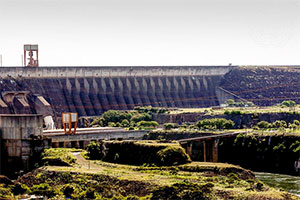 UN Power Plant, Paraguay. Credit: UN Photo/Evan Schneider
Energy has posed a great challenge for economies around the world. As global energy consumption skyrockets throughout the years, so does the need for sustainable solutions. The Sustainable Development Goals are essential in providing people with access to safe, affordable, and sustainable energy sources that minimize harm on the planet. Progress towards these goals opens the door for an advancement in modernization for communities on a global level and allows for a potential mitigation of tensions between nations.
The UN’s Summit of the Future in 2024 offered new initiatives that are being taken to achieve these goals, including a decreased reliance on fossil fuels, a switch to renewable energy sources, and improved climate financing.
IPS is well positioned to provide relevant, insightful, and compelling analysis of recent updates and measures being taken around the world to achieve a cleaner future.

The Week with IPS

NEXT STOP - SDGs
Tracking global progress towards a sustainable world
Tracking global progress towards a sustainable world
