Languages
Saturday, November 21, 2026



News and Views from the Global South
Food and Agriculture

MALI: Rush For Land Along the Niger
Domestic and international investors are taking over increasing amounts of arable land in Mali.MOZAMBIQUE: Co-existing With Floods
April signals the tail end of the flood season in Mozambique. The country's water managers will soon be able to appraise the effects of changing policies.EU Defends Food as Fuel
The European Union's anti-poverty chief has refused to concede that his promotion of biofuels has helped exacerbate global hunger.
EAST AFRICA: Green Agriculture Growing in Leaps and Bounds
Organic agriculture using natural farming methods rather than fertilisers and pesticides has made significant gains in African countries – not just among farmers but among consumers too.MOZAMBIQUE: Weather Service Key to Flood Disaster Management
Mozambique's government learned some tough lessons from the devastating floods that hit the country a decade ago. Experts say the disaster management plans drawn up since are a model for other African countries.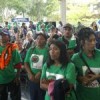
Farm Workers Fight for an Extra Cent
Chanting "No more slaves! Pay a living wage!", hundreds of farmworkers, students and others marched 22 miles through central Florida for three days, calling on the Publix supermarket chain to pay an extra penny to the impoverished workers who pick their tomatoes.
PARAGUAY: Bamboo Against Deforestation
Uncontrolled expansion of cattle farming in Paraguay has led to "cutting down trees and planting exotic grasses," says environmentalist Guillermo Gayo. To put a halt to this practice in the southern department of Paraguarí, the foundation he heads has implemented what is known as "permaculture."
AFRICA: Foreign Investors Safeguarded From Obligations to Locals
Parts of the Tana Delta on Kenya’s northern coastline are being leased to foreigners to grow food and bio-fuels for export. Civil society organisations are worried about such deals as they are done without public consultation while safeguarding investors from requirements that could benefit local communities, such as technology transfer.
WATER-ZAMBIA: Lozi Make Annual Migration to Higher Ground
Josias Akataama spent March watching the moon wane above, and flood waters rise from below. Only with the sighting of the new moon, would the men, women and children of Kandiani know when they could leave the water-logged village for higher ground.
AGRICULTURE: Affordable Solution to Costly Pests
The International Centre for Plant Physiology and Ecology (ICIPE), based at Mbita, on the Kenyan shores of the world’s second-largest freshwater body, is advocating "push-pull cultivation" as the answer to feeding future generations in Africa.ENVIRONMENT: Whaling Profitable but Bad for Iceland’s Image
Early April Greenpeace protestors in Rotterdam intercepted seven containers with 140 kg of fin whale meat from Iceland, destined for Japan. They said that the import of whale meat to the Netherlands is illegal, but Dutch authorities turn a blind eye on consignments destined elsewhere.
ARGENTINA: Invisible Rural Women
"I had never worked before, and now I produce kilos and kilos of dried fruit to sell. They taught me how to dry peaches, tomatoes, peppers and grapes, and I decided on my own to try it with melons and pears - and they were spectacular," Susana Robledo, a proud new entrepreneur from rural Argentina, told IPS.
DR CONGO: Uneasy Calm After Fighting in Northwest
Fighting between "Enyélé" insurgents and regular armed forces in the northwestern Democratic Republic of Congo at the beginning of April left 18 people dead, including nine rebels, and triggered mass displacements from the region's principal city, Mbandaka.DEVELOPMENT: Farmers on Fringe of Intl Agriculture Policy?
How's this for short-sighted: A billion people go hungry every day, food prices have climbed 30 to 40 percent, climate change is reducing agricultural production - and for the past two decades, the world has slashed investments in publicly-funded agriculture until it is a pittance in most countries.AFRICA: Monitoring a Changing Climate
The gathering environmental crisis presented by global warming makes effective weather information and prediction a matter of urgency. As Africa's farmers come to grips with adapting to climate change, it may be that the best way to equip them is to involve them directly in collecting the data.SOUTH AFRICA: Racist’s Death Highlights Rural Tension
Eugene Terre'Blanche, killed on his farm on Easter weekend, is catalysing racial tension in South Africa in death much as he did in his life.
SENEGAL: Small-Scale Irrigation: Key to Rural Development
Over the past four years, the Local Small-scale Irritation Project has spent more than $10.5 million U.S. dollars supporting rural communities in Senegal.
AFRICA: Land Grabs Continue as Elites Resist Regulation
A year after the purchases of vast swathes of farm land in Africa first drew public attention, transactions remain as opaque as ever.
ENVIRONMENT-NIGER: French State-Owned Company “Poisoning” Poor
Recent research by Greenpeace suggests that French state-owned company Areva’s public claims of decontamination of populated areas near uranium mines in Niger are false. High radio-activity persists in towns and rural areas near the mines, affecting some 80,000 people.MALI: Shea Production Vital to Women’s Incomes
Across the semi-arid Sahel region of West Africa, the shea tree prized by women, who produce a butter from its nuts that is a key ingredient in food and cosmetics. However, drought and diseases threaten this source of income.Q&A: Why Poorest African Countries Should Not Sign the EPAs
It is a "million dollar question" why African least developed countries (LDCs) would enter into economic partnership agreements (EPAs) with the EU as what remains of especially their agricultural markets will be overrun with subsidised European produce.« Previous Page — Next Page »


 Farming on the Outskirts of Juba. Credit: UN Photo/JC McIlwaine
Promoting human and planetary health is a central focus of the United Nations, as laid out in the 2030 Sustainable Development Goals (SDGs). World hunger and unsustainable farming practices continue to be pressing concerns for the world. According to the 2025 State of Food Security and Nutrition in the World report by the Food and Agriculture Organization (FAO), 673 million people faced hunger in 2024. There are stark regional disparities, with the FAO projecting that 60% of the world population facing hunger will reside in Africa by 2030. Globally, the prevalence of food insecurity has remained consistently higher for women than men.
Sustainable and efficient national food systems are essential in preserving health, education, environmental well-being, peace, economy, and security. However, creating sustainable food systems can be a challenging endeavor, as food production takes a heavy toll on the environment. The agricultural sector accounts for a significant portion of greenhouse gases. Finding safe, sustainable, and ethical strategies to feed the world is crucial in ensuring planetary longevity. A recent initiative from 2023, the EU Regulation on Deforestation-free Products (EUDR), seeks to advocate for sustainable food systems. The main driver of deforestation is the expansion of agricultural land used to produce commodities like cattle, wood, cocoa, coffee, etc. The EUDR is part of the 2020 European Green New Deal and the EU Biodiversity Strategy for 2030 and aims to limit Europe’s consumption of products linked with deforestation by requiring that companies prove that their products are deforestation-free. Despite aiming to achieve major strides in sustainability, policies such as EUDR also raise socioeconomic concerns for targeted countries. Many emerging Latin American economies are impacted by the policy, and have raised the question of how developing countries can grapple with the tensions between economic development and advancing sustainability.
IPS has been at the forefront of providing compelling and insightful stories on communities facing hunger as well as the cost of food production. IPS uses statistics from FAO, the World Food Programme (WFP) and the International Fund for Agricultural Development (IFAD) to bring relevant and hard-hitting facts to readers. This gathering of information and data from such organizations helps bring the best stories from IPS journalists working in the different regions in consultation with experts on the ground.

The Week with IPS

NEXT STOP - SDGs
Tracking global progress towards a sustainable world
Tracking global progress towards a sustainable world

