Languages
Saturday, November 21, 2026



News and Views from the Global South
Food and Agriculture
DEVELOPMENT: Food Security Requires New Approach to Water
The ongoing food crisis, characterised by growing shortages and rising prices of staple commodities, has far reaching implications for the world's scarce water resources, says a new study released here.ECONOMY-CUBA: A New Model in the Making?
Preparations for the sixth congress of Cuba’s ruling Communist Party (PCC), to be held in late 2009, may speed up the "structural changes" promised by President Raúl Castro and pave the way for a development strategy more suited to present conditions, experts say.ENVIRONMENT: GM Foods the Problem, Not the Solution
The food crisis has prompted some looks towards genetically modified food production as a solution. That in turn has led to stronger warnings over the consequences of such food for health and the environment.
LATIN AMERICA: The Divorce of Agriculture and Biodiversity
Latin America's vast biological diversity has contributed little to the region's commercial agriculture, despite being the birthplace of two of the world's four most widely consumed food crops: maize and potatoes.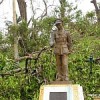
ENVIRONMENT-BURMA: 'Mangrove Loss Exacerbated Cyclone Devastation'
When researchers surveyed the battered coastlines of Asian countries after the December 2004 tsunami, they stumbled upon an arresting fact - that mangroves can save lives.
Q&A: Of Elephants, Mice and Fleas
Sylvia Borren was executive director at Oxfam Novib from 1999 until Feb 2008. Before that she was programme director.EL SALVADOR: Poor Eating Less While Food Prices Soar
Eating less is the only option left to the poorest of the poor in El Salvador, in the face of the steady rise in global food prices, which has had an impact on the domestic cost of staples like rice, beans, tortillas, milk, eggs and bread.
PARAGUAY: Women’s Cooperative Buys in Bulk to Beat Food Inflation
Making the old saying "cheaper by the dozen" their motto, a group of women in a poor neighbourhood of Asunción created a cooperative to buy food in bulk, in order to combat the rise in food prices.FINANCE: IMF “Cure” for Food Crisis Also a Cause
The International Monetary Fund (IMF) says it is responding to the global food crisis by doling out new emergency loans to 15 of the world's poorest nations, mostly in Africa.DEVELOPMENT: Food Crisis Rippling Out Like a “Tsunami”
"A rolling tsunami of social unrest is underway as we speak - hungry people are desperate people capable of taking desperate actions. This tsunami is rapidly enveloping the global South, and it won't take much longer before it knocks at the door of the global North," warned Vicente Garcia-Delgado, the U.N. representative for CIVICUS, the world alliance for citizen participation.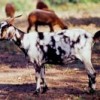
BRAZIL: Leading Agroscience Has Few Links to Small Farmers
Brazil has the most advanced agricultural science and technology system of the world's tropical countries, with an array of environmental and high-production solutions, but which rarely reach their intended target: the small farmer.DEVELOPMENT: More Fears Rise Around Doha Deal
As WTO negotiations pick up this week, some developing countries are in growing doubt that a deal liberalising their economies further could help them cope with the food crisis.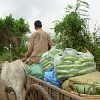
CAMBODIA: Seeing Opportunity in Rising Food Prices
Cambodian government sees opportunity for this impoverished country in the global rise in food prices that could help turn the fortunes for its agrarian economy.TRADE-AFRICA: EPA Threatens to Tear Apart Oldest Customs Union
The fate of the world’s oldest customs union, the Southern African Customs Union (SACU), is hanging in the balance as a result of the economic partnership agreements that most SACU countries have signed with the European Union (EU).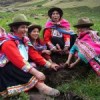
PERU: Women – The Guardians of Potato Biodiversity
In South America’s Andes mountain region, indigenous women have traditionally been responsible for selecting, conserving and managing seed potatoes from the countless native varieties of the crop, thus ensuring diversity and continued production while contributing to food security among their people.IRAQ: Nature Adds to Occupation Blows
Farmers in the Diyala province in Iraq have been hit by just about every crisis possible. First the security disaster dried up supplies and markets, then lack of electricity cut irrigation, and now comes a drying up of water resources.
LATIN AMERICA: Food Price Inflation Threatens Children
Child malnutrition in Latin America and the Caribbean will be aggravated by global food shortages, even though the region produces much more food than it consumes, say experts and officials.DEVELOPMENT: Sweden, Ireland, Britain Lead in Aiding Africa
Sweden, Ireland and Britain top an index of 21 rich countries that ranks their commitment to help develop African nations. The United States, the world's largest economy, was a distant thirteenth, while Japan remains the least committed to the continent among rich nations.CUBA: ‘Green’ Farming Techniques to Boost Production
The application of agroecological techniques and the salvaging of traditional farming methods have revolutionised food production in rural areas along the southern edge of the Cuban capital.
DEVELOPMENT: Can Sorghum Solve the Biofuels Dilemma?
A new crop that provides food, animal feed and fuel at the same time promises to help developing countries redirect money spent on oil imports to benefit their own farmers. Is sweet sorghum biofuel's "holy grail"?HEALTH-KENYA: Months After Dump Scare, Problems Persist
Every day, the Dandora dumpsite in the eastern part of Nairobi receives 2,000 tonnes of rubbish - about half of the waste generated daily by the capital's 4.5 million people. The 12-hectare site is a low mountain of smouldering trash. Vultures and marabou storks circle overhead in anticipation of a meal.« Previous Page — Next Page »


 Farming on the Outskirts of Juba. Credit: UN Photo/JC McIlwaine
Promoting human and planetary health is a central focus of the United Nations, as laid out in the 2030 Sustainable Development Goals (SDGs). World hunger and unsustainable farming practices continue to be pressing concerns for the world. According to the 2025 State of Food Security and Nutrition in the World report by the Food and Agriculture Organization (FAO), 673 million people faced hunger in 2024. There are stark regional disparities, with the FAO projecting that 60% of the world population facing hunger will reside in Africa by 2030. Globally, the prevalence of food insecurity has remained consistently higher for women than men.
Sustainable and efficient national food systems are essential in preserving health, education, environmental well-being, peace, economy, and security. However, creating sustainable food systems can be a challenging endeavor, as food production takes a heavy toll on the environment. The agricultural sector accounts for a significant portion of greenhouse gases. Finding safe, sustainable, and ethical strategies to feed the world is crucial in ensuring planetary longevity. A recent initiative from 2023, the EU Regulation on Deforestation-free Products (EUDR), seeks to advocate for sustainable food systems. The main driver of deforestation is the expansion of agricultural land used to produce commodities like cattle, wood, cocoa, coffee, etc. The EUDR is part of the 2020 European Green New Deal and the EU Biodiversity Strategy for 2030 and aims to limit Europe’s consumption of products linked with deforestation by requiring that companies prove that their products are deforestation-free. Despite aiming to achieve major strides in sustainability, policies such as EUDR also raise socioeconomic concerns for targeted countries. Many emerging Latin American economies are impacted by the policy, and have raised the question of how developing countries can grapple with the tensions between economic development and advancing sustainability.
IPS has been at the forefront of providing compelling and insightful stories on communities facing hunger as well as the cost of food production. IPS uses statistics from FAO, the World Food Programme (WFP) and the International Fund for Agricultural Development (IFAD) to bring relevant and hard-hitting facts to readers. This gathering of information and data from such organizations helps bring the best stories from IPS journalists working in the different regions in consultation with experts on the ground.

The Week with IPS

NEXT STOP - SDGs
Tracking global progress towards a sustainable world
Tracking global progress towards a sustainable world

