Languages
Friday, November 13, 2026



News and Views from the Global South
Food and Agriculture

Winds of Change on Kenya’s Northern Borders
Previously characterised by belligerence, based on competition for resources, the border regions of Eastern Africa can sense the blissful wind of peace approaching.
As It Recovers, Argentina’s Beef Production Faces Environmental Impact Questions
Beef is one of the symbols historically identified with Argentina. After lean years, production and exports are growing, as is the debate on the environmental impact of cattle, which is on the radar of environmentalists and actors in the agricultural value chain.
The Sun Powers a Women’s Bakery in Brazil’s Semi-arid Northeast
“The sun which used to torment us now blesses us," said one of the 19 women who run the Community Bakery of Varzea Comprida dos Oliveiras, a settlement in the rural area of Pombal, a municipality of the state of Paraiba, in Brazil's semi-arid Northeast.
Transforming Food Systems: Today’s Realities and Tomorrow’s Challenges
The world’s food systems face two immense challenges today. One, to produce enough food to nourish a global population of seven billion people without harming the environment. Two, to make sure food systems deliver nutrition to everyone, particularly the world’s poorest, many of whom suffer from chronic under-nutrition.
‘Agromafia’ Exploits Hundreds of Thousands of Agricultural Workers in Italy
In Italy, over 400,000 agricultural labourers risk being illegally employed by mafia-like organisations, and more than 132,000 work in extremely vulnerable conditions, enduring high occupational suffering, warns the fourth report on Agromafie and Caporalato.
Sustainable Agriculture To End World Hunger
Significantly more investment is needed to lift hundreds of millions rural poor out of poverty and make agriculture environmentally sustainable, according to Rob Vos, director of the markets, trade and institutions division at the International Food Policy Research Institute (IFPRI).
Even Rocks Harvest Water in Brazil’s Semi-Arid Northeast
Rocks, once a hindrance since they reduced arable land, have become an asset. Pedrina Pereira and João Leite used them to build four ponds to collect rainwater in a farming community in Brazil’s semi-arid Northeast.
Chile Has Medicine Against Desertification, But Does Not Take It
The retention of rainwater which otherwise is lost at sea could be an excellent medicine against the advance of the desert from northern to central Chile, but there is no political will to take the necessary actions, according to experts and representatives of affected communities.
Blue Economy Movement Gains Traction in Africa
An increasing number of African countries are now embracing the blue economy for its potential to deliver solutions to their most pressing development needs–particularly extreme poverty and hunger.
Q&A: Raising the Profile on the Largest Environmental Issue of Our Time
Land degradation caused by human activities is occurring at an alarming rate across the world, and the cost will be steep if no action is taken.
Forests and Marine Resources Continue to Shrink
Deforestation and unsustainable farming are depriving the planet of forests, while destructive practices in fishing are limiting the chance to sustainably manage our oceans.
Agroecology Beats Land and Water Scarcity in Brazil
"Now we live well," say both Givaldo and Nina dos Santos, after showing visiting farmers their 1.25-hectare farm in Brazil’s semi-arid Northeast, which is small but has a great variety of fruit trees, thanks to innovative water and production techniques.
Keep Water Out of the Reach of Children
To many of us, ‘keep out of the reach of children’ is a phrase we see printed on labels for medicines and chemicals. To mothers in Rweru Sector, Rwanda, it’s a daily principle to live by.
Women Are Key to Fixing the Global Food System
According to the U.N. Food and Agriculture Organization, women make up about 43 percent of the agricultural labor force worldwide, and in some countries they make up 80 percent of all farmers. In addition to tending crops, most women—particularly in the Global South—are also responsible for seed saving, animal husbandry, grain processing, and other tasks related to growing food. This is in addition to cooking, cleaning, and taking care of sick elders and children.
Experts Decry Exclusion of Africa’s Local Farmers in Food Security Efforts
Joshua Kiragu reminisces of years gone by when just one of his two hectares of land produced at least 40 bags of maize. But that was 10 years ago. Today, Kiragu can barely scrape up 20 bags from the little piece of land that he has left – it measures just under a hectare.
Community Work Among Women Improves Lives in Peru’s Andes Highlands
At more than 3,300 m above sea level, in the department of Cuzco, women are beating infertile soil and frost to grow organic food and revive community work practices that date back to the days of the Inca empire in Peru such as the "ayni" and "minka".
Bamboo, A Sustainability Powerhouse
A landmark conference bringing more than 1,200 people from across the world together to promote and explain the importance of bamboo and rattan to global sustainable development and tackling climate change has ended with a raft of agreements and project launches.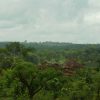
West Africa Moves Ahead with Renewable Energy Despite Unpredictable Challenges
The West African nation of Guinea may be a signatory of the Paris Agreement, a global undertaking by countries around the world to reduce climate change, but as it tries to provide electricity to some three quarters of its 12 million people who are without, the commitment is proving a struggle.
Building West Africa’s Capacity to Access Climate Funding
When Senegalese president Macky Sall opened the 30MW Santhiou Mékhé solar plant last June, the country gained the title of having West Africa's largest such plant. But the distinction was short lived.
Ukraine Puts Water Strategy High on Development Agenda
A campaign to raise awareness of water security in Ukraine could be an inspiration around the world, activists behind it say, after it forced a change in the country’s approach to its water resources.
Food Sustainability, Migration, Nutrition and Women
We worry about how we can continue to put food on our tables; and yet one-third of food is never eaten, instead being lost or wasted. We worry about eating properly, and yet in many countries, poor nutrition, obesity and micronutrient deficiencies are increasingly common. This trend is taking place in the Americas, Oceania, Asia, Africa and in Europe.« Previous Page — Next Page »


 Farming on the Outskirts of Juba. Credit: UN Photo/JC McIlwaine
Promoting human and planetary health is a central focus of the United Nations, as laid out in the 2030 Sustainable Development Goals (SDGs). World hunger and unsustainable farming practices continue to be pressing concerns for the world. According to the 2025 State of Food Security and Nutrition in the World report by the Food and Agriculture Organization (FAO), 673 million people faced hunger in 2024. There are stark regional disparities, with the FAO projecting that 60% of the world population facing hunger will reside in Africa by 2030. Globally, the prevalence of food insecurity has remained consistently higher for women than men.
Sustainable and efficient national food systems are essential in preserving health, education, environmental well-being, peace, economy, and security. However, creating sustainable food systems can be a challenging endeavor, as food production takes a heavy toll on the environment. The agricultural sector accounts for a significant portion of greenhouse gases. Finding safe, sustainable, and ethical strategies to feed the world is crucial in ensuring planetary longevity. A recent initiative from 2023, the EU Regulation on Deforestation-free Products (EUDR), seeks to advocate for sustainable food systems. The main driver of deforestation is the expansion of agricultural land used to produce commodities like cattle, wood, cocoa, coffee, etc. The EUDR is part of the 2020 European Green New Deal and the EU Biodiversity Strategy for 2030 and aims to limit Europe’s consumption of products linked with deforestation by requiring that companies prove that their products are deforestation-free. Despite aiming to achieve major strides in sustainability, policies such as EUDR also raise socioeconomic concerns for targeted countries. Many emerging Latin American economies are impacted by the policy, and have raised the question of how developing countries can grapple with the tensions between economic development and advancing sustainability.
IPS has been at the forefront of providing compelling and insightful stories on communities facing hunger as well as the cost of food production. IPS uses statistics from FAO, the World Food Programme (WFP) and the International Fund for Agricultural Development (IFAD) to bring relevant and hard-hitting facts to readers. This gathering of information and data from such organizations helps bring the best stories from IPS journalists working in the different regions in consultation with experts on the ground.

The Week with IPS

NEXT STOP - SDGs
Tracking global progress towards a sustainable world
Tracking global progress towards a sustainable world

