Languages
Thursday, November 12, 2026



News and Views from the Global South
Food and Agriculture

The Revolutionary Ambition of AGRF 2018 Must be Sustained
In early September 2018, about 2,800 delegates from 79 countries and high-level dignitaries, including current and former heads of states, international agencies, CEOs of global corporations and youth entrepreneurs, and techies involved in agriculture gathered in Kigali for this year’s African Green Revolution Forum (AGRF).
Climate Change Undermining Global Efforts to Eradicate Hunger
The United Nations warned last month that the accelerating impacts of climate change—“already clearly visible today”-- have triggered an unpredictable wave of natural disasters-- including extreme heatwaves, wild fires, storms, and floods during the course of this year.
Ethiopia’s Struggle Against Climate Change Gets a Boost from Green Climate Fund
Faced with worsening droughts due to climate change, Ethiopia is joining an international initiative seeking to build global resilience against the problems caused by it, and enable developing countries to become part of a united solution to the ongoing problem.
Recognising the Debilitating Nature Conflict Has on Food Security
Nyalen Kuong and her daughters fled to safety after an attack on their village in South Sudan in which Kuong's husband and two sons where killed and the family’s cattle lost. Kuong, her daughters and other families from their village fled to islands surrounded by swamp land. There, she had little to eat. And soon began suffering from diarrhoea, brought on by acute malnutrition.
In the Race to Achieve Zero Hunger and Mitigate Climate Change, We Must Look Down — to the Soil
Recently, the United Nations Food and Agriculture Organization (UN FAO) Director-General José Graziano da Silva urged countries, scientists, policymakers and stakeholders invested in building an equitable, sustainable, and thriving planet to pay attention to the soil. He further noted that the future of the planet depends on how healthy the soils of today are.
Africa Needs Strong Political Will to Transform Agriculture and Spur Economic Growth
Africa needs strong political commitment to accelerate the transformation of its agricultural sector. According to the 2018 Africa Agriculture Status Report (AASR), Catalyzing State Capacity to Drive Agriculture Transformation, released this September by the Alliance for a Green Revolution in Africa (AGRA), African states need political will to boost production and income on the millions of small, family farms that grow most of Africa’s food.
Salmon Farming, Questioned in Chile, Arrives to Argentina
Questioned for its environmental and health impacts in Chile, where it is one of the country's main economic activities, salmon farming is preparing to expand in Argentina from Norway, the world's largest farmed salmon producer. The news has triggered a strong reaction from civil society organisations.
Maya Farmers in South Belize Hold Strong to Their Climate Change Experiment
In one of Belize’s forest reserves in the Maya Golden Landscape, a group of farmers is working with non-governmental organisations to mitigate and build resilience to climate change with a unique agroforestry project.
New Rules for High Seas Must Include Needs of Poorest Nations
Over-fishing, warming oceans and plastic pollution dominate the headlines when it comes to the state of the seas. Most of the efforts to protect the life of the ocean and the livelihoods of those who depend on it are limited to exclusive economic zones – the band of water up to 200 nautical miles from the coast.
China-Africa Cooperation a Vibrant Partnership for Sustainable Development
This Forum on China-Africa Cooperation is an embodiment of two major priorities of the United Nations: to pursue fair globalization and to promote development that leaves no one behind in the context of a rules-based system of international relations supported by strong multilateral institutions.
How Accurate Information About the Weather is Yielding Resilience for Zambia’s Smallholders
Just having better information about when and for how long it will rain is proving the difference between success and failure among smallholder farmers in southern Zambia. Empowered with timely information about the weather ahead of the 2017/18 farming season, 56-year-old Fainess Muzyamba of Pemba district ditched her traditional maize crop for sweet potatoes.
Why India’s Solar Water-Drawing ATMs and Irrigation Pumping Systems Offer Replicable Strategies
At New Delhi’s Savda Ghevra slum settlement, waterborne diseases have become less frequent thanks to solar-powered water ATMs that were installed here as a social enterprise venture three years ago.
Fledgling Venture Aims to Make Money from Cutting Food and Packaging Waste
To tackle food waste, Nicholas Lim did not simply spread the word among his friends and family. In an experiment to see if he could make a viable business out of the problem, he co-founded an online platform that allows individuals, eateries and voluntary welfare organisations to order discounted groceries that would otherwise be thrown away.
Take Charge of Your Food: Your Health is Your Business
The minimum we expect from the government is to differentiate between right and wrong. But when it comes to regulating our food, it’s like asking for too much. Our latest investigation vouches for this. The Centre for Science and Environment (CSE)’s pollution monitoring laboratory tested 65 samples of processed food for presence of genetically modified (GM) ingredients.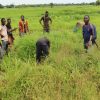
How Ghana’s Rapid Population Growth Could Become an Emergency and Outpace Both Food Production and Economic Growth
Paul Ayormah and his fellow farmers make their way home after hours spent manually weeding a friend’s one-acre maize farm in Ghana’s Eastern Region. “Tomorrow it will be the turn of my maize farm,” he tells IPS.
Joint Action Needed to Reform our Food System
While participating in this year’s High-level Political Forum (HLPF), one thing became crystal clear to me. Come 2030, we will not have healthy and affordable food if we continue with business as usual. But no one institution can single handedly change the course of our food system. The key to ensuring a sustainable food system is involving a diverse group of actors – from smallholder farmers to government – to generate ideas for change, together.
Let Food Be Thy Medicine
When faced with a crisis, our natural reaction is to deal with its immediate threats. Ateka* came to the make-shift clinic with profuse diarrhoea: they diagnosed cholera. The urgent concern in the midst of that humanitarian crisis was to treat the infection and send her home as quickly as possible. But she came back to the treatment centre a few days later – not for cholera, but because she was suffering from severe acute malnutrition. Doctors had saved her life but not restored her health. And there were others too, who like Ateka eventually succumbed to severe malnutrition.
When Salt Water Intrusion is Not Just a Threat But a Reality for Guyanese Farmers
Mikesh Ram would watch his rice crops begin to rot during the dry season in Guyana, because salt water from the nearby Atlantic Ocean was displacing freshwater from the Mahaica River he and other farmers used to flood their rice paddies.
How the Lack of Affordable Vegetables is Creating a Billion-Dollar Obesity Epidemic in South Africa
Every Sunday afternoon, Thembi Majola* cooks a meal of chicken and rice for her mother and herself in their home in Alexandra, an informal settlement adjacent to South Africa’s wealthy economic hub, Sandton.
States Must Act Now to Protect Indigenous Peoples During Migration
States around the world must take effective action to guarantee the human rights of indigenous peoples, says a group of UN experts. In a joint statement marking International day of the World’s Indigenous Peoples, the experts say it is crucial that the rights of indigenous peoples are realised when they migrate or are displaced from their lands:
How the Yanadi, an Oppressed Indigenous People in India, are Reclaiming Their Rights One Village At a Time
Under the blazing midday sun, a tractor moves slowly along a dirt trail in Nacharwari Pallem, a village of the Yanadi indigenous people located some three hours from Chennai city in South India. Atop the tractor, women of the village – 36 in all – sit expectantly, ignoring the heat. Squeals of excitement fill the air as the tractor slowly halts near a stretch of rice fields.« Previous Page — Next Page »


 Farming on the Outskirts of Juba. Credit: UN Photo/JC McIlwaine
Promoting human and planetary health is a central focus of the United Nations, as laid out in the 2030 Sustainable Development Goals (SDGs). World hunger and unsustainable farming practices continue to be pressing concerns for the world. According to the 2025 State of Food Security and Nutrition in the World report by the Food and Agriculture Organization (FAO), 673 million people faced hunger in 2024. There are stark regional disparities, with the FAO projecting that 60% of the world population facing hunger will reside in Africa by 2030. Globally, the prevalence of food insecurity has remained consistently higher for women than men.
Sustainable and efficient national food systems are essential in preserving health, education, environmental well-being, peace, economy, and security. However, creating sustainable food systems can be a challenging endeavor, as food production takes a heavy toll on the environment. The agricultural sector accounts for a significant portion of greenhouse gases. Finding safe, sustainable, and ethical strategies to feed the world is crucial in ensuring planetary longevity. A recent initiative from 2023, the EU Regulation on Deforestation-free Products (EUDR), seeks to advocate for sustainable food systems. The main driver of deforestation is the expansion of agricultural land used to produce commodities like cattle, wood, cocoa, coffee, etc. The EUDR is part of the 2020 European Green New Deal and the EU Biodiversity Strategy for 2030 and aims to limit Europe’s consumption of products linked with deforestation by requiring that companies prove that their products are deforestation-free. Despite aiming to achieve major strides in sustainability, policies such as EUDR also raise socioeconomic concerns for targeted countries. Many emerging Latin American economies are impacted by the policy, and have raised the question of how developing countries can grapple with the tensions between economic development and advancing sustainability.
IPS has been at the forefront of providing compelling and insightful stories on communities facing hunger as well as the cost of food production. IPS uses statistics from FAO, the World Food Programme (WFP) and the International Fund for Agricultural Development (IFAD) to bring relevant and hard-hitting facts to readers. This gathering of information and data from such organizations helps bring the best stories from IPS journalists working in the different regions in consultation with experts on the ground.

The Week with IPS

NEXT STOP - SDGs
Tracking global progress towards a sustainable world
Tracking global progress towards a sustainable world

