Languages
Friday, November 20, 2026



News and Views from the Global South
Health
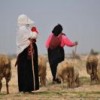
Israel Winning its War on Goats
Nine-year-old Ismail spends every afternoon herding his family's flock of sheep and goats, a scraggly group of roughly 20 animals. They live in a shanty house district near Tel el Howa in Gaza City, where growth is sparse to non-existent.
DISARMAMENT: France Urged to Ban Cluster Bomb Funding
Human rights groups are urging the French government to adopt a law that would ban the financing of companies that produce cluster munitions, the deadly bombs that have killed or maimed thousands of civilians in the past 40 years.PAKISTAN: Law May Drive Trade in Human Organs Underground
Already on dialysis, Sukhil Johal was told by her doctors in the United States that she needed a kidney transplant. But they also told her that it would probably take 10 years before a suitable one could be found for her.
NIGER: Lack of Data on Causes of Death Buffers French Company
French state-owned company Areva continues to deny any wrongdoing after findings that populated areas in Niger remain contaminated with high levels of radio-activity. The company seems to be escaping censure partly because of lack of data on cancer-related causes of death among Nigeriens working at or living near the uranium mines.A North-South Pact to Resolve Water, Sanitation Crisis
An international coalition of over 120 non-governmental organisations (NGOs) is demanding a North-South partnership to resolve the spreading global crisis in water and sanitation.NICARAGUA: Controversy Over Pregnancy-Related Death Toll
Non-governmental organisations in Nicaragua are questioning data on the maternal mortality rate released by the government, which is claiming a historic decline in the indicator, and they warn that the reduction target that the country has committed itself to by 2015 is still out of reach.PAKISTAN: Prosthetics Give Needy A New Lease on Life
Thirty-something Shazia could not contain her joy as she watched an artificial leg being strapped on her right leg, just below her knee.Will Polio Go the Way of Smallpox?
Only one disease has ever been totally eradicated by human beings: smallpox, the last natural instance of which was reported in 1975. Two doctors are now making the case for adding a second disease to the list.Malaria Funding Falls Short of Six-Billion-Dollar Target
As African countries continue their relentless battle against the spread of malaria, a global fund to fight the deadly tropical disease has fallen short of expectations.
Latin America Feels the “Garzon Effect”
Latin America owes Spanish Judge Baltasar Garzón, who is facing prosecution in his country for trying to investigate Franco-era abuses, for the groundbreaking invocation of legal principles that have led to trials for crimes against humanity in Argentina, Chile, Guatemala, Peru and Uruguay, human rights lawyers say.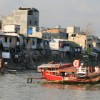
PHILIPPINES: Revival of Filthy River Flows from Changed Habits
While more developed countries consider waterfronts prime property, most Filipinos have regarded rivers and creeks as their "backyard" and sewage system.COSTA RICA: (In)human Trafficking
The rescue in a Costa Rican port of 36 Asians working as slaves in appalling conditions on two fishing boats once again highlighted the need to fight people trafficking in this Central American country.HEALTH: Maternal Deaths Drop, but Progress Still “Slow”
One day closer to an ever-approaching deadline to achieve the Millennium Development Goals (MDGs), U.N. Secretary-General Ban Ki-moon announced a Joint Action Plan to improve reproductive, maternal and newborn health on Wednesday, flanked by international leaders and development experts.
RIGHTS-PAKISTAN: Conflict Complicates Aid to Disabled
The rising number of civilian casualties in the military operations against the Taliban in Pakistan’s northern provinces has become an early difficulty for a new government project for the disabled.DEVELOPMENT: Farmers on Fringe of Intl Agriculture Policy?
How's this for short-sighted: A billion people go hungry every day, food prices have climbed 30 to 40 percent, climate change is reducing agricultural production - and for the past two decades, the world has slashed investments in publicly-funded agriculture until it is a pittance in most countries.
MIDEAST: Adding Torture to Injury
It was bad enough that Ahmad Asfour was severely maimed by an Israeli drone strike outside his house on Jan. 9, 2009. But, his search for advanced treatment landed the journalism student, now 19, in Israeli prison where he remains.HEALTH: Empowering Women to Slash Mother and Child Deaths
In developed countries, child and maternal mortality is a health problem that has largely been solved.JAMAICA: Nursing Exodus May Only Get Worse
The shortage of nurses throughout the Caribbean has reached chronic proportions, in a region already struggling with an ailing health care system.
MIDEAST: Gazans Gassed by Silent Killer
"You feel very sleepy and dizzy. You put your head down and all you want to do is sleep. Everything feels very peaceful, you are not even aware what is happening and if there is no immediate intervention you are dead within minutes," Enaam Abu Nada told IPS.
Q&A: Equality for Women – “The Core of the Problem is Care”
"Women help to reduce poverty and raise family incomes, but they pay too high a price for it, because in every country their working days are longer than men's," said Sonia Montaño, head of the Economic Commission for Latin America and the Caribbean's (ECLAC) Division for Gender Affairs.
ENVIRONMENT-NIGER: French State-Owned Company “Poisoning” Poor
Recent research by Greenpeace suggests that French state-owned company Areva’s public claims of decontamination of populated areas near uranium mines in Niger are false. High radio-activity persists in towns and rural areas near the mines, affecting some 80,000 people.« Previous Page — Next Page »


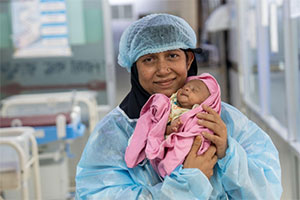 Bangladesh: Sarid, born one month early, receives specialized newborn care and grows stronger every day. Credit: UNICEF/UNI944397/Mojumder
Since the onset of the 2000s, global life expectancy has seen an overall rise, attributed to significant technological and scientific innovations in healthcare. Due to an increased understanding of different conditions as well as a rise in cooperation among healthcare experts around the world, there have been major strides made in ensuring that as few people die from chronic illnesses as possible. Despite the belief that healthcare is a fundamental human right, people from low- or middle-class backgrounds, marginalized groups, and underdeveloped countries have far more limited access to basic healthcare services.
The COVID-19 pandemic showed how marginalized communities are disproportionately affected by health crises, proving that we have much work to do in ensuring that no one dies of terminal conditions. While the global response to the coronavirus saw significant strides in immunization and vaccine development, the global outbreak of mpox in 2022 and its upsurge in parts of Africa in 2024 must remind us to remain vigilant.
Other major disease outbreaks in recent years have been linked to the destruction of infrastructure during warfare. Notably, in 2024, the Gaza Strip witnessed a return of the poliovirus since its eradication in the region 25 years ago. Israel’s blockade on Gaza has resulted in the collapse of the region’s sewage plants and desalination plants, and also destroyed healthcare capacities. The UN stated that this lack of clean water and sanitation would lead to an outbreak of cholera and other deadly infectious diseases. The 2026 OCHA Humanitarian Situation Report confirmed that the over two years of conflict in Gaza has produced a catastrophic health emergency, with millions remaining dependent on relief aid amid tight restrictions and no functioning public health system.
IPS is committed to providing full and comprehensive coverage on healthcare challenges around the world. IPS seeks to address the multifaceted causes of such challenges, including unprecedented pandemics, conflict-driven disease outbreaks, as well as socioeconomic barriers to equal healthcare access. IPS is also dedicated to reporting on innovations in the healthcare industry.

The Week with IPS

NEXT STOP - SDGs
Tracking global progress towards a sustainable world
Tracking global progress towards a sustainable world
