Languages
Friday, November 20, 2026



News and Views from the Global South
Health
UGANDA: New Version of Anti-Counterfeiting Bill Still Problematic
The Ugandan government’s controversial Anti-Counterfeiting Bill has been amended after civil society organisations campaigned against provisions in the bill that may restrict access to generic medicines, which form the bulk of medicines used in the East African country.
SOUTH AFRICA: Teenagers’ Health at Tremendous Risk
"I sometimes drink alcohol because it makes things funny," 15-year-old Senelo* giggles shyly. "I go to unlicensed taverns. They sell alcohol without asking questions."
ECUADOR: Fewer Mothers Dying Thanks to “Model” Law
Seventeen-year-old Miriam Toaquiza is the only occupant of the teenage mothers' ward in the public hospital in this Andean city. Beside her in the bed is Jennifer, her newborn baby.Argentina’s Roads Still a Death Trap
Two years after a law was enacted that held out the promise of better road safety in Argentina, the country's death toll from traffic accidents is still one of the highest in Latin America.
CHINA: E-waste Processing Poisons Health, Environment
Like many who have profited from the electronic waste trade in this southern Chinese town, hospital administrator Lin Banghong does not live there. "I've worked here 10 years and haven't gotten sick," he said.
SIERRA LEONE: Bold Plan for Maternal Health
A woman alone: Josephine Bangali fetches water from the well to set to boil over a wood fire so she can sterilise her instruments.Ramping up Malaria Prevention in Angola
Crouched on an upturned plastic box, Eva Angelino bounces 11-month old Odelina on her knee, trying to stop her crying. Mother and daughter are waiting in line outside a public health centre not far from the city centre of Angola’s capital Luanda.RIGHTS: Zambia Pushes Anti-Counterfeit Bill Despite Health Danger
Zambia is pushing forward with formulating an anti-counterfeit draft law which will include medicines, despite the controversy that has surrounded similar laws in East Africa and despite having existing legislation which has been used to successfully prosecute counterfeiters of medicines.
PAKISTAN: Lack of Access to Contraception, Abortion Persist
Perween Riaz, 36, waited till after she gave birth to her sixth child before she finally got herself sterilised.“Drug War” Policies Need a Stint in Rehab
The war on drugs is a complete failure everywhere, according a comprehensive review of 20 years of scientific literature released at the Harm Reduction 2010 conference in Liverpool, England that wraps up Thursday.CHINA: Stigma Stays Despite Lifting of Ban on People with HIV
China’s lifting of its longstanding ban on foreign visitors with HIV removes a restriction that many Chinese doctors and activists find discriminatory, but erasing the stigma attached with the virus remains one of the biggest challenges ahead in facing the disease.HEALTH: Uganda Bill Shouldn’t Block Generics, Minister Agrees
Uganda’s trade minister is in agreement that his government’s controversial Counterfeit Goods Bill should not restrict the manufacture or import of life-saving generic medicines.HEALTH: Injecting Drug Use Spreads HIV in Eastern Europe
Poor intervention in Injecting drug use (IDU) is driving the HIV/AIDS epidemic in Eastern Europe and is also largely responsible for the tuberculosis epidemic in parts of Russia, says a new study.
Q&A: Coal, a Silent Killer
Fatal accidents at coalmines, like the recent tragedies in China and the United States, cause great public alarm. But U.S. physician Alan Lockwood warns that many more deaths are caused by the pollution that comes from the use of coal as an energy source.
MIDEAST: Settler Sewage Ruins Palestinian Crops, Drinking Water
Residents of this Palestinian village refuse to buy the idea that the flood of raw sewage from the adjacent Israeli settlement of Kfar Etzion, that destroyed vineyards and contaminated their drinking water, was an accident.EU-India Deal Could Kill a Health Lifeline
Life-saving medicines could become too costly for the world's poor after a new trade agreement between the European Union and India comes into effect, public health activists have warned.HEALTH-DR CONGO: Coming Together to Fight Malaria
Eight faith-based organisations have set up a pilot project in the Democratic Republic of Congo to support the fight against malaria.
Q&A: The State of HIV Prevention Vaccines
An HIV vaccine is possible if the world works together as a global community with the objective of finding one, but it will take some years to develop.GM Crops Go to US High Court, Environmental Laws on the Line
The U.S. Supreme Court will hear arguments Tuesday in its first-ever case involving genetically modified crops. The decision in this case may have a significant impact on both the future of genetically modified foods and government oversight of that and other environmental issues.
AFGHANISTAN: War-Zone Medical Aid Doubly Endangered
The case of the three Italians arrested this month on suspicion of trying to assassinate a southern Afghan governor concluded with a happy ending of sorts and a sure fire certainty - an uncompromising attitude that makes war-zone medical aid doubly dangerous.
RIGHTS-KENYA: Court Victory Against “Anti-Counterfeit” Agenda
The Constitutional Court in Kenya has barred the government from implementing the Anti-Counterfeit Act of 2008 as it applies to generic medicines until a verdict is delivered in a case filed by three people living with HIV.« Previous Page — Next Page »


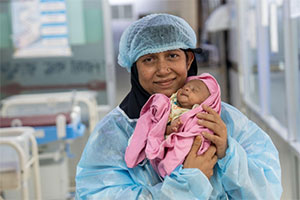 Bangladesh: Sarid, born one month early, receives specialized newborn care and grows stronger every day. Credit: UNICEF/UNI944397/Mojumder
Since the onset of the 2000s, global life expectancy has seen an overall rise, attributed to significant technological and scientific innovations in healthcare. Due to an increased understanding of different conditions as well as a rise in cooperation among healthcare experts around the world, there have been major strides made in ensuring that as few people die from chronic illnesses as possible. Despite the belief that healthcare is a fundamental human right, people from low- or middle-class backgrounds, marginalized groups, and underdeveloped countries have far more limited access to basic healthcare services.
The COVID-19 pandemic showed how marginalized communities are disproportionately affected by health crises, proving that we have much work to do in ensuring that no one dies of terminal conditions. While the global response to the coronavirus saw significant strides in immunization and vaccine development, the global outbreak of mpox in 2022 and its upsurge in parts of Africa in 2024 must remind us to remain vigilant.
Other major disease outbreaks in recent years have been linked to the destruction of infrastructure during warfare. Notably, in 2024, the Gaza Strip witnessed a return of the poliovirus since its eradication in the region 25 years ago. Israel’s blockade on Gaza has resulted in the collapse of the region’s sewage plants and desalination plants, and also destroyed healthcare capacities. The UN stated that this lack of clean water and sanitation would lead to an outbreak of cholera and other deadly infectious diseases. The 2026 OCHA Humanitarian Situation Report confirmed that the over two years of conflict in Gaza has produced a catastrophic health emergency, with millions remaining dependent on relief aid amid tight restrictions and no functioning public health system.
IPS is committed to providing full and comprehensive coverage on healthcare challenges around the world. IPS seeks to address the multifaceted causes of such challenges, including unprecedented pandemics, conflict-driven disease outbreaks, as well as socioeconomic barriers to equal healthcare access. IPS is also dedicated to reporting on innovations in the healthcare industry.

The Week with IPS

NEXT STOP - SDGs
Tracking global progress towards a sustainable world
Tracking global progress towards a sustainable world
