Languages
Friday, November 20, 2026



News and Views from the Global South
Health
BURMA: Nature Conspires Against Cyclone Victims, Denying Them Clean Water
A year after powerful Cyclone Nargis tore through Burma’s Irrawaddy Delta and southern Rangoon, killing tens of thousands of people, nature continues to play a cruel trick on survivors.HEALTH: Voices of Alarm and Moderation at WHO Meet
World Health Organisation (WHO) Director General Margaret Chan issued a warning about the danger posed by the H1N1 flu epidemic, while health ministers from several countries recommended avoiding excesses when it came to remarks about a potential pandemic.EGYPT: Move to End Organ Trafficking
Egypt's parliament is set to review a long-overdue draft law to regulate organ transplant operations. If passed, the legislation could make more human organs available for transplant, and curtail the country's booming organ trade.HEALTH-AFRICA: Global Financial Crisis Leads to HIV Budget Cuts
International donors and African governments are likely to cut health budgets due to the global financial crisis. Health experts fear that increasing unemployment and poverty will lead to less food security and quality of nutrition, which will in turn put more stress on already weak health systems.
HEALTH-SWAZILAND: New Effort To Control TB
Swaziland saw a 5.6 percent increase in tuberculosis cases between 2008 and 2007. Out of a population of one million, 10,000 are infected with TB, one of the highest rates of TB infection in the world.LATIN AMERICA: H1N1 Flu Spreading, but Mild
The H1N1 flu virus has begun its southward march in Latin America, carried by passengers travelling from areas hit by the outbreak. But the mortality rate is much lower than in Mexico, and there are no signs of "sustained domestic transmission" in the rest of the region.
HEALTH: Flu Fuels Concerns about ‘Factory Farms’
While the swine flu virus does not appear to be as potentially devastating as first imagined, environmentalists and some public health activists argue that it should be considered a wake-up call to the public about the conditions in which much of our food is being produced.HEALTH: China Battling to Contain Swine Flu
China is battling hard to contain the spread of the swine flu after stringent border checks and draconian quarantine measures of Mexican nationals failed to prevent the virus from entering the country.NEPAL: Explosive Reminders of War
Eighteen army deminers are hard at work in the minefields of Wami Taksar in central Nepal. The deminers start out early in the morning, before the sun is too hot. They move meticulously from one mine to another, carefully excavating each one, and they take breaks to stay alert.MADAGASCAR: Education Hampered by Lack of Clean Water
Because most schools in Madagascar have no access to running water, lack of hygiene and sanitation have become a major problem for children on the Southern African island. Many pupils fall sick regularly, are unable to attend classes and hence don’t perform well at school.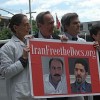
RIGHTS-IRAN: Day of Protests for Jailed AIDS Doctors
A handful of motivated doctors, HIV/AIDS and human rights activists held rallies Tuesday in New York City and 20 countries to protest the imprisonment of Iranian doctors Arash and Kamiar Aleai.HEALTH: Killer Diarrheal Diseases Eclipsed on Donor Agendas
Interest in reducing the harm caused by diarrheal diseases has waned among the global health and aid communities, said two new reports released Tuesday in Washington.
HEALTH: Science on the Trail of New Flu’s Secrets
Scientists around the world are trying to decipher the influenza H1N1 virus in order to develop a vaccine, while others are tracking its origins to fight its spread more effectively.U.S.-IRAQ: Massacre Puts War Trauma Under the Spotlight
A U.S. soldier shot five of his colleagues dead at a base in Baghdad, Iraq Monday. The Pentagon says at least two other people were hurt in the shootings and the gunman is in custody.ASIA: Region Prepares for Swine Flu
Researchers at a prestigious university hospital in Bangkok have been able to cut by 14 hours the time it takes to detect the lethal strain of the swine flu virus, which has infected thousands across the world.HEALTH: WHO Shifts Away from DDT for Malaria Control
While much of the public health community’s attention is consumed by the H1N1 human swine flu outbreak, efforts are quietly being made to plug away at the continued threat of malaria.ARGENTINA: Tobacco Treaty Unratified, Six Years On
Six years after signing the global World Health Organisation Framework Convention on Tobacco Control, Argentina is the only Latin American country that has not ratified it, for fear of losing tens of thousands of rural jobs in seven provinces.MIDEAST: Assault Leaves Debris in the Mind
Gazans have a colloquial term to describe the buzzing of Israeli warplanes that is an ever-present feature of their lives: zanana.U.S.: Obama Boosts Foreign, Development Aid Spending
True to his promises to bolster Washington's "soft power" abroad, President Barack Obama released details of his fiscal year (FY) 2010 budget that included significant increases in development assistance and other civilian-oriented tools of U.S. foreign policy.HEALTH-MEXICO: Shunned Abroad, Negligence at Home
The Mexican government is complaining about measures taken by other countries to protect themselves against possible contagion from the new H1N1 flu virus, which is widely seen as having originated in Mexico. But some Mexicans complain about stigma at home, as well as medical negligence.RIGHTS-US: Psychologists Under Fire for Role in Interrogations
A leading human rights organisation is charging that an American Psychological Association (APA) task force formed to advise the U.S. military on prisoner interrogations was "stacked with Defence Department and [George W.] Bush Administration officials" and "rushed to conclusions that violated the Geneva Convention."« Previous Page — Next Page »


 Bangladesh: Sarid, born one month early, receives specialized newborn care and grows stronger every day. Credit: UNICEF/UNI944397/Mojumder
Since the onset of the 2000s, global life expectancy has seen an overall rise, attributed to significant technological and scientific innovations in healthcare. Due to an increased understanding of different conditions as well as a rise in cooperation among healthcare experts around the world, there have been major strides made in ensuring that as few people die from chronic illnesses as possible. Despite the belief that healthcare is a fundamental human right, people from low- or middle-class backgrounds, marginalized groups, and underdeveloped countries have far more limited access to basic healthcare services.
The COVID-19 pandemic showed how marginalized communities are disproportionately affected by health crises, proving that we have much work to do in ensuring that no one dies of terminal conditions. While the global response to the coronavirus saw significant strides in immunization and vaccine development, the global outbreak of mpox in 2022 and its upsurge in parts of Africa in 2024 must remind us to remain vigilant.
Other major disease outbreaks in recent years have been linked to the destruction of infrastructure during warfare. Notably, in 2024, the Gaza Strip witnessed a return of the poliovirus since its eradication in the region 25 years ago. Israel’s blockade on Gaza has resulted in the collapse of the region’s sewage plants and desalination plants, and also destroyed healthcare capacities. The UN stated that this lack of clean water and sanitation would lead to an outbreak of cholera and other deadly infectious diseases. The 2026 OCHA Humanitarian Situation Report confirmed that the over two years of conflict in Gaza has produced a catastrophic health emergency, with millions remaining dependent on relief aid amid tight restrictions and no functioning public health system.
IPS is committed to providing full and comprehensive coverage on healthcare challenges around the world. IPS seeks to address the multifaceted causes of such challenges, including unprecedented pandemics, conflict-driven disease outbreaks, as well as socioeconomic barriers to equal healthcare access. IPS is also dedicated to reporting on innovations in the healthcare industry.

The Week with IPS

NEXT STOP - SDGs
Tracking global progress towards a sustainable world
Tracking global progress towards a sustainable world
