Languages
Saturday, November 21, 2026



News and Views from the Global South
Health
NICARAGUA: ‘Invisible’ Victims of Pesticide Protest Government Neglect
For months, more than 3,000 Nicaraguans in a makeshift camp in the centre of Managua have been demanding a government response to their health needs and legal backing for their cause. They have been poisoned by the pesticide Nemagon, but in spite of their protests they are apparently invisible to those in power.HEALTH-CENTRAL ASIA: Intravenous Drug Use Feeds HIV Pandemic
The steep rise in HIV cases in recent years in Central Asia - at a pace faster than in other regions of the world - has set alarm bells ringing among government and non-government groups in the former Soviet republics.HEALTH-ASIA: HIV, AIDS Take on A Woman's Face
The feminisation of HIV and AIDS continues in full swing in the Asia-Pacific, reflected in the fact that almost 40 percent of new HIV cases are among women, even if the newest estimates show that there are fewer people than originally estimated to be living with the virus in the region.HEALTH-ASIA: Hope Sets Tone for AIDS Congress
The 8th International Congress on AIDS in Asia and the Pacific (ICAAP) opened here with a strong message of hope, anchored on the fact that the world's most populous region still has relatively low prevalence rates of HIV despite problems of poverty, discrimination and stigma.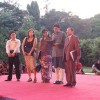
HEALTH-ASIA: When Hearth Is No Longer Her Home
To Princey Mangalika from Sri Lanka, AIDS has come to mean hatred, hunger, humiliation and death.HEALTH-ASIA: Unheard Voices Resonate at AIDS Photo Show
Sabina Yeasmin Putul has a silent, determined look with her left fist clenched tight in front of her face - a vision of strength, grace, and resilience all in one.HEALTH-ASIA: 'Tackling HIV/AIDS Goes Beyond Morality'
On the second day of the three-day Interfaith Community Forum ahead of the 8th International Congress for AIDS in the Asia-Pacific (ICAAP) here, different religious groups gathered together to share their experiences dealing with HIV and AIDS - once a controversial, taboo issue for many of them.HEALTH-PAKISTAN: Drug Addicts Routinely Denied Anti-HIV Medicines
''I’ve been running temperature for the past 25 days and lost about five kg in the last one month... just feel so weak every day,'' says Mohammad Sohail, 28, who tested HIV positive a little more than a year ago. His CD4 count is 152.DEVELOPMENT: Singapore and Iraq – Contrasts in Water Management
As the world faces new threats of water scarcity, triggered by phenomena like global warming and bioenergy demands, Singapore and Iraq have been singled out as two political extremes in water management.RIGHTS-THAILAND: Restrictions Make Life Tough For Migrant Workers
Migrant workers do not have an easy time in Thailand, but those from the neighbouring countries of Burma, Cambodia and Laos have been facing an especially tough life following the imposition of a harsh decree on them that severely restricts their movements and rights.
IRAQ: Between the Two Rivers, Lack of Water Kills
The collapse of Iraq's infrastructure has created a worsening water crisis that is killing untold numbers of Iraqis.PERU: Earthquake Death Toll 450 and Climbing
The fishing port of Pisco, 167 kilometres south of the Peruvian capital, was the town worst hit by the devastating earthquake which shook nearly the whole country for two minutes late Wednesday, reaching a magnitude of 7 on the Richter scale. The death toll continues to climb.DEVELOPMENT: 2.6 Billion Wait in Line for Toilets
There are more than 2.6 billion people, roughly 42 percent of the world's population, waiting in line for toilets that just do not exist.HEALTH-US: Defence Contract Workers Fall Through Insurance Cracks
New statistics from the United States Department of Labour offer greater insight into the number of defence contractors killed in Afghanistan and Iraq, but questions remain about compensation for injured or dead contract workers and their families.DEVELOPMENT: Water as a Right and Key to Social Stability
A top United Nations official has learned through personal experience what it is like to live without safe drinking water during her visits home to the Tanzanian capital.HEALTH: World Faces New Threats of Water Scarcity
The world is on the verge of "a new and more serious era of water scarcity" than ever before, is the ominous warning coming out of an international water conference here.MOROCCO: Not Everyone Has the Right to Cure
Despite an annual health budget of half a billion euros, large numbers of people in this nation of 30 million still have no access to essential medical care.
PERU: Pollution Emergency Plan Instead of Real Action for La Oroya
Far from halting the source that is poisoning the Andean city of La Oroya, which is home to the Doe Run smelting complex, the Peruvian government ordered a contingency plan for the days when air pollution is worst, as if it were dealing with a natural disaster.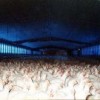
HEALTH-US: “Too Many Animals, Too Much Manure in One Place”
Imagine 600,000 hens confined in seven sheds - with a total of four workers to care for them and cages so dilapidated that birds often became entangled in frayed wires and died horribly.HEALTH-INDIA: Novartis Patents Case Far From Dead
Cancer patients in India have reason to be relieved at a high court ruling this week which dismissed a petition by Swiss pharmaceuticals multinational corporation (MNC) Novartis challenging an Indian law which denies patents for minor or trivial improvements to known drugs.
SIERRA LEONE: A Women's Issue That Women Are Wary of Campaigning About
Female genital mutilation (FGM) can make sex painful, complicate childbirth, lead to urinary tract infections, enable the transmission of HIV - and induce a host of other ills. So, promising to fight this practice should be a winning strategy for someone hoping to be elected to parliament this Saturday in Sierra Leone - where about 90 percent of girls and women undergo FGM, according to rights watchdog Amnesty International.« Previous Page — Next Page »


 Bangladesh: Sarid, born one month early, receives specialized newborn care and grows stronger every day. Credit: UNICEF/UNI944397/Mojumder
Since the onset of the 2000s, global life expectancy has seen an overall rise, attributed to significant technological and scientific innovations in healthcare. Due to an increased understanding of different conditions as well as a rise in cooperation among healthcare experts around the world, there have been major strides made in ensuring that as few people die from chronic illnesses as possible. Despite the belief that healthcare is a fundamental human right, people from low- or middle-class backgrounds, marginalized groups, and underdeveloped countries have far more limited access to basic healthcare services.
The COVID-19 pandemic showed how marginalized communities are disproportionately affected by health crises, proving that we have much work to do in ensuring that no one dies of terminal conditions. While the global response to the coronavirus saw significant strides in immunization and vaccine development, the global outbreak of mpox in 2022 and its upsurge in parts of Africa in 2024 must remind us to remain vigilant.
Other major disease outbreaks in recent years have been linked to the destruction of infrastructure during warfare. Notably, in 2024, the Gaza Strip witnessed a return of the poliovirus since its eradication in the region 25 years ago. Israel’s blockade on Gaza has resulted in the collapse of the region’s sewage plants and desalination plants, and also destroyed healthcare capacities. The UN stated that this lack of clean water and sanitation would lead to an outbreak of cholera and other deadly infectious diseases. The 2026 OCHA Humanitarian Situation Report confirmed that the over two years of conflict in Gaza has produced a catastrophic health emergency, with millions remaining dependent on relief aid amid tight restrictions and no functioning public health system.
IPS is committed to providing full and comprehensive coverage on healthcare challenges around the world. IPS seeks to address the multifaceted causes of such challenges, including unprecedented pandemics, conflict-driven disease outbreaks, as well as socioeconomic barriers to equal healthcare access. IPS is also dedicated to reporting on innovations in the healthcare industry.

The Week with IPS

NEXT STOP - SDGs
Tracking global progress towards a sustainable world
Tracking global progress towards a sustainable world
