Languages
Saturday, November 21, 2026



News and Views from the Global South
Health

Q&A: "In Sierra Leone They Just Cut You, And There's Not Much Problem With That"
Certain comments resonate long after they are made, and Shirley Yeama Gbujama's reported threat to "sew up the mouths of those preaching against Bondo" is certainly one of them.HEALTH-INDIA: On War Footing to Stamp Out Bird Flu Outbreak
For the past fortnight, the menu on the Manipur state government’s table has changed from the staple of fighting HIV infections to stamping out an outbreak of avian influenza.HEALTH: India Verdict Welcomed by Advocates for Affordable Medicines
Non-governmental organisations that advocate poor countries’ access to affordable medicines applauded an Indian court’s dismissal of a challenge brought by Swiss-based drug-maker Novartis.TRADE: China, US in Bid to Ease Exports Amid Safety Scares
China and the United States have agreed on measures to improve the safety of Chinese exports of food and drugs following a wave of scandals involving tainted products.ENVIRONMENT-MEXICO: So Far from God, So Close to…Venice?
Mexico City, one of the most populous cities in the world, could become the Venice of Latin America, although without the "gondolieri" to serenade tourists as they row them along.CHILE: Arica Residents Tired of ‘Undrinkable’ Tapwater
Residents of the city of Arica, in northern Chile, are demanding regulations to limit the amount of boron in their drinking water, while the authorities are waiting for the results of a study to determine whether it has a harmful effect on human health.PARAGUAY: Hospitals – Generating Health or Pollution?
A thousand inflated transparent plastic bags labelled "Pathological Garbage" cover the floor of one of the exhibition rooms at the Juan de Salazar Cultural Centre in the Paraguayan capital.TRADE-CHINA: Safety Complaints Force Beijing to Tighten Quality Control
Dogged by a plethora of reports in the foreign media highlighting problem Chinese goods and worried that product-safety recalls are spiralling into a major problem for its export juggernaut, Beijing has shifted gear to defend its battered "Made in China" reputation.DEVELOPMENT-ZIMBABWE: The City of “Passport Size” Ablutions
The City Council of Bulawayo, Zimbabwe’s second largest city, has issued a warning to residents of a possible outbreak of disease following a massive cut in the city’s water supply. This is the first time in Bulawayo's history such a health warning has been issued.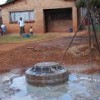
DEVELOPMENT-ZIMBABWE: Water Shortages in Capital Leave Residents Desperate
Taps in the Zimbabwean capital, Harare, are running dry even though the city’s main supply dams are more than 60 percent full, according to figures from the Zimbabwe National Water Authority (ZINWA). With more than half of Harare's three million inhabitants now experiencing water shortages, residents are resorting to desperate measures to find supplies.
RIGHTS-KENYA: A Moment of Joy Turned to Ashes
Josephine, young and pregnant, had just felt her water break. She arrived at the doors of St. Mary's Hospital in Langata, Kenya ready to give birth to her first child. But the throbbing pain of delivery was just the start of her troubles.PAKISTAN: Uncontrolled Population Blamed for Climate Change
When it comes to climate change population matters, particularly for countries in South Asia, Africa and some Arab countries, says Prof. Khalid Rashid. A mathematician and physicist in Pakistan, he has long been studying the phenomenon of global warming and views the uncontrolled population explosion with much trepidation.
SOUTHERN AFRICA: Blind, Translucent, Vulnerable – And Important For Your Health
An unexpectedly rich variety of organisms can be found in groundwater, a source that more than 37 percent of people in Southern Africa are dependent on, according to the Southern African Development Community's Water Sector Co-ordinating Unit. And, an Australian scientist visiting South Africa believes these tiny animals should be studied more intensively to monitor the quality of groundwater.RIGHTS-MOZAMBIQUE: Law to Stop Human Trafficking
Over 1,000 Mozambicans, including children, are trafficked to South Africa every year where they are forced into prostitution or to provide free or cheap labour. In response, Mozambique’s government last week approved a new law which will make human trafficking a crime punishable with long prison sentences.ARGENTINA: Regional Leader in Traffic Deaths
Traffic accidents in Argentina have been claiming an average of 20 lives a day over the past decade, making it the top country in Latin America for these tragedies. They are also the main cause of death among people under 35, but in spite of this there are no official plans to end the slaughter on the roads.DEVELOPMENT-NAMIBIA: No Water In Babylon
Cardboard and rickety tin structures jostle for space on a barren outcrop in the sprawling suburb of Katutura in Namibia’s capital Windhoek. A putrid smell hangs in the still, afternoon air as flies wing their way over the debris.ENVIRONMENT-CHINA: Jittery Officials Thwart Green GDP Report
The pollution cost tally is becoming a potentially explosive political issue in China.BULGARIA: Release of Medics Leaves Larger Issues Hanging
The release of six Bulgarian medics detained in Libya for eight years seems to have led to a sudden "normalisation of ties" between Libya and the European Union.
HEALTH: A New Weapon in the Fight Against Anaemia
A nutritional supplement known as Sprinkles, which is a simple powder that parents can easily add to their children's food, reduces childhood anaemia by more than half, according to a recent study published in the Journal of Nutrition.
SOUTHERN AFRICA: Unequal Water Resources Present a Challenge
Water resources are unevenly distributed throughout the countries of Southern Africa. The region boasts of some of the world’s largest lakes and rivers, but is also a land of vast deserts.
HEALTH-US: Tiny Town Demands Justice in Dioxin Poisoning
A U.S. health agency has made research subjects of people in tiny Mossville, Louisiana by repeatedly monitoring dangerously high levels of dioxin in their blood while doing nothing to get the community out of harm's way, residents say.« Previous Page — Next Page »


 Bangladesh: Sarid, born one month early, receives specialized newborn care and grows stronger every day. Credit: UNICEF/UNI944397/Mojumder
Since the onset of the 2000s, global life expectancy has seen an overall rise, attributed to significant technological and scientific innovations in healthcare. Due to an increased understanding of different conditions as well as a rise in cooperation among healthcare experts around the world, there have been major strides made in ensuring that as few people die from chronic illnesses as possible. Despite the belief that healthcare is a fundamental human right, people from low- or middle-class backgrounds, marginalized groups, and underdeveloped countries have far more limited access to basic healthcare services.
The COVID-19 pandemic showed how marginalized communities are disproportionately affected by health crises, proving that we have much work to do in ensuring that no one dies of terminal conditions. While the global response to the coronavirus saw significant strides in immunization and vaccine development, the global outbreak of mpox in 2022 and its upsurge in parts of Africa in 2024 must remind us to remain vigilant.
Other major disease outbreaks in recent years have been linked to the destruction of infrastructure during warfare. Notably, in 2024, the Gaza Strip witnessed a return of the poliovirus since its eradication in the region 25 years ago. Israel’s blockade on Gaza has resulted in the collapse of the region’s sewage plants and desalination plants, and also destroyed healthcare capacities. The UN stated that this lack of clean water and sanitation would lead to an outbreak of cholera and other deadly infectious diseases. The 2026 OCHA Humanitarian Situation Report confirmed that the over two years of conflict in Gaza has produced a catastrophic health emergency, with millions remaining dependent on relief aid amid tight restrictions and no functioning public health system.
IPS is committed to providing full and comprehensive coverage on healthcare challenges around the world. IPS seeks to address the multifaceted causes of such challenges, including unprecedented pandemics, conflict-driven disease outbreaks, as well as socioeconomic barriers to equal healthcare access. IPS is also dedicated to reporting on innovations in the healthcare industry.

The Week with IPS

NEXT STOP - SDGs
Tracking global progress towards a sustainable world
Tracking global progress towards a sustainable world
