Languages
Saturday, November 21, 2026



News and Views from the Global South
Health
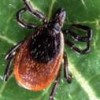
GERMANY: Warming Climate Helps Some Species, Kills Others
The weather conditions in the heart of Europe were abnormal last year - the summer too hot, too dry, and too long, and the winter too warm. But they were excellent for some foreign species, which, benefiting from the changed weather, settled in Germany, and have become a headache - or worse - for farmers and just about everybody else.ROMANIA: Cannes Award Brings Back Memories
A Romanian triumph at the Cannes film festival this year has revived painful memories for thousands of women.HEALTH-US: Debating the Right to Die
The recent release from a U.S. state prison of assisted-suicide practitioner Jack Kevorkian has sparked renewed interest in the legal and ethical implications of helping the terminally ill take their own lives.ARGENTINA: Psychiatric Patients’ Radio Station Up in the Air
La Colifata was the first radio station in the world to broadcast live from a psychiatric hospital, and has played a key role in the reinsertion of patients in the community. But now the Argentine station, which has inspired the creation of around 40 similar stations in Latin America and Europe, has run out of financing.DEVELOPMENT-BOTSWANA: Even More Children Are Dying
While Botswana has succeeded in decreasing its poverty rate, it is unlikely that the country will achieve the United Nations' fourth Millennium Development Goal of decreasing child mortality rates by two-thirds by 2015. Figures have shown an increase in child mortality between the 1990s and the 2000s.COLOMBIA-ECUADOR: Studies Find DNA Damage from Anti-Coca Herbicide
U.S.-funded aerial spraying of coca plantations in Colombia near the Ecuador border has severely damaged the DNA of local residents, a new study has found.HEALTH: Commonwealth Event Debates Why AIDS Wears “the Face of a Woman”
The issue of women continuing to be at higher risk of HIV infection than men has received considerable attention at a gathering of women's affairs ministers from Commonwealth countries underway in Uganda's capital, Kampala.
HEALTH-US: Surviving War, Slowly Dying at Home
The U.S. Vets Westside Residence Hall is a hulking eight-story structure a few blocks from Los Angeles International Airport. It's the largest transitional housing and employment centre for homeless veterans in the country, hosting 700 veterans annually.ENVIRONMENT-THAILAND: Seeing the Light With Solar Power
Till over a year ago, health officials worried over maintaining the cold chain for vaccines delivered to children on this island. These included the ten given to new-born Thais, such as those for polio, diphtheria, tetanus, Japanese encephalitis and tuberculosis.Q&A: “I Said to Myself, Why Not Create an NGO Focused on the Dignity of Women?”
Later this year, Salamatou Traoré - a leading health worker in Niger - will be awarded a five thousand dollar grant from the United Nations Population Fund (UNFPA) in recognition of her work to assist women who suffer from fistulas. She is one of three persons being honoured by the agency for their efforts to uplift women.SCIENCE: Genome Guru Seeks Patent on Synthetic Life Form
Patent applications for the world's first-ever human-made species have been made to patent offices around the world.G8-AFRICA: Shortfall on Help in AIDS Fight ‘Devastating’
Although the Group of Eight industrialised nations agreed at their summit in Heiligendamm, Germany, to allocate 60 billion dollars to fight AIDS, malaria and tuberculosis in Africa, health activists say the treatment targets are much lower than originally pledged, which is "devastating news", especially for the millions of people with HIV/AIDS.BOLIVIA: Safe Abortion Nearly Impossible Even in Cases of Rape
Bolivia's constituent assembly has just two months left to finishing rewriting the country's constitution. In 10 months of sessions, it has approved a single article, regarding the right to hold football matches at high altitudes, in response to the International Football Federation's (FIFA) ban on high-altitude international matches.
G8: Much Talk, Too Few Results
This year's summit of the G8 heads of government will likely be remembered as a "how not to" organise such an event, for the contrast between the expectations it raised and its negligible accomplishments, and for its enormous security costs.AFRICA: G8 Has Yet to Deliver on Aid Promises – World Bank
The industrialised nations of the Group of Eight are failing on the promises made in their previous summits to help Africa's economic development and to push for poverty alleviation for those struggling to survive on less than a dollar per day, say World Bank experts and development activists.G8: Health Over Intellectual Property Rights, Says G5
The Group of Eight industrialised countries suffered a setback Friday in its plan to strengthen intellectual property rights through "promoting innovation - protecting innovation" when the five developing world's leaders - China, India, Brazil, South Africa and Mexico - forced a key change in the final statement.
G8: Summit Falls Short on Africa Aid, Hedge Fund Regulation
The Group of Eight industrialised countries (G8) agreed to allocate 60 billion dollars in new aid to Africa in "the coming years", to beef up the fight against HIV/AIDS, malaria and tuberculosis, and to improve primary education across the continent.
COLOMBIA-ECUADOR: ‘There Are No Plants or Animals Left’
A new U.S. government report acknowledges that coca crops expanded last year in Colombia, despite the heavy herbicide spraying carried out under Plan Colombia, which has been loudly protested by neighbouring Ecuador for causing damages to human and animal health and food crops in border areas.G8: Poverty Reduction and Climate Change Inextricably Linked, Say Activists
In the final hours before this week's Group of Eight (G8) summit gets underway in Germany, activists have underscored the need for progress with both climate change and poverty alleviation - key items on the meeting's agenda - for there to be real improvement in Africa's living conditions.HEALTH-PAKISTAN: ‘War on Terror’ Cripples Border Hospitals
Pakistan's Federally Administered Tribal Area (FATA) extends 27,220 sq km along the Afghanistan border and has been the target of a series of debilitating U.S. missile attacks since 2005.ENVIRONMENT-CHILE: From One Conflict to the Next
In what was hailed as a landmark ruling, the Chilean Supreme Court ordered the state to pay compensation to 356 residents affected by pollution with toxic metals in the northern city of Arica.« Previous Page — Next Page »


 Bangladesh: Sarid, born one month early, receives specialized newborn care and grows stronger every day. Credit: UNICEF/UNI944397/Mojumder
Since the onset of the 2000s, global life expectancy has seen an overall rise, attributed to significant technological and scientific innovations in healthcare. Due to an increased understanding of different conditions as well as a rise in cooperation among healthcare experts around the world, there have been major strides made in ensuring that as few people die from chronic illnesses as possible. Despite the belief that healthcare is a fundamental human right, people from low- or middle-class backgrounds, marginalized groups, and underdeveloped countries have far more limited access to basic healthcare services.
The COVID-19 pandemic showed how marginalized communities are disproportionately affected by health crises, proving that we have much work to do in ensuring that no one dies of terminal conditions. While the global response to the coronavirus saw significant strides in immunization and vaccine development, the global outbreak of mpox in 2022 and its upsurge in parts of Africa in 2024 must remind us to remain vigilant.
Other major disease outbreaks in recent years have been linked to the destruction of infrastructure during warfare. Notably, in 2024, the Gaza Strip witnessed a return of the poliovirus since its eradication in the region 25 years ago. Israel’s blockade on Gaza has resulted in the collapse of the region’s sewage plants and desalination plants, and also destroyed healthcare capacities. The UN stated that this lack of clean water and sanitation would lead to an outbreak of cholera and other deadly infectious diseases. The 2026 OCHA Humanitarian Situation Report confirmed that the over two years of conflict in Gaza has produced a catastrophic health emergency, with millions remaining dependent on relief aid amid tight restrictions and no functioning public health system.
IPS is committed to providing full and comprehensive coverage on healthcare challenges around the world. IPS seeks to address the multifaceted causes of such challenges, including unprecedented pandemics, conflict-driven disease outbreaks, as well as socioeconomic barriers to equal healthcare access. IPS is also dedicated to reporting on innovations in the healthcare industry.

The Week with IPS

NEXT STOP - SDGs
Tracking global progress towards a sustainable world
Tracking global progress towards a sustainable world
