Languages
Saturday, November 21, 2026



News and Views from the Global South
Health
Q&A: “Abstinence Is Not the Only Way to Go”
Few aid programmes have been as controversial among activists and public health experts as the George W. Bush administration's abstinence-based HIV/AIDS treatment and prevention initiative, called the President's Emergency Plan for AIDS Relief (PEPFAR).LATIN AMERICA: For a Day Against Homophobia
"We don't want more or less rights than anyone else; we want exactly the same rights," says Mexican transsexual Sofía Valero, one of millions of Latin Americans who suffer discrimination and are at risk of gay bashings and murder because of their sexual orientation.
HEALTH-MOZAMBIQUE: Stopping Death With a Net
Each time she has been pregnant, 20-year-old Isaura Paulina has fallen sick with malaria. Malaria was probably the cause of her two miscarriages and the low birth weight and frailty of her baby Belinda. She only weighed two kilograms at birth and now also has malaria.VENEZUELA: Museums Throw Open Their Doors to the Disabled
"We drew a fat woman with little dots. I like learning to draw. Maybe I'll be an artist later on," Lisette, a 15-year-old mentally disabled girl who goes every Friday from her school in the south of the Venezuelan capital to the Alejandro Otero Museum, told IPS.HEALTH-THAILAND: Holding Big Pharma’s Feet to the Fire
For nearly a week the advertising pages of Thai and English-language dailies have been the stage for debates on Thailand's decision to break patents on anti-AIDS drugs in the interest of public health.
HEALTH-U.S.: Boston Residents Face to Face with Bio-War
The U.S. government and Boston University are facing protests and lawsuits for building a laboratory to research potential biological weapons in a neighbourhood whose residents are mostly African-American and Latinos.RIGHTS-ANGOLA: Beauty Is in the Eye of the Evictor
The Angolan government forcibly evicted 20,000 poor people, including small-scale farmers, and destroyed 3,000 homes between 2002 and 2006 in the capital, Luanda, "to facilitate development and 'beautification' in the public interest".HEALTH-US: Suicidal and Facing a Third Tour in Iraq
At the beginning of May, Corporal Cloy Richards tried to kill himself.CHINA: Public Health Education Sorely Missing
China's government is trying to fix its ailing rural health-care system by pouring millions into medical infrastructure for the countryside, but its neglect of basic health education for the public could condemn these efforts to failure, health experts here warn.HEALTH-AFRICA: 28 Stories, 28 Million Victims
"Humans are predisposed to respond to individual suffering; they are overwhelmed by huge numbers," Henry-Paul Normandin, Canada's ambassador to the United Nations, told diplomats, U.N. officials and journalists gathered at the Canadian Mission here Monday.TRADE: Deal Rekindles Hopes and Fears over U.S. Policy
A new U.S. policy to include internationally recognised labour and environmental standards in future trade deals with foreign countries has received mixed reactions in the United States.HEALTH: HIV-Positive Women Activists in Latin America Stand Tall
Patricia Pérez, an activist from Argentina who was diagnosed HIV-positive in 1986, has been nominated for the 2007 Nobel Peace Prize for her activism on behalf of women living with the AIDS virus. But her case is an exception to the rule.HEALTH: Into the Minds of Children of War
The Apr. 16 shooting massacre of 32 people on the campus of Virginia Tech University, and the mental problems that propelled the 23-year-old gunman to his murderous rampage, received countess hours and column inches of media attention in the United States and abroad.CUBA: Children Use Art to Learn About Hunger
A Cuban child is drawing a train, heavily loaded with emergency food supplies that are about to be airlifted and dropped into areas where hunger is just a normal part of life. The drawing will be entered in an annual international competition called "WFP in Action," organised by the World Food Programme.HEALTH: Thailand Turns Giant Pharma Killer
By standing up to pressure from ‘big pharma' over cheap anti-AIDS drugs, Thailand may have created an opening in global trade rules that will permit developing countries to more readily break patents in times of public health emergencies.ENVIRONMENT: Momentum Grows to “Ban the Bulb”
On Feb. 20, Australia announced it would phase out the sale of inefficient incandescent light bulbs by 2010, replacing them with highly efficient compact fluorescent bulbs that use one-fourth as much electricity.GUATEMALA: Indigenous Women Last in Line for MDGs
Guatemala is making slow, uneven progress towards meeting the Millennium Development Goals (MDGs), with maternal mortality and illiteracy remaining the most persistent problems, mid-way to the 2015 deadline.
PERU: Blood and Gold on Algamarca Hill
While two companies are disputing a hill rich in gold in the extreme northwest of Peru, more than 3,000 informal sector miners are working there without the most basic safety or environmental protection measures.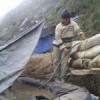
PERU: Farmers, Informal Gold Miners Clash Over Pollution
There is a cemetery at the foot of this hill full of gold and silver near the village of Algamarca in northwestern Peru - an indication of the risks involved in informal mining, which uses highly toxic substances like cyanide and mercury.ENVIRONMENT: Oxy Faces Lawsuit Threat Over Amazon Toxins
Indigenous communities in the Peruvian Amazon are warning the U.S. oil giant Occidental Petroleum (Oxy) that it could soon face a lawsuit in the United States if it fails to clean up toxic waste in their tropical rainforest.LEBANON: Refugees Learn to Substitute Government
The influx of refugees from Palestinian areas and the inability of the government to do much for them has strengthened a unique NGO providing essential services.« Previous Page — Next Page »


 Bangladesh: Sarid, born one month early, receives specialized newborn care and grows stronger every day. Credit: UNICEF/UNI944397/Mojumder
Since the onset of the 2000s, global life expectancy has seen an overall rise, attributed to significant technological and scientific innovations in healthcare. Due to an increased understanding of different conditions as well as a rise in cooperation among healthcare experts around the world, there have been major strides made in ensuring that as few people die from chronic illnesses as possible. Despite the belief that healthcare is a fundamental human right, people from low- or middle-class backgrounds, marginalized groups, and underdeveloped countries have far more limited access to basic healthcare services.
The COVID-19 pandemic showed how marginalized communities are disproportionately affected by health crises, proving that we have much work to do in ensuring that no one dies of terminal conditions. While the global response to the coronavirus saw significant strides in immunization and vaccine development, the global outbreak of mpox in 2022 and its upsurge in parts of Africa in 2024 must remind us to remain vigilant.
Other major disease outbreaks in recent years have been linked to the destruction of infrastructure during warfare. Notably, in 2024, the Gaza Strip witnessed a return of the poliovirus since its eradication in the region 25 years ago. Israel’s blockade on Gaza has resulted in the collapse of the region’s sewage plants and desalination plants, and also destroyed healthcare capacities. The UN stated that this lack of clean water and sanitation would lead to an outbreak of cholera and other deadly infectious diseases. The 2026 OCHA Humanitarian Situation Report confirmed that the over two years of conflict in Gaza has produced a catastrophic health emergency, with millions remaining dependent on relief aid amid tight restrictions and no functioning public health system.
IPS is committed to providing full and comprehensive coverage on healthcare challenges around the world. IPS seeks to address the multifaceted causes of such challenges, including unprecedented pandemics, conflict-driven disease outbreaks, as well as socioeconomic barriers to equal healthcare access. IPS is also dedicated to reporting on innovations in the healthcare industry.

The Week with IPS

NEXT STOP - SDGs
Tracking global progress towards a sustainable world
Tracking global progress towards a sustainable world
