Languages
Sunday, October 11, 2026



News and Views from the Global South
Humanitarian Emergencies

Climate Action Greatest Economic Opportunity of this Century, Says UN Climate Chief
With fewer than 100 days to go to COP29, the highest decision-making body on climate issues under the United Nations Framework Convention on Climate Change (UNFCCC), the need for creative and innovative solutions to protect lives and livelihoods is now extremely urgent.
Kenya’s Unanswered Questions About Enforced Disappearances
As the world marked International Day of the Disappeared, Kenya grapples with a shadowy and persistent crisis—enforced disappearances. This harrowing violation of human rights has left countless families in anguish, searching for their loved ones while battling a wall of government denial and indifference.
In Tonga the UN Secretary-General Declares a Global Climate Emergency
Three months ahead of the COP29 United Nations (UN) Climate Change Conference, the United Nations Secretary-General, António Guterres, has called for an emergency response from the international community as new data from the World Meteorological Organization (WMO) reveals a critical deterioration in the state of the climate.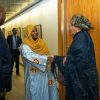
Humanitarian Crisis As Floods, Prolonged Heavy Rains Impact Chad
Since June of this year, Chad has been facing an extended period of heavy rainfall. Major flooding has triggered the onset of a significant humanitarian crisis, as all aspects of Chadian life, including health, food production, and community, have been negatively impacted. Additionally, response plans are severely compromised due to high levels of hostility taking place in neighboring nations.
UN Polio Vaccine Campaign in Gaza Will Proceed During Humanitarian Pause
The UN’s multi-agency polio vaccine campaign in Gaza is set to begin this weekend. It will do so under continued constraints on humanitarian operations and mobility, but with the assurance from Israel to pause fighting for the campaign to go ahead.
Infection Rates Among Children Show Worrying Increase in Gaza
As the humanitarian crisis in Gaza continues, so does the spread of illness among Palestinian children. Already facing widespread malnutrition, starvation, dehydration, and unhygienic living conditions, hundreds of thousands of children in Gaza face the risk of contracting a multitude of diseases.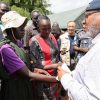
In the Midst of Hostilities Hunger Escalates in Sudan
The ongoing humanitarian crisis taking place in Sudan, which is a result of the civil war that began last year, continues to escalate as hunger and displacement plague the population, according to spokesperson for the Secretary-General of the United Nations, Stéphane Dujarric, during a press briefing on August 21, 2024.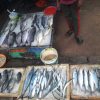
Struggling at Sea: The Plight of Indian Fishworkers Amid Climate Change and Government Policies
Climate change forces millions of India’s fishworkers to venture beyond the country's exclusive economic zone into the perilous high seas.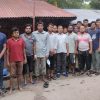
Bangladesh Students, Community Moves to Protect Minorities Following Fall of Hasina Government
Immediately after the fall of the Sheikh Hasina government on August 5, 2024, following weeks of deadly demonstrations staged by students, people carried out attacks on the houses and temples of the Hindu community in Dacope of Khulna, about 225 kilometres from Dhaka. They particularly attacked and vandalized the houses of minorities believed to be involved in the politics of the ousted Awami League government.
Explainer: COP16—What’s It About and What Does It Need to Achieve?
‘Peace with Nature’ is the theme for the 16th meeting of the Conference of the Parties (COP16) to the Convention on Biological Diversity (CBD), which will take place in Cali, Colombia, between October 21 and November 1, 2024.
Research: Disease and Climate Stress Resistant Wheat Varieties for Global South
Groundbreaking research indicates that the wild relatives of wheat could be turned into an all-time food security crop capable of cushioning vulnerable populations from starvation and hunger, thanks to its ability to withstand both climatic stress and diseases. Wheat is a staple for over 1.5 billion people in the Global South.
Fast-Acting Interventions Needed for Sudanese Refugee Children as Needs Outpace Response
As peace eludes war-torn Sudan, thousands of displaced people fleeing the deadly battle between the Sudanese Armed Forces (SAF) and Rapid Support Forces (RSF) have found refuge in neighboring countries, including Egypt.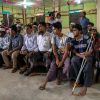
Conditions Grow Dire in Myanmar
On August 21st, Spokesperson for the Secretary-General Stéphane Dujarric spoke at a press briefing at the United Nations Headquarters about the ongoing Rohingya genocide taking place in Myanmar. Dujarric detailed high levels of hostility and displacement in the Shan, Mandalay, and Rakhine regions, which have significantly intensified since late June of this year.
Tackling the World’s Planetary Emergency
The world is facing a triple planetary crisis of climate change, pollution, and biodiversity loss. Climate change continues to pose an existential threat to humanity, with recent science estimating that we have possibly less than six years left to change course and rapidly reduce greenhouse gas emissions to have a chance of avoiding the worst of the climate crisis.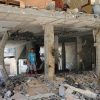
Gaza War: Displaced Palestinian Families Struggle to Access Basic Services
The latest Israeli evacuation order on August 17 led to the displacement of over 13,000 individuals, Secretary General’s spokesperson Stéphane Dujarric told a press conference at the UN headquarters.
In Samoa, Protecting the Ocean is Our Way of Life
In Samoa, we use a simple phrase to capture our way of life: Fa’asamoa. At the core of this concept is respect for others, devotion to family and a deep appreciation for the preservation of our natural resources. Importantly, Fa'asamoa has enabled us to sustainably fish our vibrant coral reefs for millennia, in a way that provides good health and prosperity for everyone in our communities.
Absence of Reproductive Care Haunts Syrian Displaced Women
Pregnant women in northern Syria's camps for internally displaced people fear about their health and the health of their unborn children because of a lack of basic medical care and a healthy diet. These conditions exacerbate the illnesses and challenges faced by women, particularly amid the region's widespread poverty, food insecurity, and the remoteness of hospitals and health centers from the camps.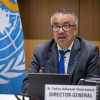
The Troubling Truth of Mpox
On August 15th, the Deputy Spokesperson for the Secretary-General, Farhan Haq, stated at a press briefing at the United Nations Headquarters that the Mpox epidemic continues to surge in the Democratic Republic of Congo and spreads throughout Africa. The alarming frequency of these cases constitutes a global health concern. Mpox, formerly known as monkeypox, is an epidemic that has grown exponentially in severity over the past two years. Originating in Central Africa in 1970, rates of infection have risen significantly since late 2023, with a new variant of the infection, known as clade 1 Mpox, infecting over 17,000 people in the Democratic Republic of Congo. These cases have generated increasing alarm, so much so that the World Health Organization has declared Mpox to be a worldwide public health emergency. Shortly after this declaration, the first case of clade 1 Mpox was reported in Sweden which greatly elevated global concern of a worldwide epidemic.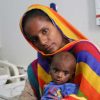
How Extreme Heat Intensifies Health Problems and Hunger
In May, temperatures soared above 52° Celsius (125.6° Fahrenheit) in Pakistan’s southern province of Sindh. To cope, Samina Kanwal, a community health worker with Action Against Hunger, began work at 7:00 am — the earliest time possible given neighborhood security protocols — to travel door-to-door helping vulnerable with the health consequences of extreme heat including heatstroke, difficulties with brain function, and even hunger.
2023 Deadliest Year for Aid Workers– & 2024 Could be Even Worse, Predicts UN
Back in August 2003, the United Nations faced one of its violent tragedies when a terrorist attack on the UN headquarters in the Iraqi capital of Baghdad claimed the lives of 22 people. Among those killed was Sergio Vieira de Mello of Brazil, the UN envoy in Iraq and High Commissioner for Human Rights, who had a long and distinguished UN career stretching over 30 years.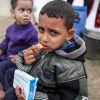
WFP in Gaza: ‘We Need a Long Ceasefire That Leads to Peace so We Can Operate’
Corinne Fleischer, WFP’s regional director for the Middle East, North Africa and Eastern Europe, describes Gaza as “a terrible situation getting worse.” Over the past two weeks, 21 United Nations World Food Programme (WFP) food distribution points have been closed under evacuation orders.« Previous Page — Next Page »





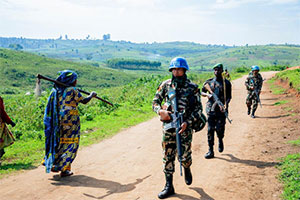 MONUSCO Peacekeepers and FARDC Soldiers Patrol Fataki Area. Credit: UN Photo/Jorkim Jotham Pituwa
Conflict, human rights violations, natural disasters, and famine have been at the forefront of concerns for humanitarian organizations. The escalation of humanitarian crises has led to over 239 million people in need of humanitarian assistance at the start of 2026, as estimated by OCHA’s Global Humanitarian Overview. The 2025 humanitarian appeal received only $12 billion, the lowest funding in over a decade, which has left 24 million fewer people reached in comparison to 2024. Conflict has remained the primary driver of crisis.
Humanitarian emergencies massively impact progress towards the Sustainable Development Goals (SDGs), adversely affecting economic development, inequality, education, planetary well-being, and poverty. Millions of people are faced with reduced access to essential services, including shelter, food, healthcare, and access to clean drinking water. UN Organizations such as UNHCR and the United Nations Children’s Fund (UNICEF) are committed to providing direct relief to affected communities when state governments cannot.
The United Nations 2024 Summit of the Future discussed measures that will be taken to reduce global inequality and promote peacekeeping efforts around the world. The recent UN Climate Change Conference (COP30) in Belém, Brazil, agreed to mobilize $1.3 trillion annually for climate action by 2035, operationalize the loss and damage fund, and triple adaptation finance. However, a fossil fuel transition commitment was not secured, despite climate change and the greenhouse effect being major contributors to humanitarian crises worldwide.
Countries across the world have also rallied to end humanitarian crises, as witnessed in conflicts such as Palestine and Ukraine. IPS is committed to providing relevant and in-depth reports of humanitarian emergencies around the world and their implications.

The Week with IPS

NEXT STOP - SDGs
Tracking global progress towards a sustainable world
Tracking global progress towards a sustainable world