Languages
Tuesday, October 13, 2026



News and Views from the Global South
Humanitarian Emergencies
The Troubling Truth of Mpox
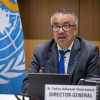
On August 15th, the Deputy Spokesperson for the Secretary-General, Farhan Haq, stated at a press briefing at the United Nations Headquarters that the Mpox epidemic continues to surge in the Democratic Republic of Congo and spreads throughout Africa. The alarming frequency of these cases constitutes a global health concern. Mpox, formerly known as monkeypox, is an epidemic that has grown exponentially in severity over the past two years. Originating in Central Africa in 1970, rates of infection have risen significantly since late 2023, with a new variant of the infection, known as clade 1 Mpox, infecting over 17,000 people in the Democratic Republic of Congo. These cases have generated increasing alarm, so much so that the World Health Organization has declared Mpox to be a worldwide public health emergency. Shortly after this declaration, the first case of clade 1 Mpox was reported in Sweden which greatly elevated global concern of a worldwide epidemic.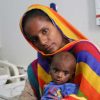
How Extreme Heat Intensifies Health Problems and Hunger
In May, temperatures soared above 52° Celsius (125.6° Fahrenheit) in Pakistan’s southern province of Sindh. To cope, Samina Kanwal, a community health worker with Action Against Hunger, began work at 7:00 am — the earliest time possible given neighborhood security protocols — to travel door-to-door helping vulnerable with the health consequences of extreme heat including heatstroke, difficulties with brain function, and even hunger.
2023 Deadliest Year for Aid Workers– & 2024 Could be Even Worse, Predicts UN
Back in August 2003, the United Nations faced one of its violent tragedies when a terrorist attack on the UN headquarters in the Iraqi capital of Baghdad claimed the lives of 22 people. Among those killed was Sergio Vieira de Mello of Brazil, the UN envoy in Iraq and High Commissioner for Human Rights, who had a long and distinguished UN career stretching over 30 years.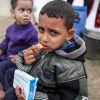
WFP in Gaza: ‘We Need a Long Ceasefire That Leads to Peace so We Can Operate’
Corinne Fleischer, WFP’s regional director for the Middle East, North Africa and Eastern Europe, describes Gaza as “a terrible situation getting worse.” Over the past two weeks, 21 United Nations World Food Programme (WFP) food distribution points have been closed under evacuation orders.
Rizwana Hasan Vows to Ensure Justice for Those Killed During Bangladesh’s Quota Reform Movement
Justice for all those who died and suffered injuries during the recent student-led quota reform movement in Bangladesh and reforms to the systems to ensure that this justice takes place are not negotiable, an adviser to the Bangladesh interim government, Syeda Rizwana Hasan, told IPS in an exclusive interview
South Sudan: World’s Youngest Nation at a Crossroads
Thirteen years since becoming an independent state, South Sudan faces profound humanitarian challenges. South Sudan’s first Independence Day was imbued with a great sense of hope.
Power to the Youth
We live in a divided world of the haves and the have nots. The rich get richer, the poor get poorer. There is learning poverty, technology poverty, healthcare poverty, and food poverty. When you think about the dynamics of the world today, there is even empathy and humanity poverty.
Digital Trade & the Sustainable Development Goals: A Dynamic Agenda
The rapid growth of digitalization has fundamentally altered commerce, impacting production and facilitating the movement of goods. The 2023 Asia-Pacific Trade and Investment Report (APTIR), has pointed out that although digital trade revenues of Asia and the Pacific account for a significant share of global trade, this growth is uneven, with trade concentrated in a few areas, leading to disparities across the region.
Gaza Children’s Education, Mental Health Targeted With Emergency Response Grant
Since October 2023, 625,000 children enrolled in schools across Gaza have had no access to education, and more than 370 schools have sustained damage from attacks, according to the United Nations.
Pacific Community Photographic Winners Bring Impacts of Climate Change to Life
The Pacific Community’s photographic competition winners reflect the devastating climate impacts on beautiful and sensitive environments, documenting the most pressing issues the communities who live on the islands face today.
Explainer: Why Kenya is Considered a High Climate Risk for Development Banks
Kenya contributes less than 0.1 percent of global greenhouse gas emissions every year, yet development banks have flagged the East African nation as a high climate risk. This is due to extreme weather changes that are increasingly threatening the country’s development agenda, widening socio-economic inequalities, and deepening rural poverty and hunger.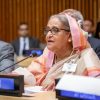
UN Calls for ‘Peaceful, Orderly and Democratic Transition’ Following Protests in Bangladesh
After weeks of violent clashes against protestors, Bangladesh Prime Minister Sheikh Hasina resigned from her position and fled the country on Monday. Preparations are underway for an interim government to take over with the backing of the military, political parties, student leaders of the protest movement and all other groups involved in the transition. A UN spokesperson has urged that all parties involved in the current transition should work together to ensure a peaceful and democratic transition.
Nigeria: Why #EndBadGovernanceInNigeria Protests Gained Traction
Thousands of Nigerians have taken to the streets to protest against bad governance, corruption, soaring inflation, and the rising cost of living, in what has been termed "10 Days of Rage" and believed to mirror Kenyan protests organized by the youth. Nigeria, Africa's most populous country and a major exporter of crude oil, citizens claim that the benefits of the country's resources do not trickle down to the masses but to a group of corrupt politicians.
Activists Challenge Pharma Company Gilead Over HIV Medication
Campaigners and experts have demanded a breakthrough HIV intervention hailed as “the closest thing to an HIV vaccine” must be made available as soon and as cheaply as possible to all who need it as its manufacturer faces protests over its pricing. Activists led a massive protest during the 25th International AIDS Conference (AIDS2024) in Munich last week as a study was presented showing lenacapavir—a drug currently sold by pharmaceutical firm Gilead for more than USD 40,000 per year as an HIV treatment—could be sold for USD 40 per year as a form of pre-exposure prophylaxis (PrEP) to help prevent HIV infection.
79 Years After Hiroshima & Nagasaki: A Grim Reminder of Nuclear Annihilation
The upcoming 79th anniversary of the atomic bombings of Hiroshima and Nagasaki, which took place on August 6 and 9, 1945, remains a grim reminder of the destructive consequences of nuclear weapons. The US bombings killed an estimated 90,000 to 210,000, with roughly half of the deaths occurring on the first day in Hiroshima.
Intl. AIDS Conference: Trans Man Asks Governments to Pressure Uganda to Repeal Punitive Anti LGBT+ Law
Jay Mulucha, Executive Director of FEM Alliance Uganda, gave an impassioned plea to governments around the world to push lawmakers in his home country to reverse punitive new legislation criminalizing the LGBT+ community.
Sportwashing Allegations at Africa’s Top Football Tournament
Following the recent Africa Cup of Nations (AFCON) tournament in Ivory Coast, a continent-wide campaign has emerged on social media challenging the tournament's main sponsor, TotalEnergies, over its involvement in the East African Crude Oil Pipeline (EACOP).
Emergency Response: Building Resilient Education Systems in Haiti Amid Multiple Crises
Haiti is witnessing unprecedented levels of lawlessness and brutality from armed gangs, which target schools and hospitals. The groups have plunged the country into a crisis and apart from the gun violence accusations, disturbing reports of ruthless sexual violence, including gang rape. Millions of children are in harm's way; many are out of school and it is estimated that between 30 and 50 percent of armed group members are children.
UN: Extreme Heat a Global Issue With an Unequal Impact
“The world must rise to the challenge of rising temperatures," says the UN Secretary-General as he launches a call to action on extreme heat and its impact on society and the environment.
Kanak Political Grievances Are Fed by Deep Inequality in New Caledonia
New Caledonia, a French overseas territory of about 290,000 people in the southwest Pacific, is facing a challenging recovery from weeks of civil unrest that erupted in mid-May, leaving an aftermath of destruction and political turmoil.
USA: ‘The Stakes in the 2024 Election Are Incredibly High for the Fate of US Democracy’
CIVICUS discusses the recent US Supreme Court ruling on presidential immunity and its potential impact on the 5 November presidential election with Ciara Torres-Spelliscy, a professor of Law at Stetson University College of Law.
« Previous Page — Next Page »





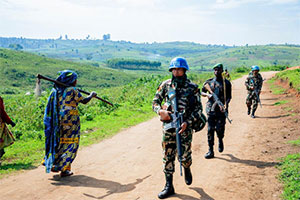 MONUSCO Peacekeepers and FARDC Soldiers Patrol Fataki Area. Credit: UN Photo/Jorkim Jotham Pituwa
Conflict, human rights violations, natural disasters, and famine have been at the forefront of concerns for humanitarian organizations. The escalation of humanitarian crises has led to over 239 million people in need of humanitarian assistance at the start of 2026, as estimated by OCHA’s Global Humanitarian Overview. The 2025 humanitarian appeal received only $12 billion, the lowest funding in over a decade, which has left 24 million fewer people reached in comparison to 2024. Conflict has remained the primary driver of crisis.
Humanitarian emergencies massively impact progress towards the Sustainable Development Goals (SDGs), adversely affecting economic development, inequality, education, planetary well-being, and poverty. Millions of people are faced with reduced access to essential services, including shelter, food, healthcare, and access to clean drinking water. UN Organizations such as UNHCR and the United Nations Children’s Fund (UNICEF) are committed to providing direct relief to affected communities when state governments cannot.
The United Nations 2024 Summit of the Future discussed measures that will be taken to reduce global inequality and promote peacekeeping efforts around the world. The recent UN Climate Change Conference (COP30) in Belém, Brazil, agreed to mobilize $1.3 trillion annually for climate action by 2035, operationalize the loss and damage fund, and triple adaptation finance. However, a fossil fuel transition commitment was not secured, despite climate change and the greenhouse effect being major contributors to humanitarian crises worldwide.
Countries across the world have also rallied to end humanitarian crises, as witnessed in conflicts such as Palestine and Ukraine. IPS is committed to providing relevant and in-depth reports of humanitarian emergencies around the world and their implications.

The Week with IPS

NEXT STOP - SDGs
Tracking global progress towards a sustainable world
Tracking global progress towards a sustainable world