Languages
Wednesday, May 6, 2026



News and Views from the Global South
Humanitarian Emergencies

Indian Muslim Minority Targeted During COVID-19 Pandemic
A Muslim call centre operator at a COVID-19 ‘war room’, who once saw himself a COVID-warrior, is now unemployed after being falsely branded by a top politician as a key member of a bed-for-bribe scam. He is a victim of the rise in Islamophobia in India as the country grapples with the COVID-19 pandemic – with scant evidence of condemnation from the authorities, say activists.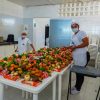
Agroecology Under Threat
This week*, the Committee on World Food Security (CFS) is expected to endorse recommendations on agroecological and other innovative approaches for sustainable food systems, after an intense period of negotiation involving governments, UN agencies and institutions, Indigenous People’s organizations, civil society, and the private sector.
Why Investing in Women Is Key to Achieving the Sustainable Development Goals
Last year, the Asia-Pacific region recorded its worst economic performance in decades. With the pandemic far from over, the region’s recovery is slow, fragile and highly uneven both across and within countries. As the region struggles to recover, how can countries rebuild their economies and revive their development?
Africa’s Forgotten Crisis
A few weeks ago, I traveled with the UN High Commissioner for Refugees Filippo Grandi to the Modale refugee site in the Nord-Ubangi province of the Democratic Republic of the Congo (DRC). What we witnessed there was a profound humanitarian crisis that has left 4.7 million children and youth in need of urgent, life-saving, life-changing educational support.
Pandemic Relief Policies Need More Resources, Better Design
Pandemic relief measures in developing countries have been limited by modest resources, fear of financial market discipline and policy mimicry. COVID-19 has triggered not only an international public health emergency, but also a global economic crisis, setting back decades of uneven progress, especially in developing countries.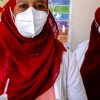
Are There Clinically Meaningful Differences Between anti-COVID-19 Vaccines?
Despite claims by the industry and some politicians, there are no clinically meaningful differences among the variety of vaccines approved under emergency use authorisation (EUA).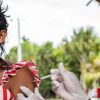
To Beat Covid, Beat HIV, & Beat Inequality, Find the Money
In this time of intersecting crises – the Covid crisis, the HIV crisis, the inequality crisis, and more – progress on all these crises is being blocked by another crisis: finance.
How the US is Obstructing Security Council Resolutions on Palestine
Over the past 75 years, there have been many UN Security Council (UNSC) resolutions acknowledging Israel’s violations of international law, including a Resolution under Chapter VI of the UN Charter, that could have addressed, if implemented, the plight of the Palestinians.
India’s Second COVID-19 Wave Shatters Livelihood Hopes of Poor Migrant Labourers
Last month, in the midst of New Delhi’s coronavirus lockdown, 37- year-old labourer Prakash Kumar wanted to return to his rural home in India’s northern state of Uttar Pradesh. But instead of travelling the usual few hours by bus, Kumar had to journey for three days.
Developing Countries Desperately Need COVID-19 Financing
Failure to sufficiently accelerate comprehensive efforts to contain COVID-19 contagion has greatly worsened the catastrophe in developing countries. Grossly inadequate financing of relief, recovery and reform efforts has also further set back progress, including sustainable development.
Why Our Best Defence Against Future Pandemics is Data
Although the World Health Organization’s (WHO) mission to discover its origins has proven inconclusive, the Covid-19 pandemic has nonetheless clearly highlighted the need for better care, attention, and investment in animal health systems.
Q&A: Reflecting on Five Years of Educating Children in the Throes of Crises, Emergencies and Displacement
Education Cannot Wait (ECW), the global fund that brings teaching and learning to children in emergencies and protracted crises, is observing five years of reaching boys and girls in some of the world’s hardest-hit conflict and disaster zones.
Wanted: Transparency & Accountability in Pandemic-Related Spending
Governments around the world are playing a crucial role in providing lifelines to people and firms to help combat the pandemic and its economic fallout. To support the effectiveness of these efforts, it is important that such spending be subject to adequate transparency and accountability.
Jerusalem: A Flashpoint For Conflict Or Microcosm Of Peace?
Regardless of how the current and future violent conflicts between Israel and the Palestinians in Jerusalem will end, there will be no Israeli-Palestinian peace unless East Jerusalem becomes the capital of a Palestinian state while the city remains united.
When Battling Covid-19 Becomes a National Policy Disaster
We went to the Kanatte cemetery, Sri Lanka’s largest, where most of us, residents of the capital city, would end up sooner or later. But it was deserted, and so we had time for a leisurely chat with some of the helpful staff there, albeit after admiring some of the grave sites and remaining beautiful trees.
Large Corporations Cash in on COVID-19 Relief Funds
Poverty and income inequality are being deepened as COVID-19 relief funds are handed out to large corporations instead of social protection programmes in developing countries, groups involved in a new study of COVID-19 bailouts have said.
Put People Before Profits for Progress
Millions of people are expected to die due to delayed and unaffordable access to COVID-19 tests, treatment, personal protective equipment and vaccines. Urgent cooperation is desperately needed to save lives and livelihoods for all.
Women Leading Somalia’s Health System
Somalia is one of the most complex regions of the world, with threats and political instability, extreme weather conditions, movement of internally displaced people (IDPs), decades of conflict, poverty-related deprivation, poor health and communicable diseases that are killing people. There is a constant risk of gender violence making women, children and members of minority groups particularly vulnerable, and more so during displacement or while seeking work. Three decades of civil war and instability have weakened Somalia’s health system and contributed to it having some of the lowest health indicators in the world. The COVID-19 pandemic has added yet another strain on its tremendously fragile infrastructure presenting unexpected challenges and dilemmas.
COVID-19 Vaccination: The Barriers to Achieving Global Herd Immunity
The global community is conducting a rapid vaccination program against the SARS.Cov-2 virus, using several vaccines, authorised for emergency use. To date, the percentages of adults vaccinated vary between less than 2% to over 90% in different countries.
The Devastating Gun Battle in Gaza is Being Fought in an Uneven Killing Field
In most civil wars and military conflicts across the politically-volatile Middle East, including in Syria, Yemen and Palestine, the ongoing battles are being fought not on a level playing field but on an uneven killing field.
Where are the Women? How Pandemic Decisions are Ingraining Global Gender Bias
There are teams of experts around the world right now tackling the coronavirus pandemic, providing pathways to put an end to this deadly global scourge and charting the course for recovery.« Previous Page — Next Page »