Languages
Sunday, November 8, 2026



News and Views from the Global South
Development & Aid

Global South Stagnating under Heavier Debt Burden
Much higher interest rates – due to Western central banks – are suffocating developing nations, especially the poorest, causing prolonged debt distress and economic stagnation.
Thailand’s ‘Humanitarian Corridor’ for Myanmar Faces Pushback
The Maung family is rebuilding their lives in a foreign land. A freshly painted signboard with a play on the word Revolution declares their small restaurant is open for business, and breakfast features traditional Myanmar mohinga—rice noodles and fish soup.
Pollution – a Threat To Our Groundwater Resources
Groundwater pollution significantly affects the prevalence of waterborne diseases. This form of pollution occurs when hazardous substances, such as pathogens, chemicals, and heavy metals, seep into underground aquifers, the primary source of drinking water for approximately 70% of the 250 million people living in the SADC region.
Maternity Benefits: Critical Tool to Ensure Mothers & their Newborns are Free from Poverty
Maternity protection is a human right enshrined in Article 25 of the Universal Declaration of Human Rights. Income security for newborn mothers ensures their mental and physical wellbeing and contributes to the healthy development of their infants.
State Fails to Stem Kidnapping For Ransom Crisis in Nigeria
Lilian Eze still shivers when she recalls the frequent attacks by kidnappers in the Kaduna community she once lived in, in north-central Nigeria. In February 2022, she fled with her children to Abuja, the nation's capital, to ensure their safety. In an interview with IPS, she explained that the kidnappers would invade the community on foot and with a horde of motorbikes in the evenings with little or no resistance from security agencies.
It’s Africa’s Time To Shine, says UN Under Secretary Claver Gatete
With 20 percent of the global population and vast untapped natural resources, not forgetting its human capital, it is time Africa had its rightful seat at the global table, the United Nations Under Secretary and Executive Secretary of the Economic Commission for Africa (ECA), Claver Gatete, has called.
International Women’s Day, 2024
Inside Women Dominated Seaweed Farms in Kenya’s Indian Ocean Waters
Nearly two kilometers into the Indian Ocean from the Mwazaro beach coastline in Lunga Lunga Sub-County, Kwale County, women can be spotted seated in the shallow ocean waters or tying strings to erected poles parallel to the waves. It is a captivating sight to see rows of seaweed farms in the Indian Ocean. 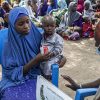
Unveiling Blind Spots & Critical Insights to Fight Poverty Effectively
Poverty is multidimensional. If we think of classical thinkers, Adam Smith referred to the basis of self-respect and the importance of being able to “appear in public without shame,” while John Rawls wrote about “primary goods,” which included rights and liberties as well as income and wealth.
Stepping Up Investment in Latin American Women is Imperative
Time is running out to achieve gender equality in Latin America and the Caribbean by 2030. The autonomy of women and girls in the region is threatened by hunger, poverty and violence, and countries must urgently step on the gas.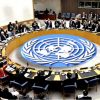
African Bloc Can Pursue Feminist Foreign Policy in Global Governance Reform Push
The United Nations Commission on the Status of Women will this month bring together government, civil society, and the private sector to strategize on the acceleration of gender equality, through strengthening institutions and financing from a gender perspective.
International Women’s Day, 2024
Rural Tajik Woman’s Road to Empowering Women Living with HIV
Born and raised in a rural area in a traditional Tajik family, Takhmina Haidarova managed to finish high school with excellent grades and wanted to go to university.
“[But] it was compulsory for my family to give higher education to boys, and girls were trained to be housewives,” she says. Her dream of higher education was instead replaced by an arranged marriage to a cousin.

New Attempts to Reduce Gender Inequality in Brazil
Brazil is beginning to test the effectiveness of a gender pay equality law passed in July 2023, a new attempt to reduce inequality for women in the world of work.
International Women’s Day, 2024

On March 8th, we celebrate International Women’s Day. A day to honour the resilience, achievements, and potential of women worldwide. The world faces crises—geopolitical conflicts, poverty, and climate change.

UNWRA Chief Warns Agency’s Fate ‘Hangs in the Balance’
UNRWA Commissioner-General Philippe Lazzarini asked the UN General Assembly to urge member states to support the organization's mandate during this period of unprecedented crisis for the region and the agency. He also called for member states to facilitate a “long-overdue political process” for the two-state solution for Israel and Palestine. Only then, in this context, should UNRWA be allowed to transition.
Building Popular National Economic Alternatives*
Viable, popular national economic alternatives require conditions to help build and sustain them. An independent, accountable government can ensure supportive institutions, including laws.
A Regional Commitment Is Underway For Food Security and a Sustainable Future
The regional commitment to fight hunger and malnutrition in Latin America and the Caribbean has made significant progress thanks to the update of the Food Security, Nutrition and Hunger Eradication Plan of the Community of Latin American and Caribbean States (CELAC) for the period 2024-2030, known as the CELAC FNS Plan.
UN Environmental Assembly Call for Action to Address Planetary Triple Threat
The Sixth United Nations Environmental Assembly (UNEA-6) ended with delegates calling for firm actions to address the triple planetary crisis of climate change, nature loss, and pollution. The assembly also reaffirmed its call for “environmental multilateralism” in seeking solutions to the threats, noting that time was running out fast before the threats could besiege the planet and make life a bigger nightmare, especially for the underprivileged.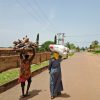
From Gas to Ash: The Struggle of Nigerian Women Amidst Surging Cooking Gas Prices
One sunny mid-morning in Omu-Aran village, a community in Kwara State, North Central Nigeria, Iyabo Sunday sat beside a firewood stand observing her pot of beans with rice (a combination enjoyed by many in Nigeria). The 52-year-old widow used her plastic dirt parker to fan the flames, occasionally blowing air through her mouth for speed and frantically shielding her face from the wisps of smoke that curled from the firewood.
Salvadoran Poultry Farms Produce Biogas, Easing Socio-environmental Conflicts
In a win-win relationship, a segment of El Salvador's agribusiness industry is taking steps to ease the tension of the historic socio-environmental conflict caused by poultry and pig farms, whose waste has caused concern and anger in nearby communities.
Air Quality Sensors Boosting Nairobi’s Fight Against Air Pollution
Deborah Adhiambo (43) has been battling mild asthma since 2022, a condition she describes as “both a health and economic burden.’’ The mother of three lives within Dandora Estate, nine miles east of Kenya’s capital, Nairobi. Dandora is home to Kenya’s largest open landfill, which receives more than 2,000 metric tonnes of waste daily.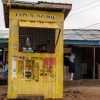
Africa’s Debt Crisis Needs a Bold New Approach– & a Way Forward
It hasn’t been easy for African states to finance their developmental and environmental policy objectives over the past few years. Recent events suggest that the situation may be improving. For the first time in two years, three African states have been able to access international financial markets, albeit at high interest rates. Kenya, for example, is now paying over 10% compared to about 7% in 2014.« Previous Page — Next Page »





 2026 High-level Political Forum on Sustainable Development. Credit: UN Photo/Eskinder Debebe
In 2015, the United Nations and its Member States adopted the Sustainable Development Goals (SDGs) in an effort to make the world a more sustainable and peaceful place for future generations. Progress on the 17 SDGs has been uneven, and inequality persists across the globe. 10 years after adoption, the 2025 UN SDGs Report revealed that only 35% of the SDG targets are on track, with more than half moving too slowly, and 18% moving backwards from the 2015 baseline. Poverty remains one of the world’s most pressing issues, with hunger, violence, and inequality impeding the opportunities for all people to achieve success. In September 2024, the United Nations Summit of the Future introduced a new goal: to eradicate global poverty by 2030, ensure universal rights to basic services, and increase the overall standard of living in terms of industrialization, economic well-being, citizen health, and literacy. Furthermore, recent shifts in United States foreign aid policy – notably, major budget cuts to USAID and the termination of thousands of development programmes– have severely threatened vital lifelines of financial aid to impoverished communities around the world. Additionally, the United States’ withdrawal from the Paris Climate Agreement has undercut international efforts at sustainable development. With the upcoming 2030 deadline, the UN Secretary-General has called for urgent multilateralism across six priority areas: food systems, energy, digital connectivity, education, jobs and social protection, and climate and biodiversity. IPS sheds light on marginalized communities that struggle on a daily basis to survive and have their stories heard and respected.
Updated by Yilan Batista and Shuli Wong August 2026

The Week with IPS

NEXT STOP - SDGs
Tracking global progress towards a sustainable world
Tracking global progress towards a sustainable world
