Languages
Monday, November 9, 2026



News and Views from the Global South
Development & Aid

Qur’an Burning: Rage, Ignorance and Prejudice
Qur’an burning has become a symbol of intolerance and “Islamophobia”, especially in some Western countries. Following the public burning of a Quran in front of Stockholm’s largest mosque on June 28 during the Islamic Eid al-Adha festival, a copy of the Qur’an was set on fire in the Danish capital on 24 July. Naturally, these events provoked protests from Muslims all over the world, including in Sweden and Denmark. The Swedish Prime Minister Ulf Kristersson is “extremely worried” that such protests could result in more burning of the Quran – thus creating a vicious circle – as the Swedish police received a large number of applications for anti-Islam protests.
Women Study More in Brazil, but Make Little Progress in the Exact Sciences
"I thought of studying journalism, because of the example of Gloria Maria," a famous black TV journalist who died of cancer in February 2023, said mathematician Luciana Elias, while discussing the scarce female participation in exact sciences research in Brazil.
20 Years Since the Canal Hotel Bombing: Protecting the People who Protect the World
This World Humanitarian Day on 19 August, we marked 20 years since 22 of our colleagues were killed and more than 100 injured when a suicide bomber detonated a truck full of explosives outside the Canal Hotel in Baghdad, the United Nations headquarters in Iraq. This devastating blow to the UN sent shockwaves across the humanitarian community.
Moving From Trauma to Healing: Practicing Self-Care in Refugee Camps
A Rohingya woman tells a forum of peer counselors the story of her divorce. A survivor of domestic abuse, she has started a new life alone with her daughter. She has weathered a storm of neighbors telling her she was the problem. Now, she provides the support she didn’t have to other women like her.
Unregulated Agrochemicals Harm Health of Rural Residents in Central America
In his green cornfield, Salvadoran farmer Medardo Pérez set about filling the hand-held spray pump that hangs on his back, with the right mixture of water and paraquat, a potent herbicide, and began spraying the weeds.
Building Agricultural Resilience in a Changing Climate: Strategies to Safeguard Crop Production Amidst Extreme Weather Events
Across the U.S., and around the world, extremes in weather patterns, from drought to excessive heat to flooding to wildfires to outbreaks of insect pests and disease have become frequent and are predicted to continue to become more intense because of climate change, and the warming of our planet.
Floods, Now Torrential Monsoon Rains Leave Pakistani Women in Crisis
Torrential monsoon rains have left the people, especially women, in crisis as they are still grappling to recover from the last year’s floods in Pakistan. “We are yet to return to normal lives after devastation caused by severe rains in June 2002 when the new series of rains have started only to further aggravate our problems,” Jannat Bibi, a resident of Kalam in the Swat Valley, told IPS.
Fragility & Poverty in Sub-Saharan Africa: Two Sides of the Same Coin
In 1990, about half of the population in Sub-Saharan Africa and South Asia and two-thirds in East Asia and the Pacific were living in extreme poverty (defined as living on less than what today amounts to around $2.15 per person per day).
World Leaders Need to Prioritize the More Than 1 Billion People Living in Informal Settlements
When representatives from dozens of countries gathered recently at the UN High Level Political Forum in New York to share progress on their efforts to achieve the UN’s 17 Sustainable Development Goals (SDGs), this disturbing reality was clear: the world is not even close to meeting the goals by 2030 as intended.
Pre-Colonial Delicacy Could Help Food Security and Climate Change
Kenya’s fight for food security may have just gone ‘Old School’ as Egerton University dons win a grant to help bring back a pre-colonial delicacy that was gradually sliding its way off consumers’ plates. Their project, dubbed ‘Exploring Potential of Togotia (Erucastrum arabicum), a forgotten African leafy vegetable for nutritional security and climate adaptation in Kenya,’ won the grant in October last year in a bid to help farmers and consumers realise the importance of the crop that many, today, term as a weed.
Reintegration Assistance for Migrants Going Home
Reintegration assistance for migrants returning to their countries of origin is becoming increasingly salient. Germany and the EU cooperate closely with countries of origin to support local reintegration.
World Bank Climate Finance Plan Little Help, Unfair
Rich nations have contributed most to the current climate crisis. They are primarily responsible for the historical emissions and greenhouse gas (GHG) accumulation of the last two centuries.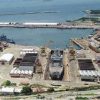
Mexico’s Interoceanic Corridor Lacks Water
Due to insufficient pressure water does not make it up to Elliot Escobar's house in the Mexican municipality of Matías Romero, where he lives on the second floor, so he pipes it up with a hose from his sister's home, located on the first floor of the house shared by the two families.
Himalayan Monsoon Disaster: Climate Change Colludes with Bad Development
As torrential rains, cloudbursts, floods, and landslides continue to wreak colossal damage and claim lives in Himachal Pradesh, India’s Himalayan foothill provinces. The question everyone is asking is: why is this happening?
Kenya: Cost of Living Protests Met with Police Repression
Protests against the high cost of living in Kenya have been met with police violence. Talks are currently underway between government and opposition – but whatever results will fall short unless it brings accountability for the catalogue of human rights violations committed in response to protests.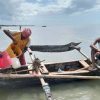
A Common African Approach to Environmental Challenges, Now & for the Future
There has never been a time in human history when collaboration between nations was more sorely needed than now, and there is no place that would benefit more from it than in Africa.
#AfghanGirlsVoices Campaign to Elevate Voices of Young Afghan Girls on Global Stage
Two years ago, the then 19-year-old Somaya Faruqi and the Afghan Robotic Team travelled from Herat City to Kabul, the heart of Afghanistan—the Taliban had taken over Herat city, cutting off electricity and internet. The all-girls team’s great passion for science, technology, engineering, and math (STEM) had driven them to Kabul to rehearse for a competition.
Political Will and Investment Will Score the Goal for Zero Hunger
A world free from hunger is possible, but it demands political will, investment, and effective policies to transform agriculture and rural development, says Alvaro Lario, President of the International Fund for Agricultural Development (IFAD).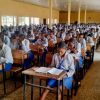
Nigeria to Expand Education Access Through a Student Loan Scheme
Wisdom Ajah, an 18-year-old senior secondary school graduate living in Karshi, a satellite town in Nigeria’s Federal Capital Territory, dreams of a university education that will secure him a good job after graduation and help support his family. But it is a distant dream considering how many obstacles he has faced trying to acquire a secondary school certificate.
Social Activists Demand Real Equality for Chilean Women
Women social activists recognize that gender equality is gaining ground in Chile, but maintain that there is still a long way to go to turn into reality the promises to "level the playing field" between women and men, while they highlight the importance of addressing the issue of care work.
POWER TO THE YOUTH: With Quality Education, Youth are Empowered with the Green Skills to Save Our Planet
To save our people and our planet from the life-threatening risks of the climate crisis, we must invest in the education of today’s youth. They will be the climate activists, climate scientists, climate innovators, game-changers and leaders of the 21st century green economy.« Previous Page — Next Page »





 2026 High-level Political Forum on Sustainable Development. Credit: UN Photo/Eskinder Debebe
In 2015, the United Nations and its Member States adopted the Sustainable Development Goals (SDGs) in an effort to make the world a more sustainable and peaceful place for future generations. Progress on the 17 SDGs has been uneven, and inequality persists across the globe. 10 years after adoption, the 2025 UN SDGs Report revealed that only 35% of the SDG targets are on track, with more than half moving too slowly, and 18% moving backwards from the 2015 baseline. Poverty remains one of the world’s most pressing issues, with hunger, violence, and inequality impeding the opportunities for all people to achieve success. In September 2024, the United Nations Summit of the Future introduced a new goal: to eradicate global poverty by 2030, ensure universal rights to basic services, and increase the overall standard of living in terms of industrialization, economic well-being, citizen health, and literacy. Furthermore, recent shifts in United States foreign aid policy – notably, major budget cuts to USAID and the termination of thousands of development programmes– have severely threatened vital lifelines of financial aid to impoverished communities around the world. Additionally, the United States’ withdrawal from the Paris Climate Agreement has undercut international efforts at sustainable development. With the upcoming 2030 deadline, the UN Secretary-General has called for urgent multilateralism across six priority areas: food systems, energy, digital connectivity, education, jobs and social protection, and climate and biodiversity. IPS sheds light on marginalized communities that struggle on a daily basis to survive and have their stories heard and respected.
Updated by Yilan Batista and Shuli Wong August 2026

The Week with IPS

NEXT STOP - SDGs
Tracking global progress towards a sustainable world
Tracking global progress towards a sustainable world
