Languages
Wednesday, November 11, 2026



News and Views from the Global South
Development & Aid

Why Does Yangtze River Have its Own Protection Law?
The new Yangtze River Protection Law (YRPL), which came into effect on March 1, 2021, is China’s first legislation on a specific river basin. The Yangtze River is China’s longest and largest river system, stretching over 6,300 kilometres and has over 700 tributaries. With a drainage basin covering more than 1.8 million square kilometres, approximately one-fifth of China’s total land area, the river basin is home to over 40% of the country’s population.
Severe Water Stress, Absolute Scarcity for 2 to 4 Billion Humans by 2025
Now it comes to the scary water crises, as it is estimated that, globally, over two billion people live in countries that experience high water stress.
The Impact of Air Pollution on Child Health
Air pollution is a global public health crisis, and air pollution levels in India are among the highest in the world, posing a heavy threat to the country’s health and economy. According to the 2019 World Air Quality Report, India is home to 21 of the 30 most polluted cities in the world. In these cities, air quality can be as much as 10 times over the safe limits of air pollution recommended by the WHO.
How Can We End Systemic Racism in the US Legal System?
Systemic racism in the US has had devastating consequences for generations of individuals from diverse backgrounds. Our legal system, which is intended to be color-blind, should be an essential tool in eliminating racism. But instead—despite legislative, educational and social efforts aiming to provide equal access to justice—the US ranks only 21st in the World Justice Project Rule of Law Index 2020.
2021: Yet Another Challenging Year in Review
 In 2020, 1.8 million people across the world died from COVID-19.
At the end of 2021 the death toll has risen to over 5.3 million.

Interview with Siddharth Chatterjee, UN Resident Coordinator in China, on the Beijing Winter Olympics and Paralympics
The interview was originally conducted by Beijing Daily. Beijing Daily: The world is paying attention to whether the Beijing Winter Olympic Games can be successfully held 6 months after the Tokyo Olympics in the face of COVID-19. How do you evaluate the preparations for the Beijing Winter Olympics? What is the key to the success of the Beijing Winter Olym-pics? What kind of signal will the successful hosting of the Beijing Winter Olympics send to the world?
2021: A Grim Year for Planet Earth
Between the COVID-19 pandemic and the deadly manifestations of the climate crisis, there were few places to hide for most of us in 2021. Ageing billionaires riding booming stock markets could take their first flights into space in their own rockets, but for the rest of Planet Earth’s 8 billion people with their feet on the ground it was a year of placing hope in the hands of scientists and our political leaders to turn the tide.
America Faces a Fateful Crossroad in 2022
When my assistant handed me copy expressing my greetings and good wishes for 2022 for approval, I paused, thinking, “is that all I can say, just hope for a better, brighter new year?”
Sugarcane Gas Opens New Horizons for Energy Agriculture – Video
Nothing is wasted from sugarcane, one can conclude from the biomethane production process at the Cocal plant, a Brazilian company that produces sugar, ethanol, electricity and other by-products from sugarcane agro-industrial waste. 
Blue Ocean Solutions for Climate Resilience and Accelerated Development
Seychelles’ 115 islands are an exotic ocean ecosystem of beaches, coral reefs, and unique plant and animal species. Concerned with the impacts of climate change, the country has committed to decarbonize by 2050.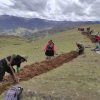
Rural Women in Peru Seed Water Today to Harvest It Tomorrow
"When I was a little girl we didn't suffer from water shortages like we do now. Today we are experiencing more droughts, our water sources are drying up and we cannot sit idly by," Kely Quispe, a small farmer from the community of Huasao, located half an hour from Cuzco, the capital of Peru's ancient Inca empire, told IPS.
Biden Should Add Development to the Next Summit for Democracy – and Convene a Development Summit
U.S. President Biden just hosted The Summit for Democracy to demonstrate the advantages of democracy in the global competition with authoritarian regimes. The U.S. can succeed in this competition by demonstrating to the people of developing countries (i.e., the vast majority of the world’s population) how coupling democracy and development is the best course to improve their lives.
Getting Beyond Body-Shaming
This is an age where pandemics are raging, millions live in war-torn strife, yet women are judged on their skin tones and height, says matchmaker Hirion Shah.
CORRECTED VERSION: Vaccine Famine & its Impact on African Economies
We are about to start a third year of living with COVID-19. The world’s humanity and solidarity are now at a further test – and yet implications of the absence of solidarity keep us all in the boat of mutations, lockdowns, quarantines and delayed SDGs – denied prosperity for all. 2021 has unearthed a new expression of global inequity: “vaccine nationalism” – itself competing with high with socioeconomic downturns, jobless growth, the climate crisis, and rising poverty.
What Would Europe, the US, Do with One Billion Climate Refugees?
A bit of fiction. Or maybe not. If things keep going the way they are, the result will be that such a massive flux would create instability and tensions, impact the global markets, cause record prices of fossil fuels, food and everything else, and the bankruptcy of big private financial corporations…
COP26 Agreed Rules on Trading Carbon Emissions – But They’re Fatally Flawed
One surprise from COP26 – the latest UN climate change conference in Glasgow – was an agreement between world leaders on a new set of rules for regulating carbon markets. This would allow countries to trade the right to emit greenhouse gases.
Green Gas: Energy as a By-Product of Sugarcane in Brazil
First came sugar. For four centuries, it was the main sugarcane product in Brazil. But since the 1970s sugarcane has grown and diversified as a source of energy: ethanol, electricity and biogas.
Vaccines, Diagnostics and Therapeutics as Global Public Goods
Countries in the Asia-Pacific region are trying their best to deal with the COVID-19 pandemic by rapidly rolling out vaccination programmes and putting in place public health interventions to reduce its impact. At the end of November, there were 262 million confirmed COVID-19 cases and 5.2 million deaths globally. About 60 per cent of all COVID-19 cases and half of all COVID-19 related deaths were in Asia and the Pacific. About 7.8 billion vaccines have been administered globally, and vaccine supply is generally improving.
We Must Rise to the Occasion, Now.
In 2021, COVID-19 continued to plague the world – a world already burdened by armed conflicts, climate-induced disasters and forced displacement. Communities, nations and people struggled to maintain normalcy in the midst of the abnormal. This was especially notable in the education sector – a sector that is the very foundation for achieving all human rights and all Sustainable Development Goals.
Quest for Asian Innovation & Solutions in a Networked World
The UN’s 76th anniversary in 2021 arrived at a time of great upheaval and change. If the world is to transition from COVID-19 and we are to deliver on our promises to future generations - to secure a world where everyone can thrive in peace, dignity, and equality on a healthy planet – then 2022 must be the year we change both gear and discourse.
Covid-19 Has Accelerated New Agtech Development and Adoption in Asia-Pacific!
While the COVID-19 impact has been predominantly negative, the pandemic appears to have sparked increased interest in developing agricultural technology (agtech) to improve the efficiency of food systems, from input supplies through farming and processing to delivery and retail.« Previous Page — Next Page »





 2026 High-level Political Forum on Sustainable Development. Credit: UN Photo/Eskinder Debebe
In 2015, the United Nations and its Member States adopted the Sustainable Development Goals (SDGs) in an effort to make the world a more sustainable and peaceful place for future generations. Progress on the 17 SDGs has been uneven, and inequality persists across the globe. 10 years after adoption, the 2025 UN SDGs Report revealed that only 35% of the SDG targets are on track, with more than half moving too slowly, and 18% moving backwards from the 2015 baseline. Poverty remains one of the world’s most pressing issues, with hunger, violence, and inequality impeding the opportunities for all people to achieve success. In September 2024, the United Nations Summit of the Future introduced a new goal: to eradicate global poverty by 2030, ensure universal rights to basic services, and increase the overall standard of living in terms of industrialization, economic well-being, citizen health, and literacy. Furthermore, recent shifts in United States foreign aid policy – notably, major budget cuts to USAID and the termination of thousands of development programmes– have severely threatened vital lifelines of financial aid to impoverished communities around the world. Additionally, the United States’ withdrawal from the Paris Climate Agreement has undercut international efforts at sustainable development. With the upcoming 2030 deadline, the UN Secretary-General has called for urgent multilateralism across six priority areas: food systems, energy, digital connectivity, education, jobs and social protection, and climate and biodiversity. IPS sheds light on marginalized communities that struggle on a daily basis to survive and have their stories heard and respected.
Updated by Yilan Batista and Shuli Wong August 2026

The Week with IPS

NEXT STOP - SDGs
Tracking global progress towards a sustainable world
Tracking global progress towards a sustainable world
