Languages
Wednesday, October 14, 2026



News and Views from the Global South
Development & Aid
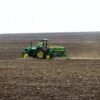
Breaking the Cycle Between Food Production and Environmental Decline
A newly published review in Nature Reviews Earth & Environment has revealed disturbing statistics on the growing environmental threats posed by global food production. The global food system, designed to feed and nourish humanity, is now a major contributor to climate change via greenhouse gas emissions, and the largest driver of freshwater depletion, biodiversity loss, and nutrient pollution.
Keep Inputs Moving to Keep Food Affordable
Across Europe, winter wheat is already in the ground. What farmers apply in the coming weeks will determine the size of this year’s harvest. Those decisions are now being made under a sudden surge in costs that did not exist when seeds went in.
Strengthening Financial Integrity: Why It Matters and What Needs to Change
A conversation with Toril-Iren Pedersen, Director of the UNDP Global Policy Centre for Governance, and Michael Jarvis, Executive Director of the Trust, Accountability, and Inclusion (TAI) Collaborative
How Santa Marta Finally Made Fossil Fuel Phase-Out Politically Discussable
The First Conference on Transitioning Away from Fossil Fuels in Santa Marta, Colombia, may eventually be remembered as a defining moment in global climate politics, not because it produced a treaty or a formal negotiation outcome, but because it changed the tone, structure, and ambition of the conversation itself.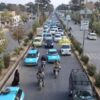
Speaking Up for Girls’ Education Carries Heavy Risks in Afghanistan
Qadoos Khatibi, an Afghan university lecturer, and Fayaz Ghori, a civil society activist, also from Afghanistan, were detained by the Taliban’s Ministry for the Promotion of Virtue and Prevention of Vice. Their crime? Advocating for girls’ right to education.
The Rise of Centenarians: A Challenging Accomplishment
Throughout human history, reaching the age of 100 was considered an exceptional accomplishment. However, in recent decades, the number of centenarians in the world has been on the rise.
100 Days, No Outcry – The Cost of Speaking Out
“We’ve abandoned this couple completely; we have not done even 1% of what they did for us all these years!” said journalist Asad Ali Toor.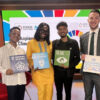
Africa’s Youth are Shaping the Continent’s Climate Future
Africa is on the frontlines of the climate crisis, warming faster than the global average and facing disproportionate climate impacts, despite contributing the least to global greenhouse gas emissions.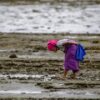
Pacific Ocean Under Pressure — Now a Region Finally Armed With Evidence
For generations, Pacific people have understood the ocean not as a resource but as identity, sustenance, and survival. Today, that relationship is being tested in ways science is only just beginning to fully capture.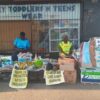
African Countries Up Efforts to Tax High-Income Individuals
African countries are exploring ways to tax high-earning individuals as the continent seeks to expand its revenue collection amid what experts say is a growing gulf between rich and poor.
Migration a Toxic and Divisive Issue in Many Parts of the West
Migration is a strange thing, hard to pin down. It is a complex phenomenon that transforms communities while shaping people’s identities and it is so multifaceted that individuals perceive it and live it in different ways.
World Press Freedom Day, 2026
 On May 3rd, the world marks World Press Freedom Day - a United Nations observance dedicated to the fundamental principles of press freedom.

‘Nuclear Weapons Are Not Just Tools of War. They Are Weapons of Mass Suffering.’
"We choose hope because despair is a form of surrender that we cannot accept,” UN Ambassador to the Philippines, Enrique Manolo, told civil society representatives and the diplomatic community, considering the question of whether to pursue nuclear disarmament in a world that is becoming more polarized on the issue.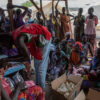
Famine in South Sudan Projected to Worsen Without Humanitarian Intervention
In 2026, the humanitarian situation in South Sudan has taken a considerable turn for the worse, with widespread food shortages, ongoing disruptions to food production systems, and rising rates of malnutrition affecting over half of the population. Compounded by the vast scale of needs and an overwhelming lack of access to basic services, humanitarian experts warn that nationwide levels of hunger are projected to worsen to catastrophic levels if urgent intervention is not secured.
UN Staff Advised to Keep Off Campaign for New Secretary-General
A longstanding rule bars international civil servants from publicly taking a political stand against member states, even against those accused of human rights violations, war crimes and genocide (and even barring staffers from participating in political demonstrations outside the UN).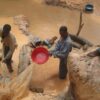
Clean Energy, Digital Technologies Are Coming at a Human Cost, UN Report Warns
A newly released United Nations report has raised urgent concerns that the world’s push toward clean energy and digital technologies is driving a hidden crisis in some of the planet’s most vulnerable regions, where mining for critical minerals is depleting water supplies, damaging health, and deepening inequality.
BULGARIA: ‘We Protested Against a Whole System of Corrupt Governance and State Capture’
CIVICUS discusses Bulgaria’s Gen Z-led protests with Aleksandar Tanev, founder of Students Against the Mafia, an informal student organisation that took part in mass protests against corruption and state capture.

The Ocean Also Has Memories: From Our Territories to the Global Seafood Marketplace
Coming from an island in southern Chile, where the sea is not an industry—but it is daily life, work, food and memory. Growing up in a family that is part of an artisanal fishers’ cooperative. Learning from a young age how to cultivate oysters, work with mussels, and understand the rhythms of the sea.
The War in Iran Isn’t Just Raising Food Prices — It’s Revealing Who Really Sets Them
As the United States and Israel’s 2026 attack on Iran remains on pause, most eyes have fixed on oil. Tankers reroute around the Strait of Hormuz, oil benchmarks climb, and insurance costs spike. But while the headlines focus on energy, warning signs are already flashing from the food commodities markets.
Climate-Driven Disruptions to Education in Africa Raise Protection Risks for Millions of Children
The escalating global climate crisis has led to an increase in the frequency of climate-induced natural disasters, affecting millions worldwide. As governments struggle to keep up due to persistent funding shortfalls and inadequate preparedness and response mechanisms, education systems in Eastern and Southern Africa continue to deteriorate, pushing millions of children into displacement and poverty, further deepening long-term inequalities.
Pacific Islanders Combat Mercury Poisoning of the Environment
It is an invisible contaminant that has been found in fisheries, an essential part of the food chain for many Pacific Islanders. Mercury, emitted from fossil fuel power generation and other industrial processes around the world, has now penetrated marine ecosystems in the Pacific Islands with detrimental consequences for people’s health and wellbeing.« Previous Page — Next Page »





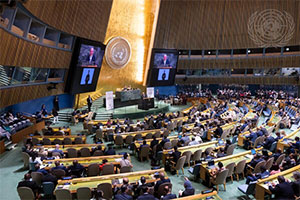 2026 High-level Political Forum on Sustainable Development. Credit: UN Photo/Eskinder Debebe
In 2015, the United Nations and its Member States adopted the Sustainable Development Goals (SDGs) in an effort to make the world a more sustainable and peaceful place for future generations. Progress on the 17 SDGs has been uneven, and inequality persists across the globe. 10 years after adoption, the 2025 UN SDGs Report revealed that only 35% of the SDG targets are on track, with more than half moving too slowly, and 18% moving backwards from the 2015 baseline. Poverty remains one of the world’s most pressing issues, with hunger, violence, and inequality impeding the opportunities for all people to achieve success. In September 2024, the United Nations Summit of the Future introduced a new goal: to eradicate global poverty by 2030, ensure universal rights to basic services, and increase the overall standard of living in terms of industrialization, economic well-being, citizen health, and literacy. Furthermore, recent shifts in United States foreign aid policy – notably, major budget cuts to USAID and the termination of thousands of development programmes– have severely threatened vital lifelines of financial aid to impoverished communities around the world. Additionally, the United States’ withdrawal from the Paris Climate Agreement has undercut international efforts at sustainable development. With the upcoming 2030 deadline, the UN Secretary-General has called for urgent multilateralism across six priority areas: food systems, energy, digital connectivity, education, jobs and social protection, and climate and biodiversity. IPS sheds light on marginalized communities that struggle on a daily basis to survive and have their stories heard and respected.
Updated by Yilan Batista and Shuli Wong August 2026

The Week with IPS

NEXT STOP - SDGs
Tracking global progress towards a sustainable world
Tracking global progress towards a sustainable world
