Languages
Friday, November 13, 2026



News and Views from the Global South
Development & Aid

My Voice, Our Equal Future! Joining the Chorus of Girls Who Are Speaking up for Change
Girls are change makers and world shapers! When girls speak up, they are a powerful force to be reckoned with.
Youth Demand a ‘Fair Share’ from World Leaders Ahead of G20 Summit
Heads of youth movements and student unions are challenging the world’s richest nations to correct an ‘incredibly unequal’ global response to COVID-19, by considering the plight of the world’s most vulnerable children and young people.
Vietnam and Cambodia: Leveraging Support to Enhance Climate Ambition
The COVID-19 pandemic has disrupted nearly every facet of our lives and delayed what was slated to be a landmark Conference of the Parties (COP26). This pivotal year marks the first due date for countries to submit revised national climate plans per the five-year cycle required by the Paris Agreement. Remarkably, countries are still moving forward with renewed urgency. And many countries are integrating green recovery into their COVID-19 responses, further contributing to climate action. While many countries have positive stories to tell, both of our nations, Vietnam and Cambodia, are sterling examples of nations taking strong, decisive action, particularly with support through the NDC Partnership. Just last month, the people of Vietnam submitted their updated national climate plan and, in short order, the people of Cambodia will do likewise.Gordon Brown – Education Cannot Wait
"For 75M children & young people trapped in conflict zones, #EducationCannotWait. A lost generation is one where hope dies in those who live. It is our responsibility to rekindle hope." ~ Gordon Brown.
The Importance of Investing in Volunteerism
The International Volunteer Day will approach soon and the 5th of December will become a day to celebrate the actions of millions of volunteers from all over the world, in the south as well in the north of the world.
Mexican’s Labor Rights Closely Watched… by the US
As many have observed worldwide, the outcome of the US presidential elections has been, as expected - full of hope and fear. Many people had the bad feeling that if Trump were to be re-elected, the uncertainty, already enormous due to the pandemic and its effects, would jeopardize the economic recovery worldwide. The triumph of Democrat Biden does not guarantee great solutions, but at the least offers a little more of transparency, certainty, and stability.
Bringing Clean Water On Tap To Rural Villages In Polynesian Island Nation Of Tuvalu
Rural communities on one of the nine islands that make up the Polynesian nation of Tuvalu are anticipating how life will change when they are connected to piped clean water for the first time.
African Employers for Gender Equality
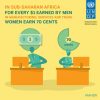
Africa has over 700 companies with an annual revenue of more than $500 million, including 400 with revenue above $1 billion. The ability of these companies to thrive rests on building and retaining talented women and men.
Eswatini makes Progress on NDCs thanks to Crucial Partnership Support
Barry de Maine, the director of Green Cross Pharmacy, lost about $ 7,675 worth of stock when The Mall, the largest shopping centre in Mbabane, was flooded back in 2003. But when the flash floods hit again this year, he had already installed a flange to stop water from coming in. “This is the best I could do under the circumstances,” De Maine told IPS, adding: “Otherwise since we started experiencing floods at The Mall (17 years ago) nothing has been done.”
Our Development Priorities Have Shifted to the Immediate Task of Saving Lives & Livelihoods.
We have come to the point in the agenda where we must take a ‘deep-dive’ in reviewing the lessons learnt so far in our response to the COVID-19 pandemic, in order to chart a way for the future. But the future, by its very definition, must be relative. Flexibility and change will define policy making and the scope of action needed for development.
COVID-19 Compounding Inequalities
The United Nations’ renamed World Social Report 2020 (WSR 2020) argued that income inequality is rising in most developed countries, and some middle-income countries, including China, the world’s fastest growing economy in recent decades. Inequality dimensions While overall inter-country inequalities may have declined owing to the rapid growth of economies like China, India and East Asia, national inequalities have been growing for much of the world’s population, generating resentment.
Reversing the Rohingya Crisis: One Woman at a Time
“This is a crisis without a quick fix that could take years to resolve unless there are concerted efforts to address its root causes”, says Manuel Fontaine, UNICEF Director of Emergency Programmes.
Redesigning Urban Markets Post-Covid
Across Africa, even in cities with relatively modern infrastructure, many shoppers prefer the informal markets. In our case, both our mothers preferred the fresh produce sold at informal markets by women from the rural areas.
They Deserve No Less in Central Sahel
“I am so happy. This is my success!” says 13-year old Cynthia, beaming proudly as she shows her Primary School Certificate with an average mark of 120 out of 150. Thanks to the Radio Education Programme, she will now graduate on to Grade 6! Cynthia’s sense of pride, joy and achievement can only be fully understood when placed in the context of her circumstances. Cynthia is an internally displaced girl, living in Burkina Faso in Central Sahel.
WFP – ‘Focus on Starvation, Destabilisation and Migration to Avert a COVID-19 Global Food Crisis’
Food security has become a priority in the Caribbean as COVID-19 pandemic travel restrictions have hit the tourism-dependent region hard.
African Languages Matter: Is There Still Time to Prevent Cultural Genocide?
As a 10 year-old newly arrived in Lagos from England, I recall listening intently to how the Yoruba language - my father's language - was spoken. I would constantly repeat in my head or verbally repeat what I thought I had heard. I was not always successful. Many times, what would come out of my mouth would throw my friends into fits of laughter.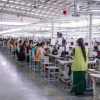
Working Class Bears Disproportionate Burden of COVID-19 Economic Fallout
Back in May 2019, we were visiting a large garment factory in Arsikere, Karnataka, when we asked some of the workers, “What would you do if you got Saturdays off?” Their responses to this simple question summed up their priorities. A majority said they would spend time with family or friends and take care of their children. Many said they would use this time to relax or do household chores. Only a few said they’d look for additional pay.
Secretive Mega-Trade Deal Rules Could Harm Asia’s Covid-19 Recovery
Fifteen countries will sign a mega-trade deal at the ASEAN conference this weekend imposing secretive restrictions on how governments help workers through the pandemic, trade union leaders and parliamentarians have warned.
Promoting Peace in Mali
Despite the various challenges they face, teachers are showing incredible dedication to their profession, writes Leandro Salazar-Lievano, our education expert deployed to UNHCR Mali.What does the second wave of Covid-19 mean for the apparel industry?
During the past few months, I had worked on a documentary for the BBC which looks at the impact of the coronavirus pandemic on the apparel industry of Bangladesh. That documentary caught me at an exceptionally low ebb. I was struggling amid the cancellation of orders and some brands being unwilling to pay for orders which had already been shipped.
Global Summit of Development Banks Fails to Learn from Destructive Past
This week, 450 public development banks from around the world met for the Finance in Common Summit at the Paris Peace Forum. They gathered to discuss how they can direct their combined investments of over USD 2 trillion - 10% of total investments in the world - “to support the transformation or the global economy” and “build new forms of prosperity that take care of people and the planet.”« Previous Page — Next Page »


 2026 High-level Political Forum on Sustainable Development. Credit: UN Photo/Eskinder Debebe
In 2015, the United Nations and its Member States adopted the Sustainable Development Goals (SDGs) in an effort to make the world a more sustainable and peaceful place for future generations. Progress on the 17 SDGs has been uneven, and inequality persists across the globe. 10 years after adoption, the 2025 UN SDGs Report revealed that only 35% of the SDG targets are on track, with more than half moving too slowly, and 18% moving backwards from the 2015 baseline. Poverty remains one of the world’s most pressing issues, with hunger, violence, and inequality impeding the opportunities for all people to achieve success. In September 2024, the United Nations Summit of the Future introduced a new goal: to eradicate global poverty by 2030, ensure universal rights to basic services, and increase the overall standard of living in terms of industrialization, economic well-being, citizen health, and literacy. Furthermore, recent shifts in United States foreign aid policy – notably, major budget cuts to USAID and the termination of thousands of development programmes– have severely threatened vital lifelines of financial aid to impoverished communities around the world. Additionally, the United States’ withdrawal from the Paris Climate Agreement has undercut international efforts at sustainable development. With the upcoming 2030 deadline, the UN Secretary-General has called for urgent multilateralism across six priority areas: food systems, energy, digital connectivity, education, jobs and social protection, and climate and biodiversity. IPS sheds light on marginalized communities that struggle on a daily basis to survive and have their stories heard and respected.
Updated by Yilan Batista and Shuli Wong August 2026

The Week with IPS

NEXT STOP - SDGs
Tracking global progress towards a sustainable world
Tracking global progress towards a sustainable world
